Combined measures better predict cardiovascular disease and diabetes
An observational study compared 15 measures in 4,258,033 Chinese adults, finding better prediction of cardiovascular and diabetes outcomes with combined measures.
Limit: Outcomes omitted nonfatal cardiovascular disease and diabetes cases that did not require hospitalization
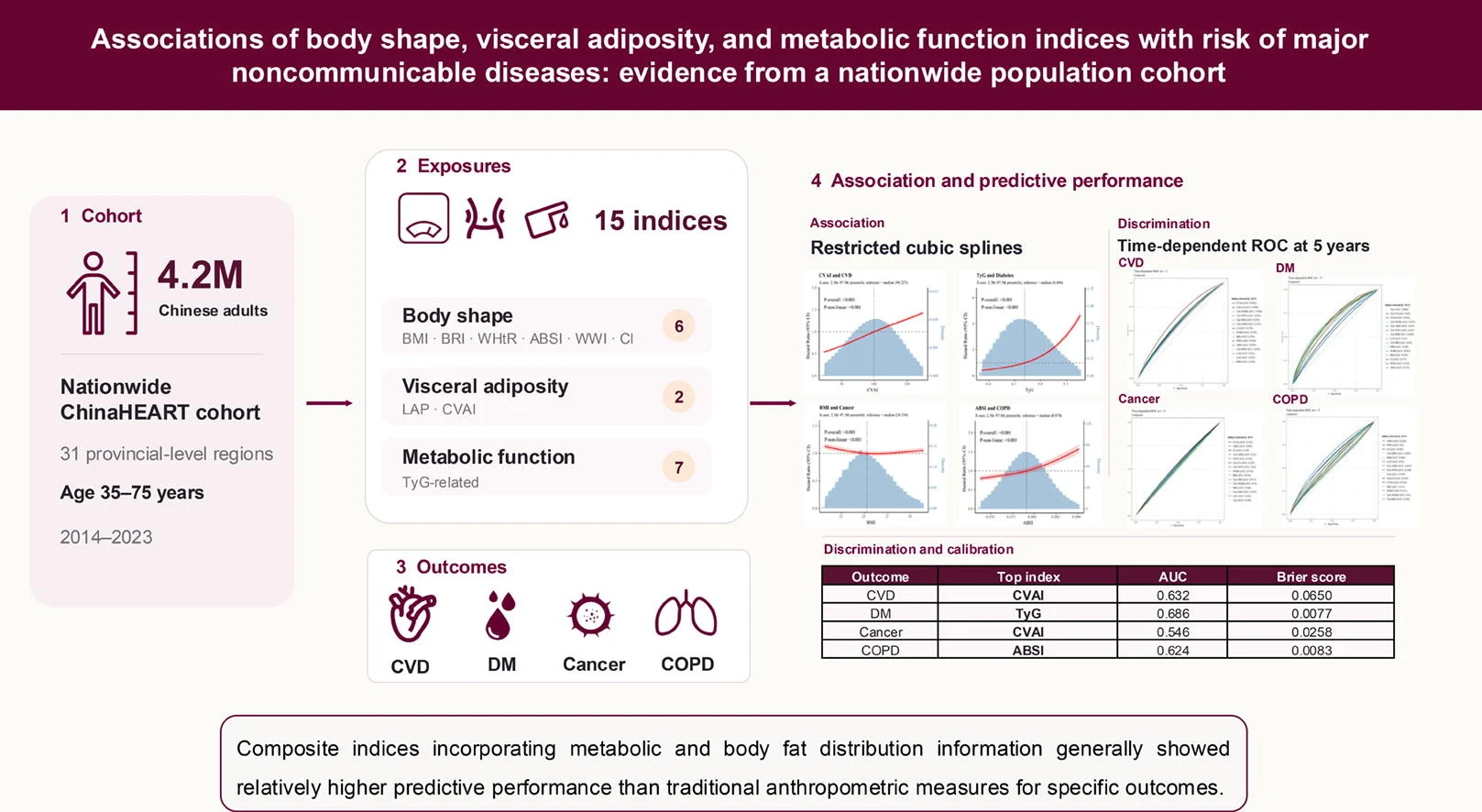
An observational cohort study of 4,258,033 Chinese adults compared 15 measures of body shape, fat around internal organs and metabolic function. Researchers analysed data collected between November 2014 and December 2023.
They assessed how well the measures predicted death or a first hospital admission attributed to cardiovascular disease, diabetes, cancer or chronic obstructive pulmonary disease, a long-term lung condition. Combined measures reflecting fat around internal organs or insulin resistance—the body’s reduced response to the hormone that controls blood sugar—had better predictive accuracy for cardiovascular and diabetes outcomes. Their predictive performance for cancer and the lung disease was comparatively limited. The researchers called for obesity measures and management approaches tailored to different population groups.
Why it matters
Cardiovascular disease and diabetes matter for health in later life. The findings support guiding weight management by disease risk, rather than body weight or shape alone.
Caveats
This observational study identified associations; it could not show that changing these measures would prevent disease. Its findings came from Chinese adults and may not apply to other populations.
- Cardiovascular disease
- Cancer
- Chronic obstructive pulmonary disease
- Obesity
- Noncommunicable disease
- Humans
The paper
Chinese Academy of Medical Sciences & Peking Union Medical College; National Health Commission of the People's Republic of China
Science Bulletin, 11 Oct 2026, Open access