Body roundness linked to heart and blood vessel disease risk
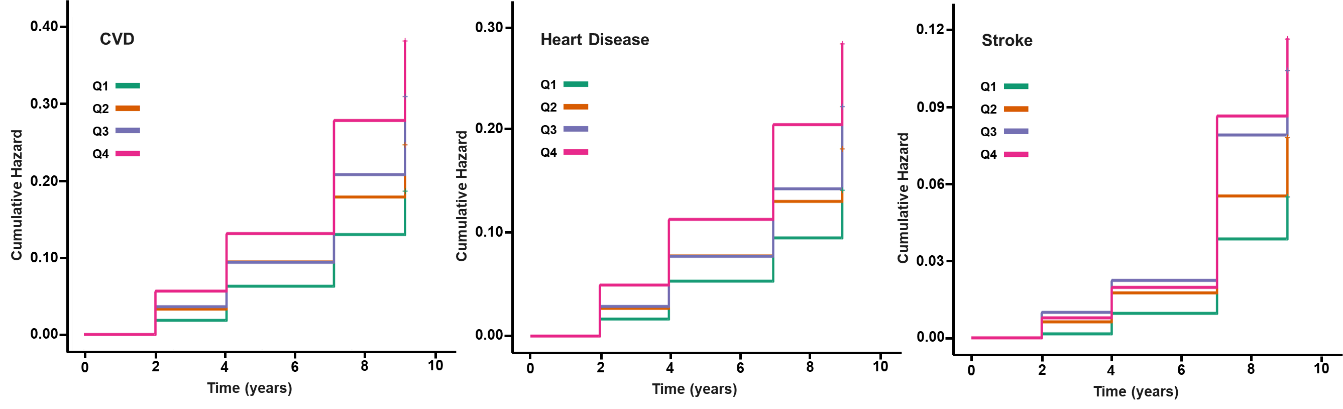
Each one-unit increase in body roundness index was associated with 15.4% higher cardiovascular disease risk during up to 9.0 years of follow-up.
Dose-response
In an observational cohort study, researchers analysed data from 7,566 middle-aged and older Chinese adults who initially had no cardiovascular disease. All were classified in stages 0–3 of cardiovascular-kidney-metabolic syndrome, a framework covering heart and kidney health and how the body uses energy. The researchers assessed body roundness index, a measure of body shape.
During a maximum 9.0-year follow-up, they recorded 1,836 new cases of cardiovascular disease, which affects the heart and blood vessels. Higher body roundness index was associated with higher disease risk after accounting for other factors. The index also predicted cardiovascular disease better than body mass index and another body-shape measure.
Why it matters
For middle-aged and older Chinese adults initially free of cardiovascular disease and classified in cardiovascular-kidney-metabolic syndrome stages 0–3, the study addresses how to assess future cardiovascular risk. The authors supported considering body roundness index for early risk assessment in this population.
Caveats
The observational design cannot show that body roundness caused cardiovascular disease. The findings concern the Chinese population studied, and the paper is a preprint that has not yet been peer-reviewed.
From the paper
- Participants
A total of 7,566 participants from the CHARLS study were included in the final analysis.
- Result
… per one-unit increase in baseline BRI was associated with an 18.3% higher risk of CVD (HR: 1.183, 95% CI: 1.144–1.224), a 23.9% higher risk of stroke (HR: 1.239, 95% CI: 1.171–1.310), and a 15.4% higher risk of heart disease (HR: 1.154, 95% CI: 1.111–1.200).
Results, 3.2 Association Between BRI and CVD in Patients with CKM Syndrome
Quoted word for word from the full text on researchsquare.com.
- Body roundness index
- Cardiovascular disease
- Cardiovascular-kidney-metabolic syndrome
- Body mass index
- Heart disease
- Humans
The paper
Seventh People's Hospital of Zhengzhou
Research Square, 11 Oct 2026, Preprint, not peer-reviewed