Identification of SGK1 as a candidate regulator associated with myeloid cell senescence in ME/CFS: An integrative transcriptomic and experimental study
Abstract
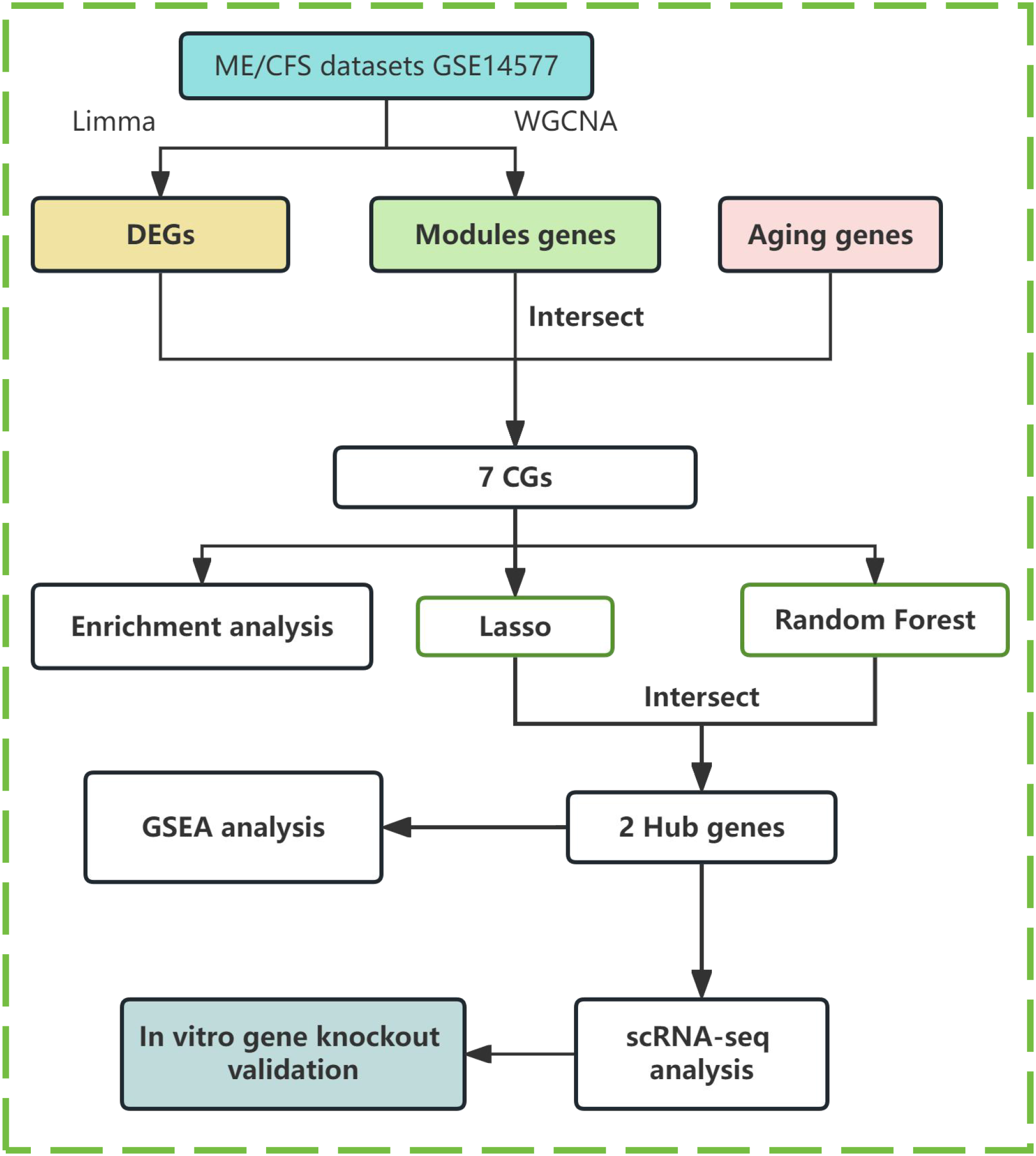
BACKGROUND: Myalgic encephalomyelitis/chronic fatigue syndrome (ME/CFS) is a complex illness lacking objective diagnostic biomarkers and clear pathophysiological understanding. Patients exhibit immune dysregulation and chronic inflammation reminiscent of aging phenotypes, yet the role of myeloid cell senescence in this disease remains unexplored. METHODS: A stepwise integrative transcriptomic and computational strategy was employed. Differentially expressed genes were identified from the bulk transcriptomic dataset GSE14577. Weighted gene co-expression network analysis was performed to identify key modules correlated with the ME/CFS phenotype. Candidate genes were obtained by intersecting these modules with aging-related genes from the GenAge database. Core hub genes were further selected using LASSO regression and random forest machine learning algorithms. Cell type-specific expression was mapped using single-cell RNA sequencing data GSE214283, and functional validation was conducted via siRNA knockdown in a THP-1 cell senescence model. RESULTS: Integrative analysis identified HMGCR and SGK1 as core hub genes. Functional enrichment analysis revealed that candidate genes were enriched in pathways related to cellular senescence and inflammation. Single-cell transcriptomics analysis suggested that SGK1 expression was enriched in myeloid cell populations, including monocytes and neutrophils, in individuals with ME/CFS, whereas HMGCR showed a broader expression pattern. Single-gene GSEA indicated that SGK1 was associated with autophagy and lysosomal function. In vitro experiments showed that SGK1 expression was significantly upregulated in D-galactose-induced senescent THP-1 cells, and SGK1 knockdown markedly reduced the mRNA expression levels of senescence markers p16, p21, and p53. CONCLUSION: This study identifies SGK1 as a candidate molecule associated with myeloid cell senescence-related alterations in ME/CFS. Integrated transcriptomic, single-cell, and experimental analyses suggest a potential link between SGK1 expression and aging-associated immune alterations. However, further validation in primary ME/CFS-derived immune cells and clinical cohorts is required to determine the biological significance and clinical relevance of SGK1.
From the paper
- Limitation
First, although external evaluation using the independent PBMC RNA-seq cohort GSE251872 showed a consistent expression tendency of SGK1, the bioinformatic analyses were primarily based on publicly available datasets with relatively limited sample sizes.
Quoted word for word from the full text on journals.plos.org.
- SGK1
- Autophagy
- Cellular senescence
- Myalgic encephalomyelitis/chronic fatigue syndrome
- Hmgcr expression
- Humans
The paper
The First Affiliated Hospital of Guangzhou University of Chinese Medicine
PLOS One, 16 Oct 2026