CD47 blockade reduces doxorubicin-induced cardiac aging in male mice
Inhibiting CD47 lessens heart dysfunction and blunts cellular senescence caused by the chemotherapy drug doxorubicin.
Physiological Reports
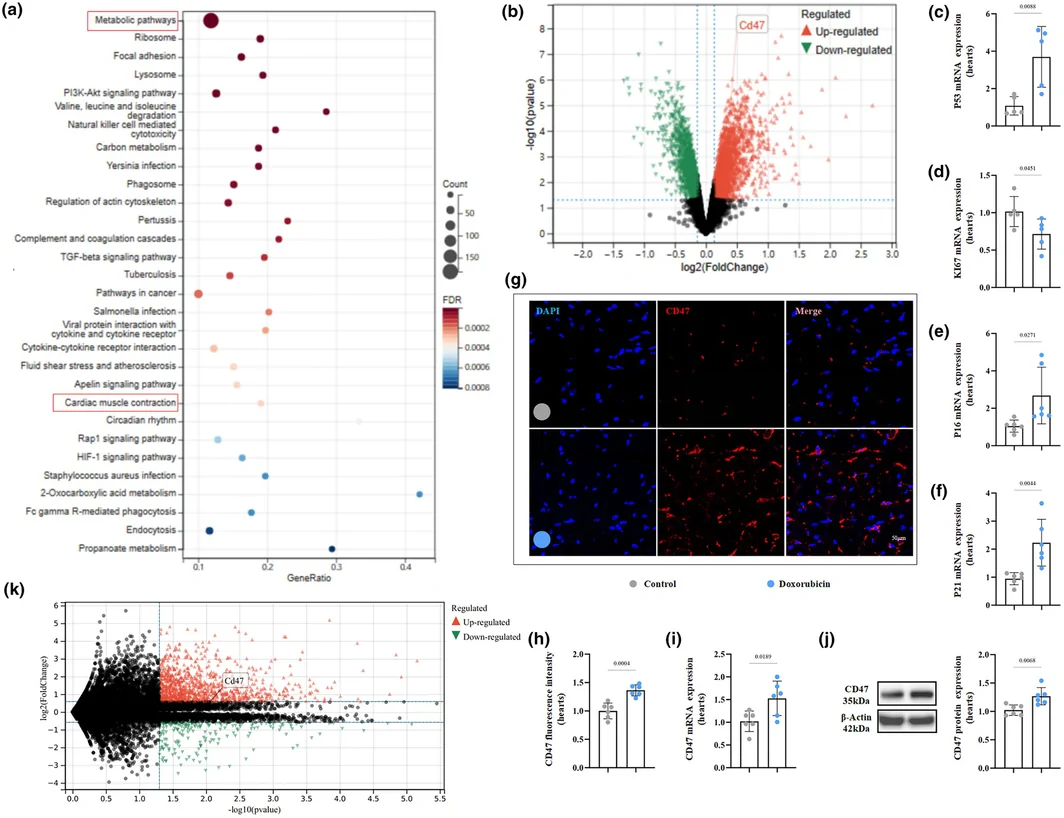
In male mice and cultured AC16 cardiomyocytes, researchers examined how CD47 regulates chemotherapy-induced cardiac aging. Initial bioinformatic analyses revealed that CD47 increases in aged hearts. The team then treated mice with doxorubicin, which raised CD47 expression alongside senescence markers p53, p16, and p21 in heart tissue. In AC16 cells, doxorubicin similarly boosted CD47 levels, p16, p21, and senescence-associated beta-galactosidase activity. Blocking CD47 with a specific antibody reduced cardiomyocyte senescence both in vitro and in vivo. Furthermore, CD47 inhibition improved doxorubicin-induced cardiac dysfunction in the animals.
Why it matters
Anticancer therapies frequently accelerate cardiac aging and functional decline. Identifying CD47 as a mediator of this process reveals a mechanistic link between therapy-induced stress and tissue senescence.
Caveats
The findings rely on cultured cells and male mice rather than human patients. Further work is needed to determine whether these effects translate across sexes and into clinical settings.
The paper
CD47 is a regulator in doxorubicin-induced cardiac aging in male mice
First Affiliated Hospital of Xinxiang Medical University
Physiological Reports · 1 Sep 2026 · CC BY