The METTL3/LOXL2 axis participates in aberrant epithelial-fibroblast crosstalk and induces oral submucous fibrosis in rats
Abstract
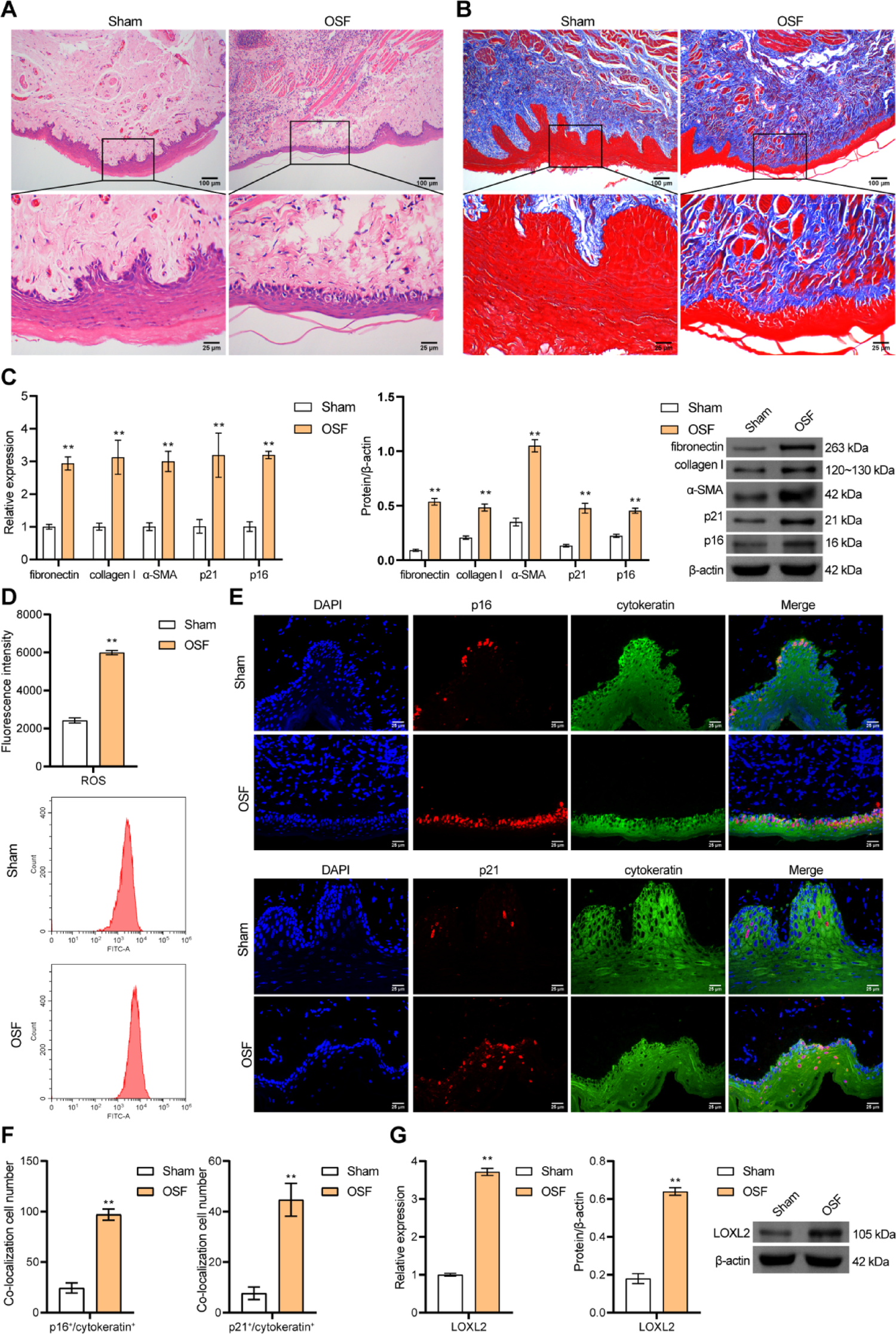
Oral submucous fibrosis (OSF) is an oral potentially malignant disorder strongly associated with the areca nut alkaloids. Although lysyl oxidase-like 2 (LOXL2) is implicated in pathological collagen accumulation and fibrosis, its regulatory role in OSF progression remains unclear. Hematoxylin-eosin, Masson and immunofluorescent staining were performed on rat oral mucosal tissues to assess fibrotic and senescent phenotypes. Senescence of human oral keratinocytes (HOKs) was assessed by senescence-associated β-galactosidase staining, flow cytometry and western blotting. LOXL2 N6-methyladenosine (m6A) methylation levels in tissues and cells were then detected, and methyltransferase-like 3 (METTL3)-LOXL2 interactions were validated using RNA immunoprecipitation and photoactivatable ribonucleoside-enhanced cross-linking and immunoprecipitation assays. LOXL2 mRNA stability was further assessed after actinomycin D treatment. In addition, lactate levels were measured to explore epithelial-fibroblast crosstalk between HOKs and human oral mucosal fibroblasts. Arecoline-treated rats exhibited progressive epithelial thinning and collagen deposition in oral mucosal tissues, accompanied by upregulated expression of fibronectin, collagen type I, α-smooth muscle actin, p21, and p16. Arecoline exposure elevated reactive oxygen species levels and promoted co-localization of the senescence markers p16/p21 with the epithelial marker cytokeratin. LOXL2 was upregulated in arecoline-induced senescence models, and LOXL2 silencing suppressed fibroblast activation by inhibiting HOKs senescence. Mechanistically, METTL3 stabilized LOXL2 mRNA through m6A-dependent interactions. Downregulation of the METTL3/LOXL2 axis reduced lactate secretion from senescent HOKs, thereby attenuating fibroblast activation. Similar findings were observed in OSF rats. The METTL3/LOXL2 axis may mediate lactate secretion from senescent epithelial cells and regulate epithelial-fibroblast crosstalk during OSF pathogenesis. This study reveals a potential mechanism and candidate targets for further evaluation in OSF.
The paper
The First Affiliated Hospital of Hunan University of Chinese Medicine
Molecular and Cellular Biochemistry, 16 Oct 2026


