Restoring a protein partly improves heart function in mice
Experiments in mice producing a progeria-linked protein in heart muscle cells found that restoring an RNA-marking protein partly reduced abnormal heart changes.
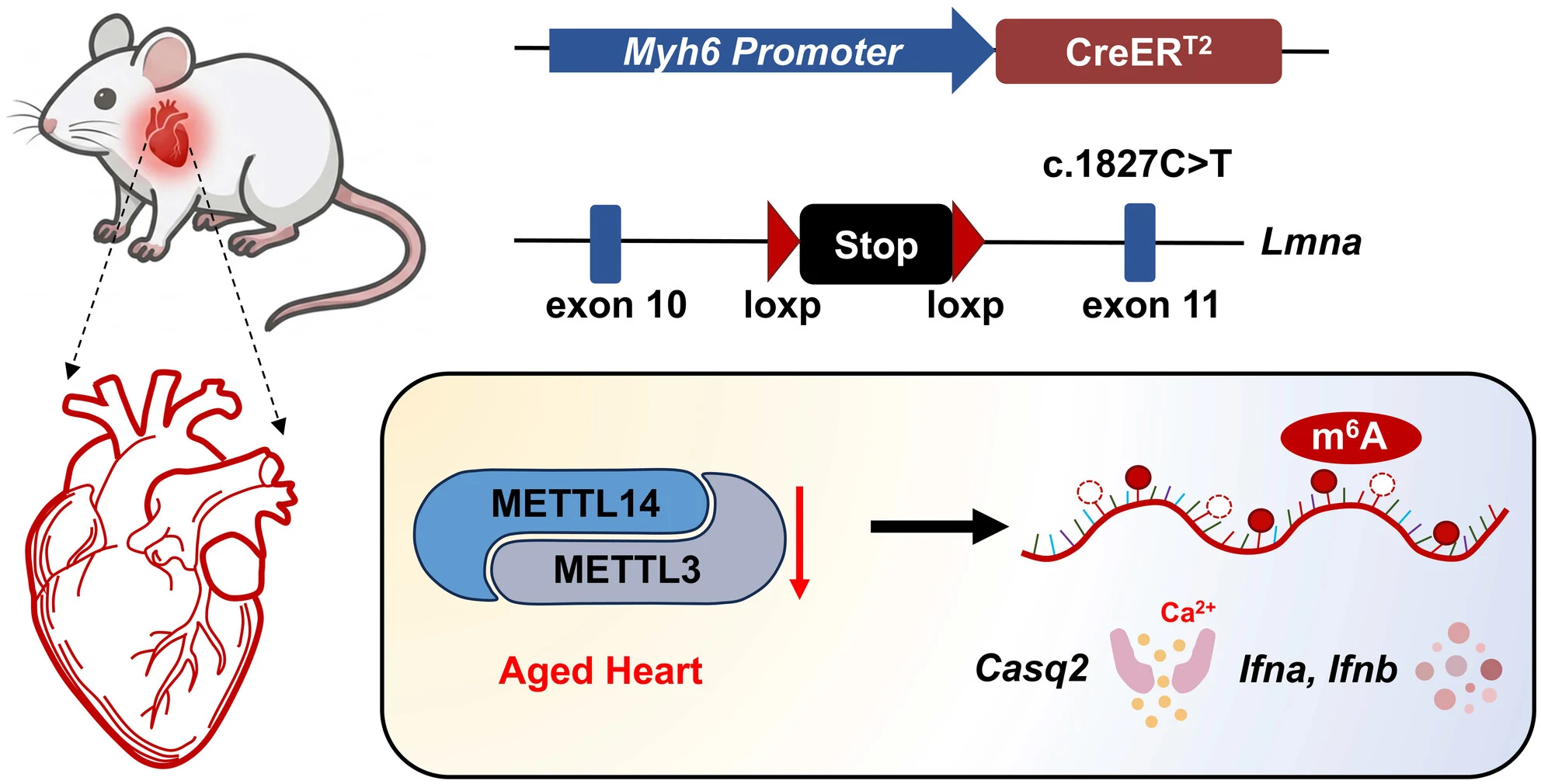
In an animal experiment, researchers engineered mice to produce progerin specifically in heart muscle cells. Progerin is a protein that accumulates in Hutchinson–Gilford progeria syndrome, a rare premature aging disorder. These mice developed heart scarring, enlarged heart muscle and progressively declining heart function.
Their hearts also had less METTL14 and METTL3, proteins that help add chemical marks to RNA. In experiments in heart muscle cells, reducing production of these proteins lowered activity of a gene involved in calcium handling. It also raised activity of genes linked to inflammation and senescence, a state in which cells stop dividing. Restoring METTL14 specifically in heart muscle cells partly reduced abnormal changes in heart structure and impaired heart function in the mice.
Why it matters
Cardiovascular disease is the main cause of death in people with progeria. The study suggests that restoring RNA-marking activity may offer a potential strategy for addressing cardiovascular aging related to this disorder.
Caveats
The findings came from engineered mice and experiments in heart muscle cells, not studies in people. The mouse model restricted progerin production to heart muscle cells.