Lysine breakdown linked to limb lean mass in humans
In 40 postmenopausal women, blood and muscle measurements suggested distinct changes rather than a uniform shift across the lysine breakdown pathway.
Independent replication
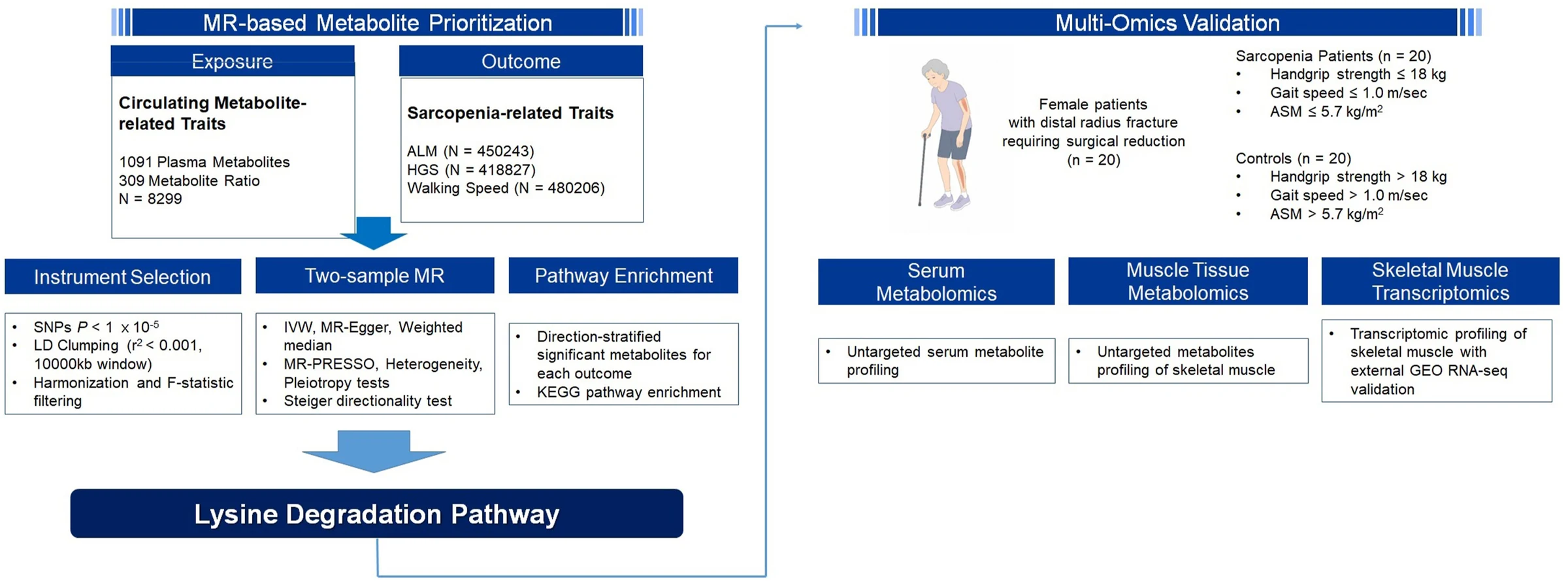
Researchers combined a Mendelian randomisation analysis with an observational study of 40 postmenopausal women with or without sarcopenia, an age-related loss of muscle mass and strength. The genetic analysis used inherited differences to examine links between blood metabolites and lean tissue in the arms and legs, handgrip strength and walking speed.
Lysine breakdown was the only pathway that met a predefined statistical threshold for associations with lower limb lean mass. Lysine is a building block of proteins. Women with sarcopenia had a lower blood score for making carnitine from a modified form of lysine. Carnitine helps cells use fat for energy. In muscle, none of the three metabolic process scores differed significantly between groups. However, the score for gene activity related to carnitine synthesis was lower in women with sarcopenia.
Why it matters
The work addresses how amino acid metabolism might relate to age-related muscle loss. The authors proposed lysine-related metabolism as a candidate framework for further investigation.
Caveats
The genetic analysis was exploratory, and the observational comparisons cannot establish cause and effect. Findings from the 40-woman cohort cannot be assumed to apply to men or premenopausal women.
The paper
Kangbuk Samsung Hospital; Yonsei University
Clinical Nutrition, 7 Oct 2026