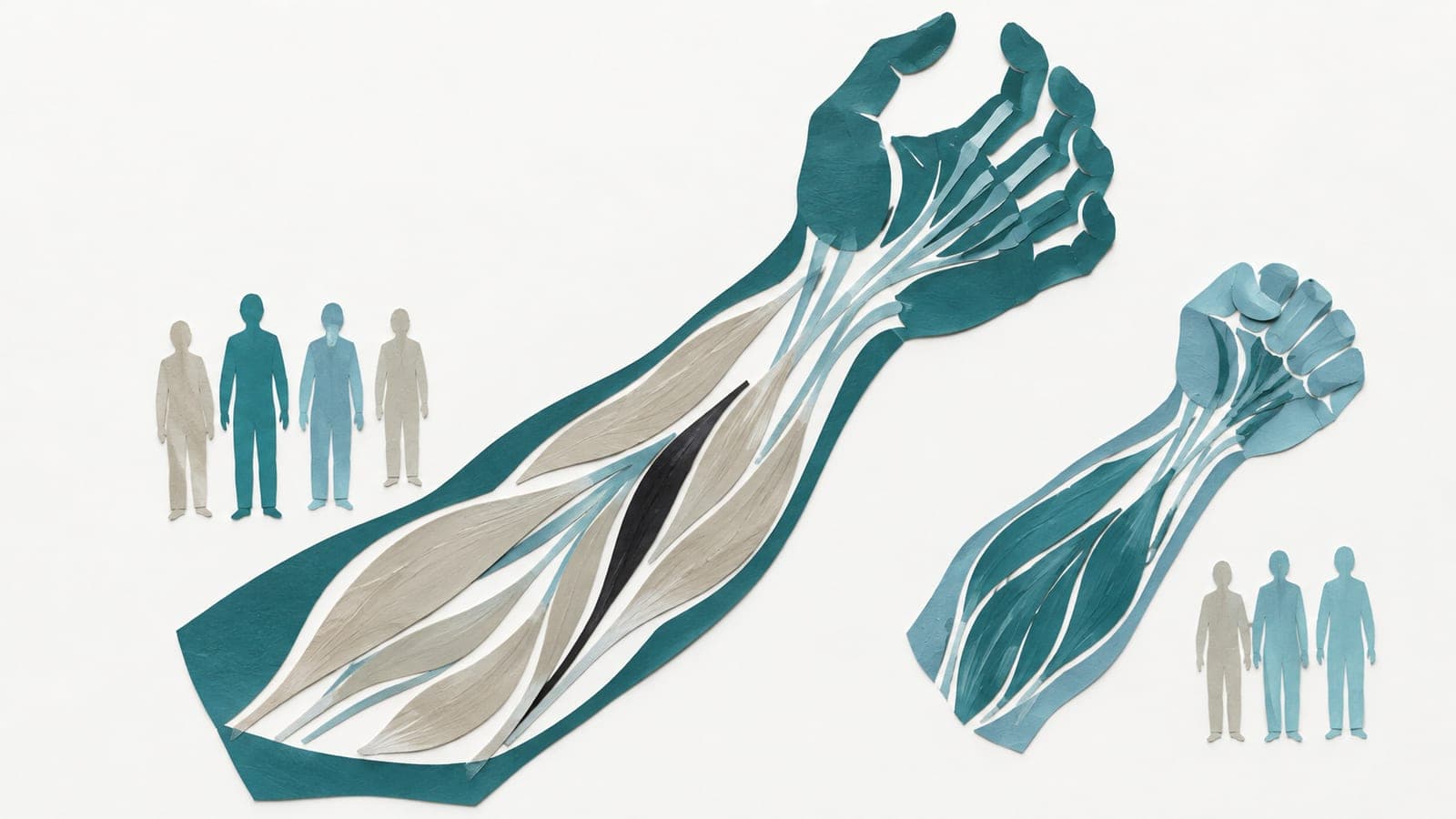
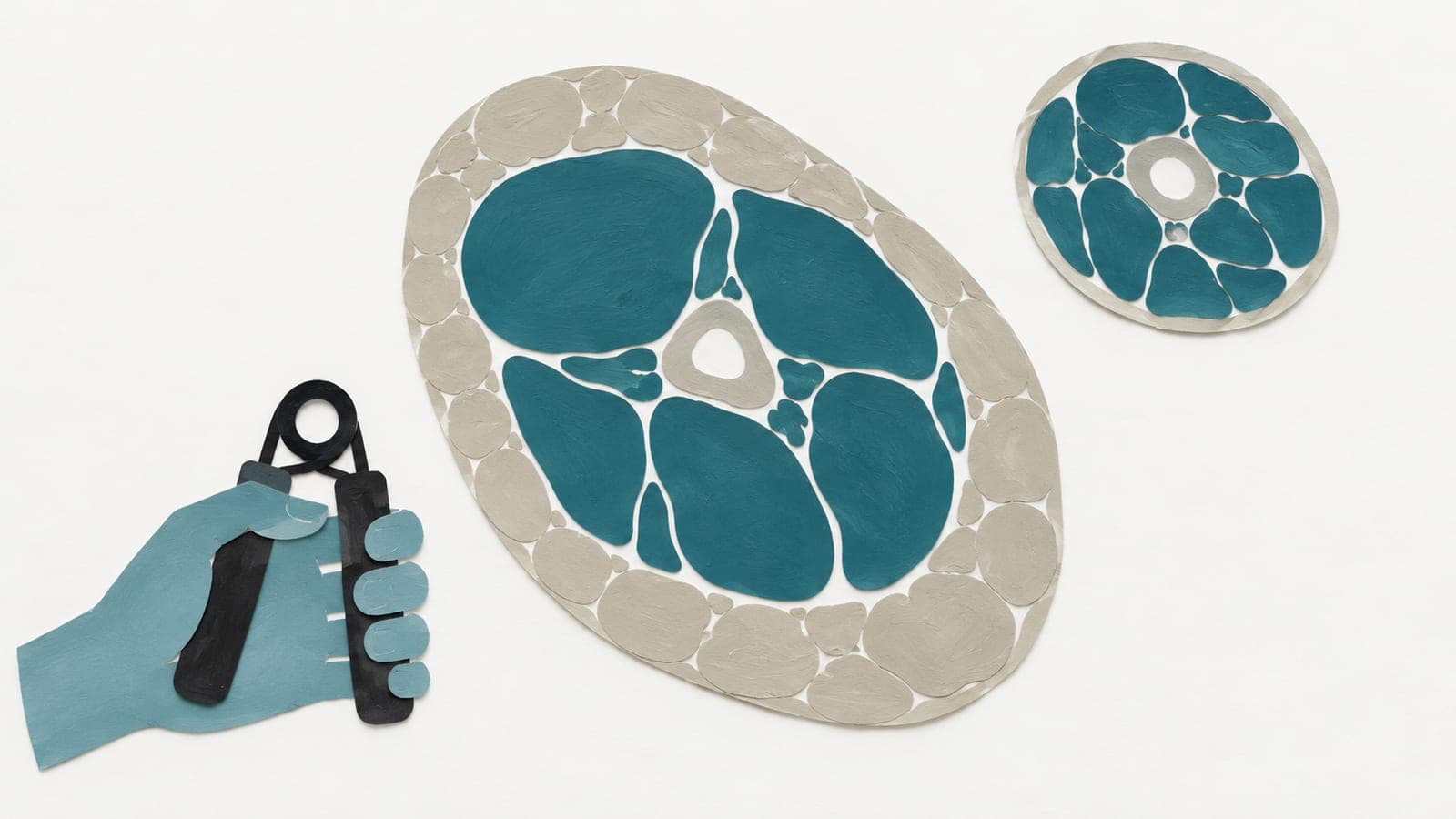
Blood and grip tests flag risk in non-dialysis chronic kidney disease
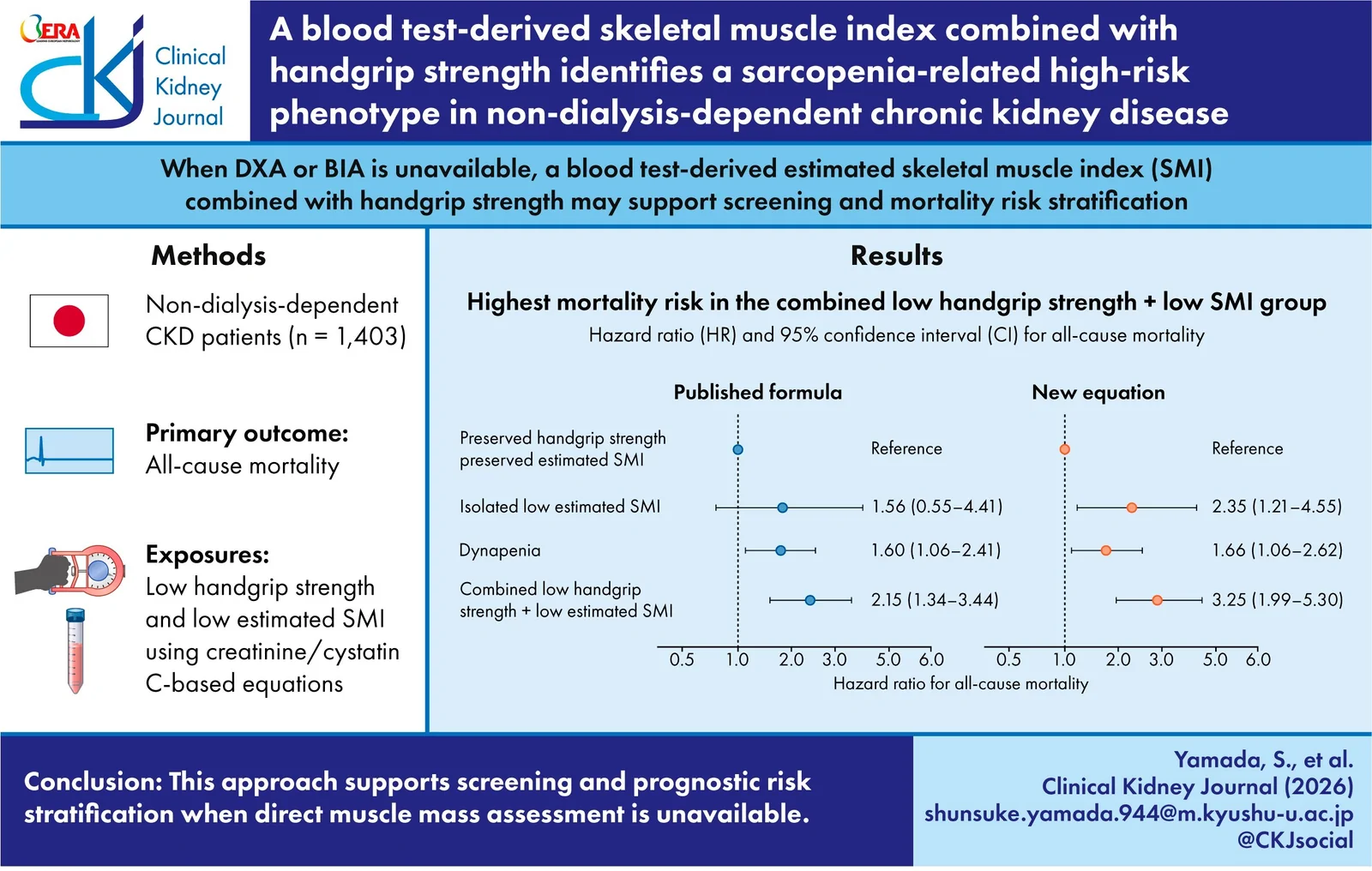
The profile was linked to higher mortality, with adjusted hazard ratios of 1.54 and 2.14 versus patients without it, depending on the muscle-estimation formula.
5 years, independent replication, multicentre
In an observational study of patients with chronic kidney disease who were not receiving dialysis, researchers combined blood-based muscle estimates with handgrip strength. They developed a muscle-mass equation in 100 patients, using an electrical body-composition test as the reference. They then assessed it alongside a published formula in an independent cohort of 1,403 patients at several centres.
Over five years, 173 patients died. Patients with both weak grip and low estimated muscle mass had higher mortality after adjustment for other factors. The adjusted hazard ratios were 1.54 using the published formula and 2.14 using the new equation. A hazard ratio compares the risk of death at a given point during follow-up. The researchers used sex-specific cutoffs to define the combined profile.
Why it matters
Sarcopenia involves loss of muscle mass and strength, a concern as people age. The authors said this approach may support screening when direct muscle measurements are unavailable.
Caveats
The observational study cannot establish cause and effect, and muscle mass was estimated rather than directly measured in the larger cohort. The approach requires further validation before it can serve as a diagnostic substitute.