Maternal BMI trajectories reflect nutritional and metabolic status and are associated with postpartum hypertension risk
Abstract
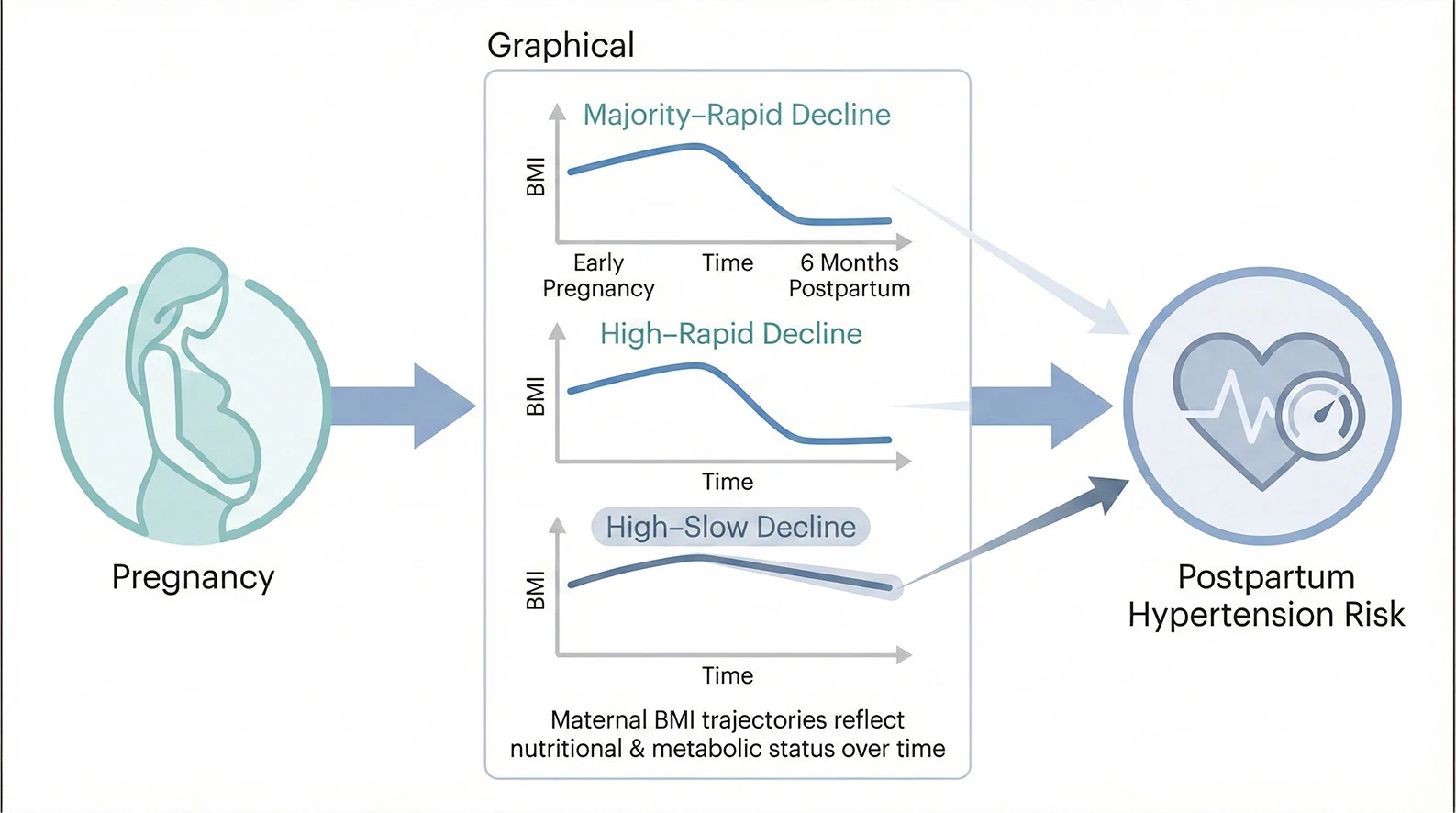
Maternal body mass index (BMI) reflects nutritional status, metabolic adaptation, and energy balance during pregnancy and the postpartum period. Longitudinal BMI trajectories may therefore represent distinct nutritional-metabolic phenotypes with implications for subsequent cardiometabolic risk. However, such trajectory patterns extending from pregnancy into the postpartum period remain insufficiently characterized, particularly in Asian populations. This study aimed to identify distinct BMI trajectories from early pregnancy to 6 months postpartum and evaluate their associations with hypertension risk. In this prospective birth cohort, 502 women were recruited at a medical center in Taiwan between August 2022 and August 2023, with scheduled follow-up from early pregnancy to 6 months postpartum. After exclusions, 444 singleton pregnancies were included in the pregnancy trajectory analysis. Among them, 348 women with available postpartum BMI measurements were included in the postpartum trajectory analysis. Latent class trajectory modeling characterized longitudinal BMI patterns, and multinomial logistic regression examined associations between trajectory groups and demographic, clinical, and biochemical factors, including hypertension status. Three prenatal BMI trajectories and 2 postpartum weight-loss patterns were identified and integrated into 3 composite nutritional-metabolic profiles: Majority-Rapid Decline (MR), High-Rapid Decline (HR), and High-Slow Decline (HS). Compared with MR, the HS group exhibited a markedly elevated risk of hypertension (adjusted odds ratio 7.63; 95% CI: 2.05-28.38). Women in the HS group had higher early-pregnancy BMI and demonstrated attenuated postpartum weight loss, suggesting a more adverse metabolic response to pregnancy. Maternal BMI trajectories represent meaningful nutritional phenotypes that extend across pregnancy and postpartum. A pattern combining high early BMI with limited postpartum weight loss was associated with increased hypertension risk, underscoring the importance of tailored nutritional and weight-management strategies to improve maternal cardiometabolic health.
The paper
China Medical University
Nutrition Research, 22 Sep 2026