Lipid accumulation index linked to cardiometabolic multimorbidity
Each one-unit increase in log10 lipid accumulation product was associated with a cardiometabolic multimorbidity hazard ratio of 3.03 (95% CI 2.33–3.93).
The Journal of the Egyptian Public Health Association
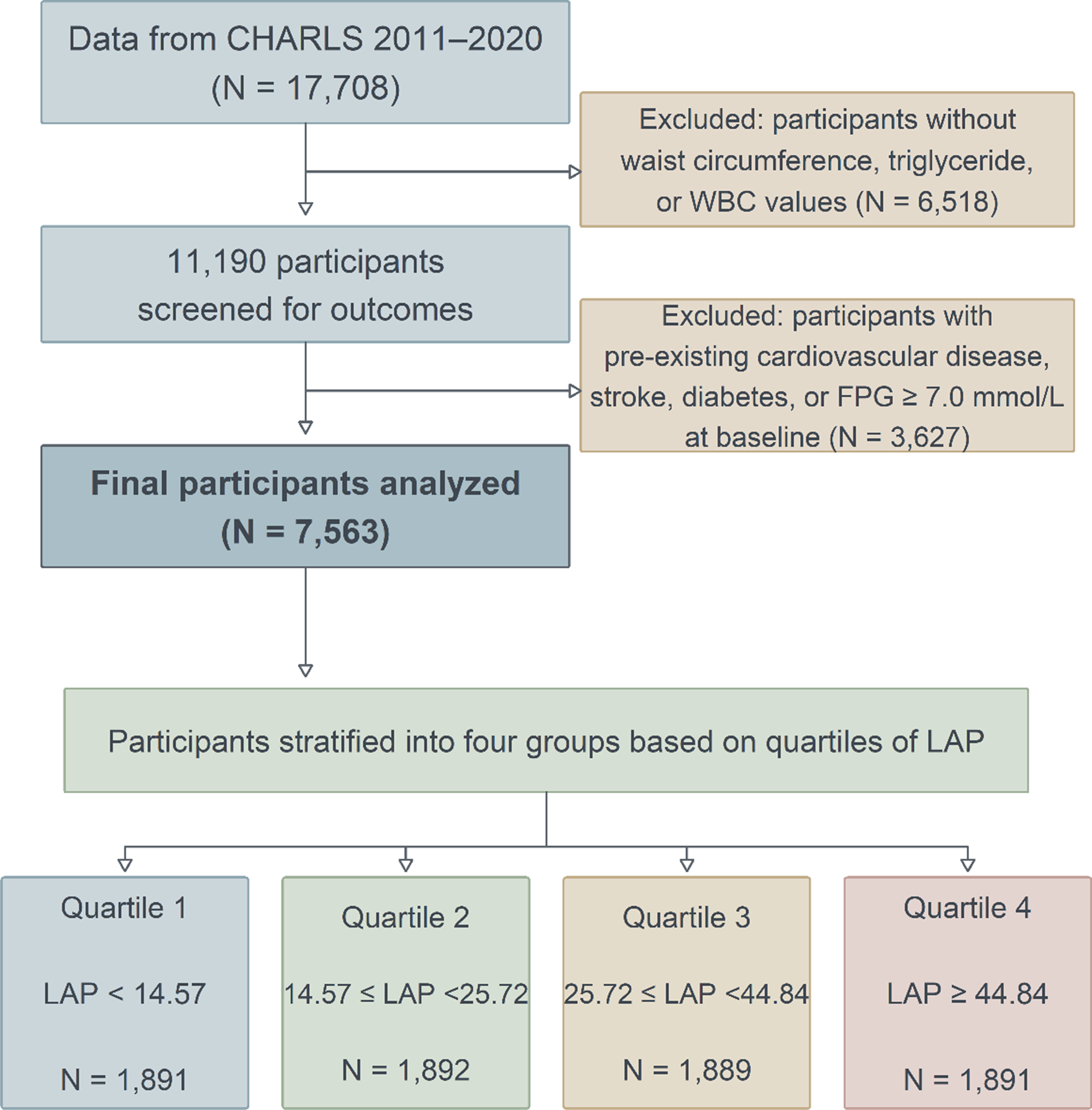
In 7,563 Chinese adults aged 45 or older, higher baseline lipid accumulation product (LAP) was associated with subsequent cardiometabolic multimorbidity. Researchers analysed five waves of the China Health and Retirement Longitudinal Study from 2011–2020. Participants were free of heart disease, stroke and diabetes at baseline. Multimorbidity meant having at least two of these conditions. Over a median follow-up of 9.0 years, 486 participants (6.43%) developed multimorbidity.
The association remained after multivariable adjustment and was stronger in participants without hypertension, although significant in both hypertension groups. In mediation analyses, white blood cell count and log-transformed C-reactive protein partially mediated the association, accounting for 5.1% and 8.4% of the total effect, respectively. Adding LAP to a base prediction model raised its C-index from 0.624 to 0.674.
Why it matters
LAP may help identify middle-aged and older adults at risk of developing multiple cardiometabolic conditions, particularly those without hypertension.
Caveats
This observational cohort cannot establish causality or confirm that inflammation causally mediates the association. The analysis included Chinese adults with complete LAP and white blood cell count data.
- Inflammation
- Lipid and ceramide metabolism
- Cardiometabolic multimorbidity
- Lipid Accumulation Product
- Heart disease
- Humans
The paper
First Affiliated Hospital of Jilin University · HongHui Hospital
The Journal of the Egyptian Public Health Association · 5 Oct 2026