Ultra-processed food intake not linked to colorectal cancer
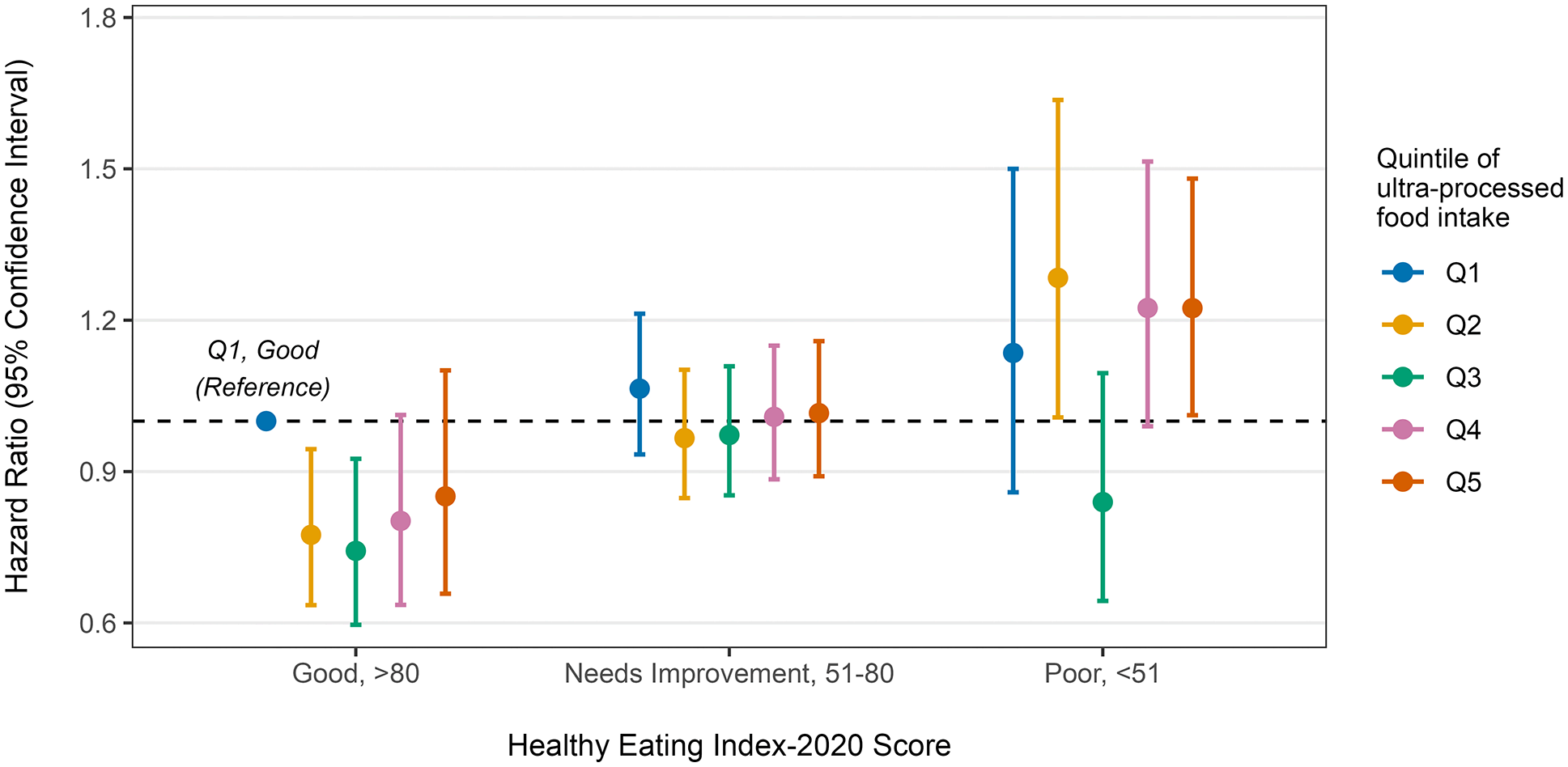
Among 461,682 older US adults, the highest versus lowest fifth of intake had a hazard ratio, a measure of relative cancer risk, of 0.97.
Dose-response
An observational cohort study followed 461,682 US adults aged 50–71 who were cancer-free when they enrolled in 1995–96. Participants reported their diets using a food-frequency questionnaire. Researchers tracked cancer diagnoses through 2018 and recorded 10,075 cases of colorectal cancer, which affects the colon or rectum.
After accounting for demographic, lifestyle and health factors, total ultra-processed food intake was not associated with colorectal cancer incidence. The range of likely values for the relative risk estimate included no difference. Within ultra-processed foods, higher intakes of whole grains, fibre, dairy and calcium were linked to lower cancer risk, while higher meat intake was linked to higher risk. The researchers suggested these opposing associations might partly explain the overall result.
Why it matters
For colorectal cancer prevention in older adults, the authors said their findings supported current guidance to consume whole grains, fibre, dairy and calcium and avoid processed meat.
Caveats
This observational study could not establish cause and effect; errors in self-reported diets and other differences between participants may have affected the results. The findings do not cover younger adults or people who already had cancer at enrolment.
From the paper
- Participants
Our analytic sample included 274,269 men and 187,413 women (N = 461,682).
- Follow-up
With a median follow-up of 18.8 years (IQR 9.7–22.5), 10,075 CRC cases were ascertained; 4,787 were proximal colon, 2,633 were distal colon, and 2,389 were rectal cancer.
- Result
… no associations were observed between UPF (g/1000 kcal/day) quintiles and relative CRC incidence overall (HRQ5vs.Q1 0.97; 95% CI [0.91,1.03]; Ptrend = 0.55 …
- Limitation
First, the FFQ and databases that our study relied on were designed to measure nutrient intake not to assess food processing level.
Quoted word for word from the full text on journals.plos.org.
The paper
National Cancer Institute
PLOS Medicine, 15 Oct 2026