Bowel cancer risk estimates suggest tailored screening ages
Modelled ages ranged from before 40 for men with high genetic risk scores and family history to after 60 for women with low scores and no family history.
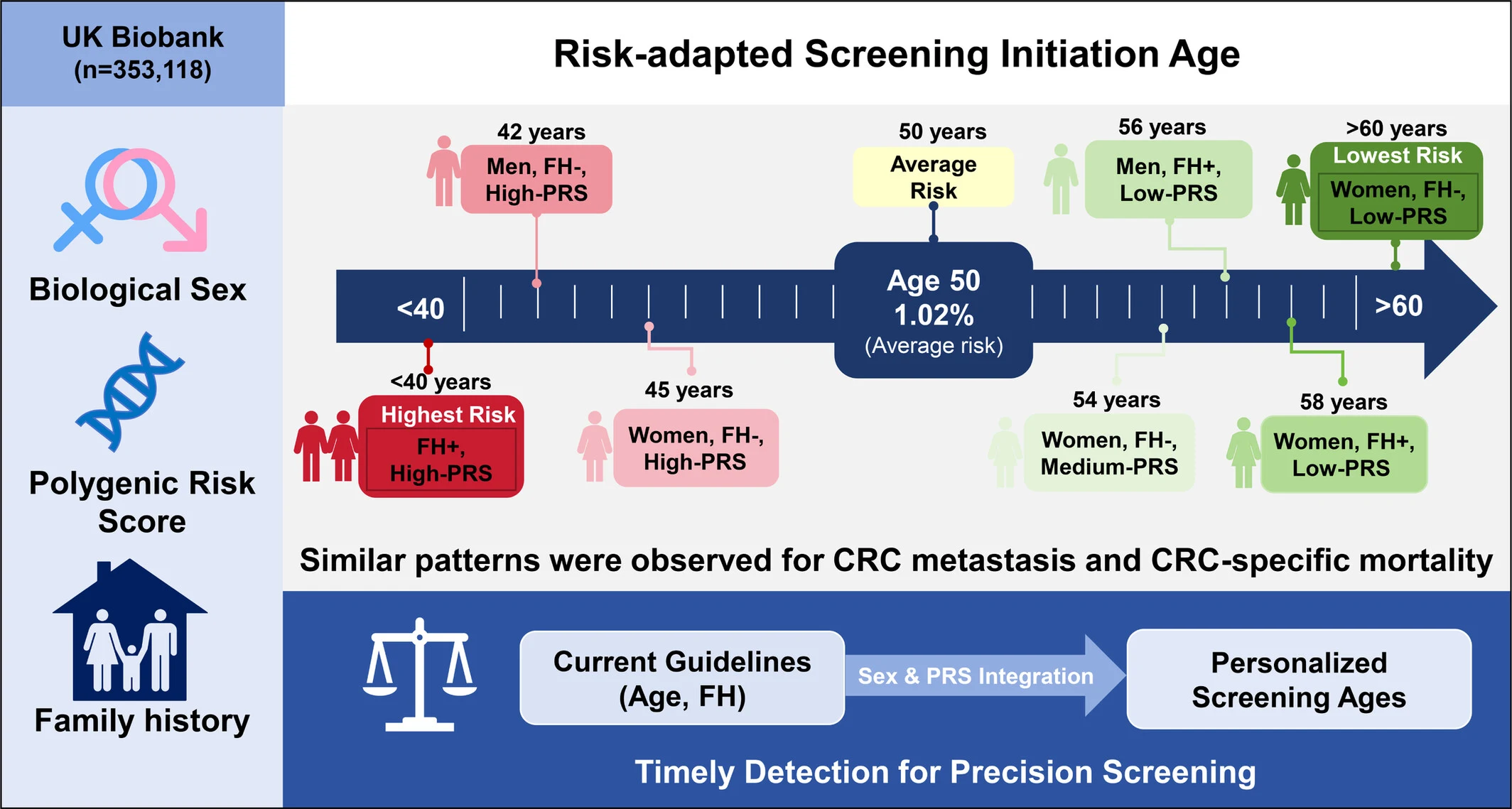
In an observational study of 353,118 average-risk UK Biobank participants, researchers estimated bowel cancer risk using sex, family history and a score estimating inherited risk. They used these estimates and the chance of developing cancer over 10 years to calculate starting ages for screening.
Men had higher bowel cancer risk than women, both with and without a family history. Higher genetic risk scores were associated with bowel cancer, cancer that had spread by diagnosis, and deaths from bowel cancer. The calculated ages ranged from before 40 for men with a family history and high genetic risk scores to after 60 for women without a family history and with low scores.
Why it matters
Age-based bowel cancer screening may not adequately account for differences in inherited risk and sex. The analysis supports considering these factors alongside family history when deciding when screening should begin.
Caveats
This observational study estimated screening ages; it did not test whether changing the starting age improved outcomes. The estimates came from average-risk UK Biobank participants.
- Modelling and theory
- Colorectal cancer
- Metastatic colorectal cancer
- Metastatic colorectal cancer at diagnosis
- Polygenic risk score
- Humans
The paper
Capital Medical University; University of Macau
International Journal of Cancer, 12 Oct 2026