Immune cell patterns differ across menopause in women
Women’s share of helper T cells peaked at ages 55–59 in a cross-sectional study of 4,209 healthy Chinese adults.
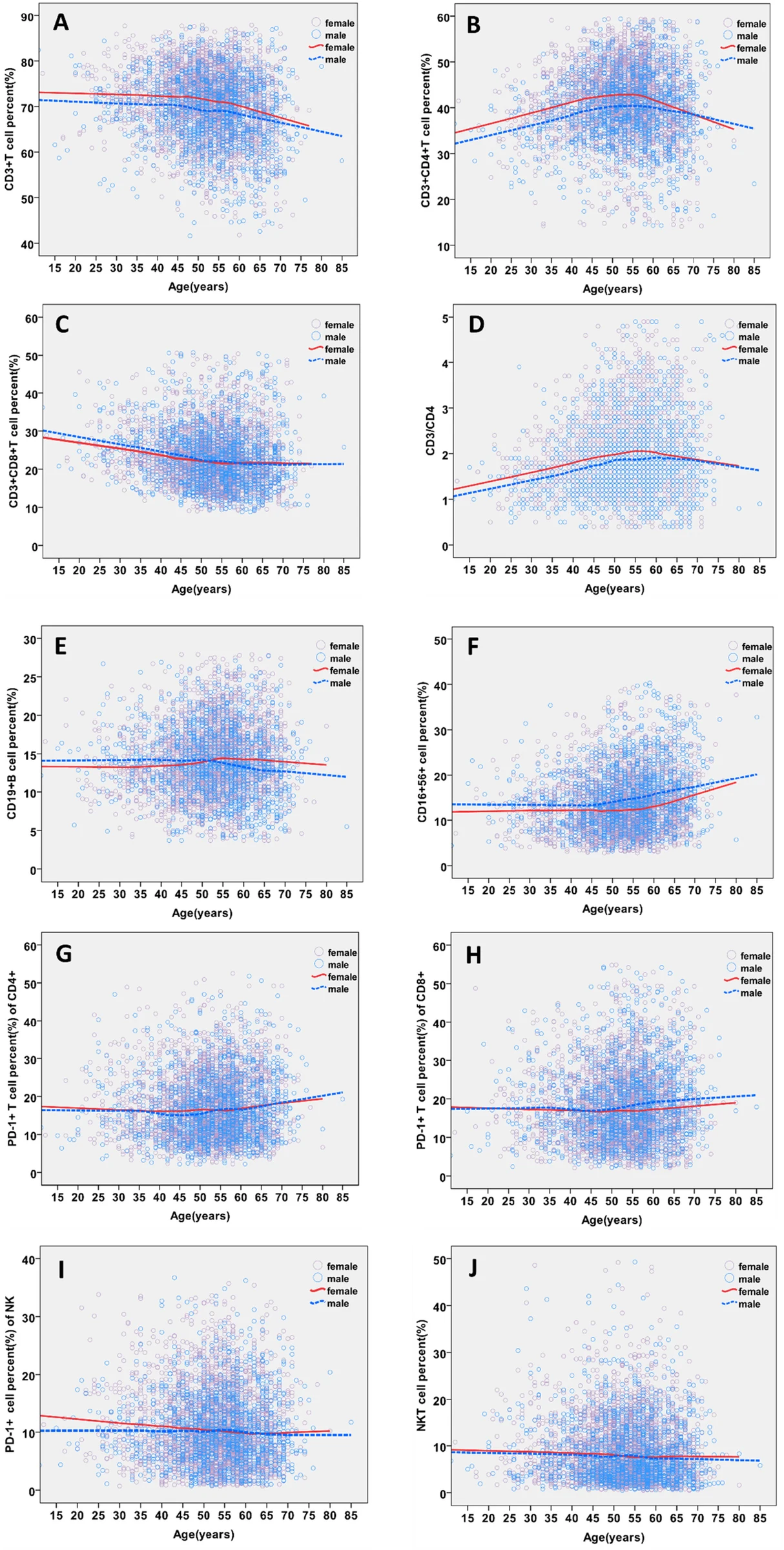
Researchers analysed immune cells in 4,209 healthy Chinese adults in a cross-sectional study. They used flow cytometry, a method for identifying and counting cells. They grouped women by age and reproductive stage, and matched women and men by age for sex comparisons.
In women, the share of CD4 T cells, which help coordinate immune responses, peaked at ages 55–59. The share of CD8 T cells, which can kill infected or abnormal cells, declined with age. The ratio of CD4 to CD8 T cells also peaked at 55–59. The share of B cells, which make antibodies, increased with age in women but decreased in men.
Why it matters
Immune aging differs between women and men. The authors suggested accounting for reproductive stage as well as sex in future research and clinical strategies.
Caveats
This cross-sectional study compared people at one point in time; it did not track individual women through menopause. The findings came from healthy Chinese adults.
- Immune response
- Menopause
- CD19+ B-cell percentage
- CD3+ T-cell abundance
- CD3+CD4+ T-cell percentage
- Humans
The paper
The First Affiliated Hospital of Guangzhou Medical University
Immunity, Inflammation and Disease, 1 Oct 2026