Lymph node shrinkage limited cancer recognition in male mice
Mouse experiments found earlier loss of immune cells not yet activated by their targets in males, alongside faster lymph node shrinkage.
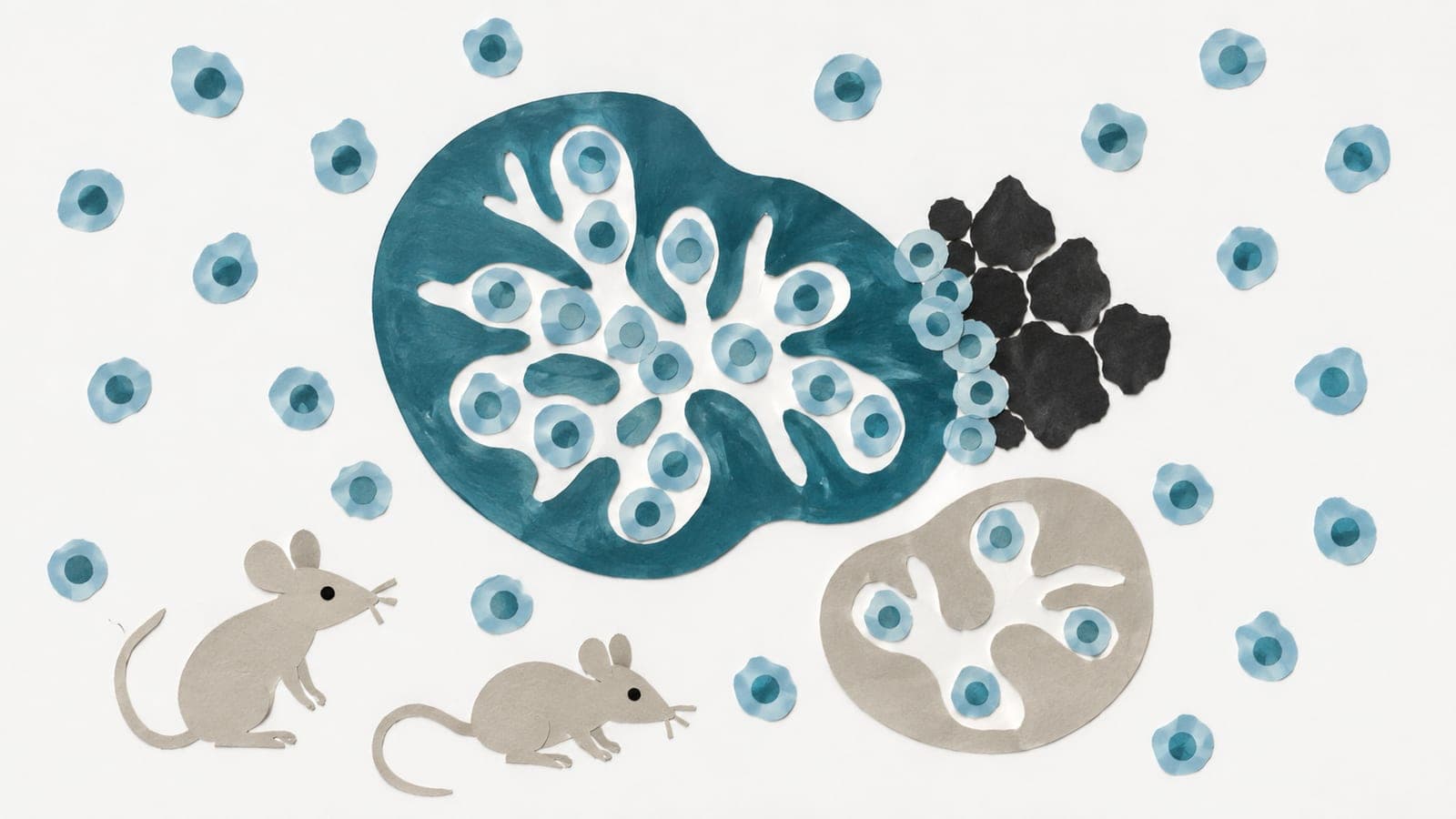
In experiments in mice, males lost naive CD8 T cells—immune cells not yet activated by their specific target—earlier than females. They shifted faster into virtual memory cells, which had memory-like features without encountering their target. Shrinkage of the thymus, the organ where T cells mature, also limited replacement of naive cells.
Together, these changes led to faster shrinkage of lymph nodes, small organs where immune cells gather, in males. Fewer distinct groups of naive T cells remained locally available, limiting recognition of cancer targets. Androgen ablation—removal or suppression of male sex hormones—regenerated the thymus in male mice. This replenished naive cells in lymph nodes, strengthened cancer-specific T cell responses and improved responses to immune checkpoint blockade, a cancer therapy that releases brakes on immune cells.
Why it matters
A broad supply of naive immune cells matters for protection against infection and cancer as the immune system ages. The authors suggested strategies to restore immune competence in middle-aged men.
Caveats
The intervention results came from mouse experiments, not a trial in men. The abstract mentioned supporting human data but did not describe their design or findings.
The paper
Massachusetts General Hospital
Nature Aging, 9 Oct 2026