Frequent pain moderates the association between brain-derived neurotrophic factor and plasma Alzheimer's disease biomarkers in early midlife
Abstract
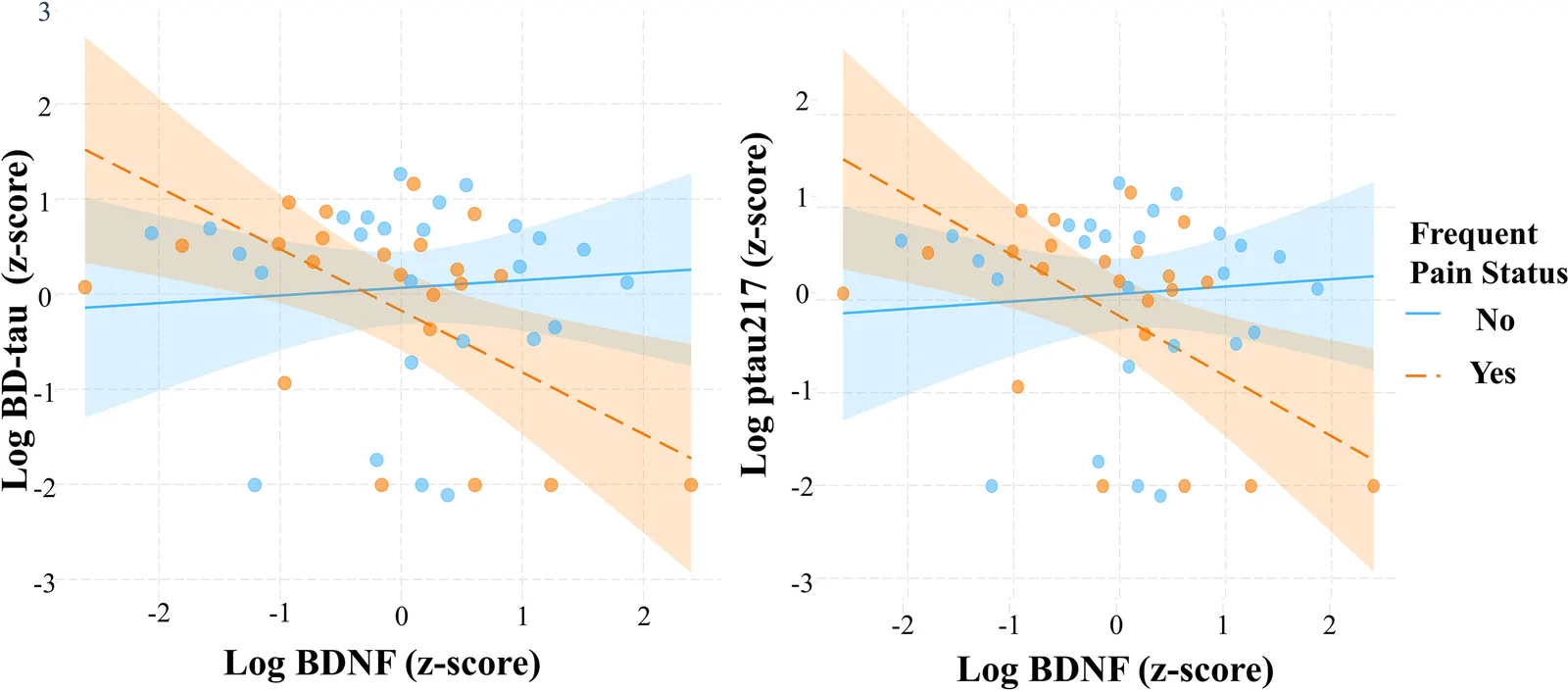
Brain-derived neurotrophic factor (BDNF) is a neurotrophin regulating neuroplasticity and is reduced in Alzheimer's disease (AD). Whether BDNF relates to AD pathophysiology in dementia-free individuals and under what conditions remain unknown. Pain, a prevalent midlife condition and AD risk factor, engages BDNF signaling. We examined whether frequent pain moderated associations between BDNF and AD plasma biomarkers (ptau217, BD-tau) in early midlife (Mean age=45.8). Among individuals with frequent pain, higher BDNF was associated with lower BD-tau and ptau217. No associations emerged among pain-free individuals. These findings suggest BDNF-indexed neuroplasticity may buffer against AD pathology and neurodegeneration in the context of pain.
The paper
University of California San Diego; Texas A&M University
Journal of Alzheimer's Disease Reports, 16 Jul 2026, Open access