Heart-brain co-ageing: phenotypic heterogeneity, molecular mechanisms and translational interventions
Abstract
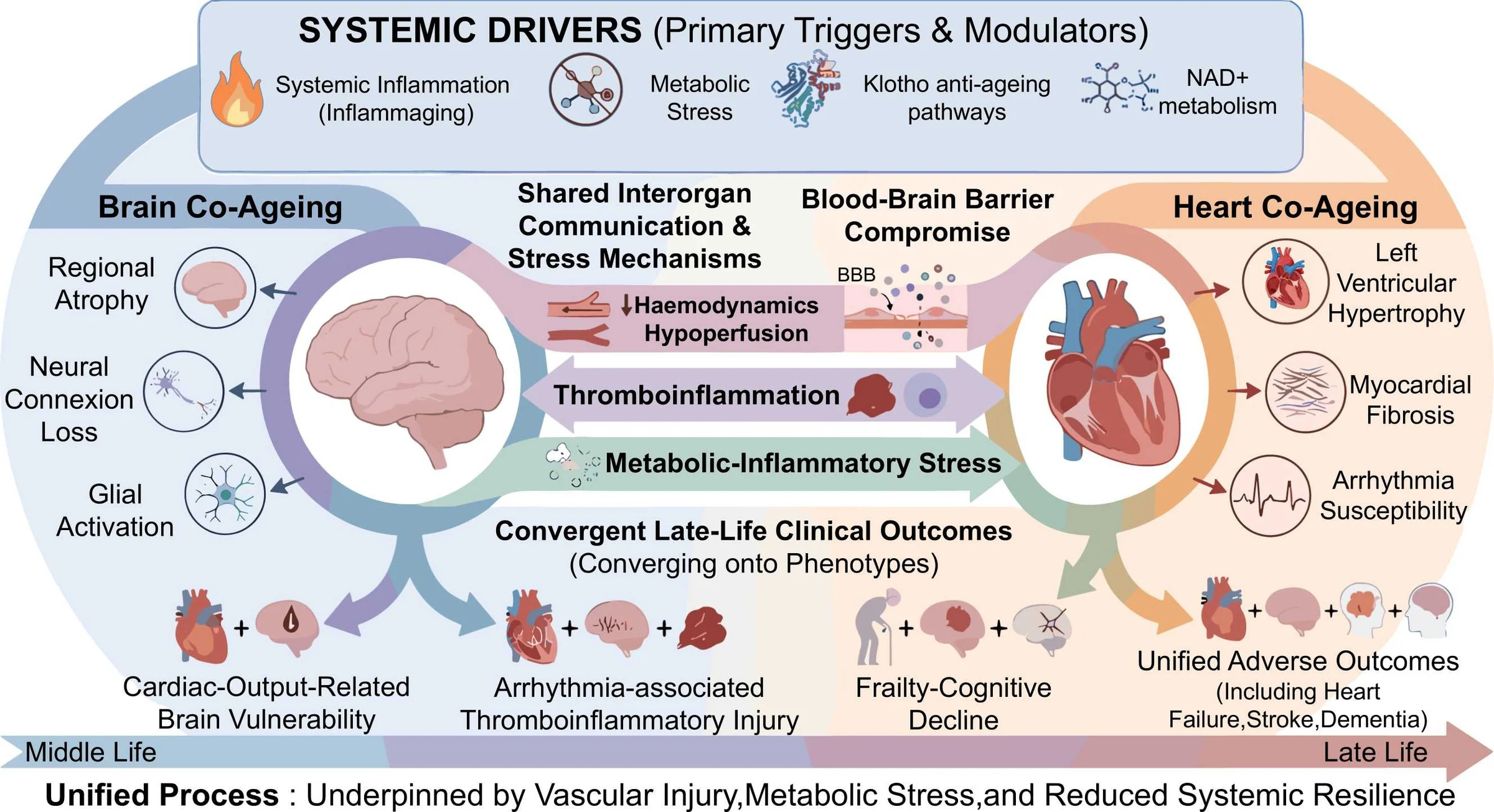
Population ageing has increased the burden of cardiovascular disease, cognitive decline and frailty in older adults. These conditions are often studied separately, yet increasing evidence suggests that the ageing heart, vasculature and brain are biologically interconnected. Using a hybrid design that combines a systematic literature search with narrative synthesis, this review summarizes current knowledge on heart-brain co-ageing, with emphasis on phenotypic heterogeneity, molecular mechanisms and translational interventions. Heart-brain co-ageing is characterized by partially coupled but non-synchronous ageing trajectories of cardiac, vascular and brain function. Major clinical phenotypes include vascular-dominant ageing, cardiac-output-related brain vulnerability, arrhythmia-associated thromboinflammatory injury, frailty-cognitive decline and metabolic-inflammatory co-ageing. These phenotypes differ in risk profiles, dominant mechanisms and potential biomarkers. Candidate shared mechanisms include cellular senescence, chronic low-grade inflammation, mitochondrial dysfunction, oxidative stress, endothelial impairment, blood-brain barrier disruption, epigenetic remodelling, telomere attrition, non-coding ribonucleic acid regulation, Klotho signalling, nicotinamide adenine dinucleotide metabolism and microbiome-derived metabolic signalling. Advances in multimodal imaging, circulating biomarkers, biological ageing clocks and multi-omics profiling provide new opportunities for risk stratification, although clinical standardization remains limited. Heart-brain co-ageing should not be regarded as the simple coexistence of cardiovascular and neurological diseases, but as a dynamic multi-organ ageing process shaped by shared biological drivers, interorgan interactions and organ-specific vulnerability, and we propose it as a testable conceptual framework with explicit operational criteria that distinguish coupled from parallel organ ageing. Future research should integrate longitudinal phenotyping, mechanism-based biomarkers and stratified clinical trials to develop precision interventions that preserve both cardiovascular and brain health in older adults.
The paper
Guangdong Provincial People's Hospital (Guangdong Academy of Medical Sciences)
Ageing Research Reviews, 14 Oct 2026