Blood methylation framework maps dependencies between aging hallmarks and organ aging
A new computational tool links cellular maintenance modules to tissue-specific age patterns across two human cohorts totaling over two thousand participants.

Qeios
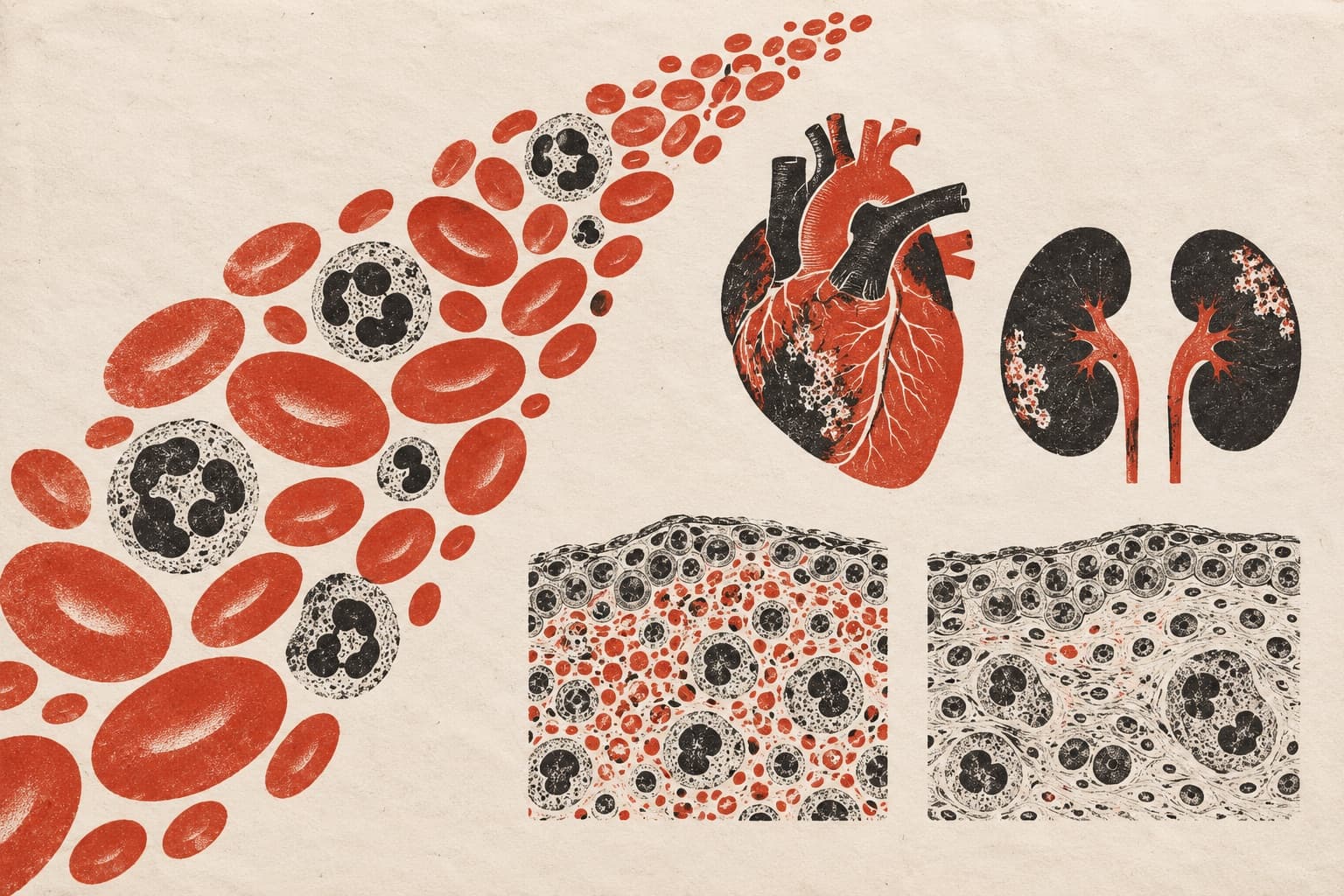
In a preprint, researchers analyzed blood DNA-methylation profiles from 656 discovery and 1,394 replication human participants to map connections between aging hallmarks and organ systems. They developed RootMap, which evaluates 332 gene modules using a module-level intrinsic capability score. The team identified 22 hallmark–organ dependency pairs, with 17 of 20 pairs maintaining their direction in the replication cohort. Stem-cell maintenance showed the broadest reach in the discovery cohort, connecting to 12 organ modules, whereas senescence regulation was broadest in the replication cohort. The dependency patterns proved asymmetric, with hallmark states more often marking differences in organ aging than vice versa. Furthermore, functional modules altered scores following interventions more frequently than hallmark modules.
Why it matters
Mapping conditional dependencies between hallmarks and organs provides a structured framework for prioritizing longevity interventions. It helps identify foundational maintenance processes that may influence multiple tissue-specific aging trajectories.
Caveats
As an observational preprint relying on blood-based scores, these dependencies reflect statistical patterns rather than proven biological control. The learned dependency edges and capability metrics still require experimental validation and calibration.
- Modelling and theory
- Stem cell maintenance
- Cellular senescence
- Module-level intrinsic capability
- mIC
- Humans
The paper
Ningbo University
Qeios · 30 Sep 2026 · Preprint, not peer-reviewed