2022 WHO estimates for overall and human papillomavirus test-based cervical cancer screening coverage worldwide: a review and synthetic analysis
Abstract
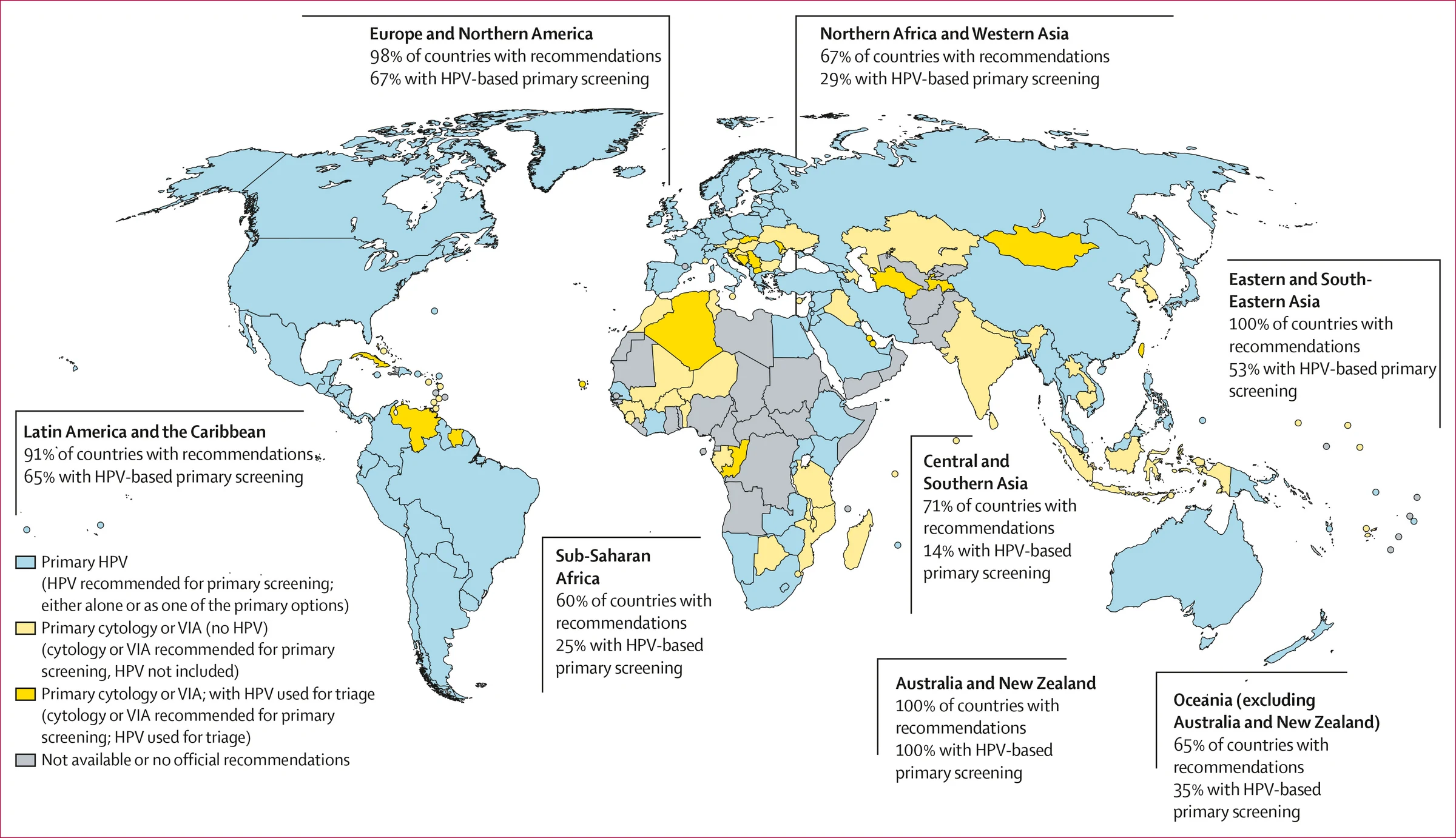
BACKGROUND: Regularly updated global estimates are needed to monitor progress in cervical cancer screening, a key pillar of WHO's strategy to eliminate cervical cancer. We aimed to update estimates of cervical cancer screening coverage in 194 WHO member states and eight associated countries and territories for 2022, including the first global assessment of human papillomavirus (HPV) test-based screening adoption and roll-out. METHODS: In this review and synthetic analysis, we used an established method to estimate standardised cervical cancer screening coverage in 2022. We used programme and population-based coverage data collected up to Jan 31, 2024, selecting the sources considered most representative of each country or territory's screening situation in 2022. Preliminary estimates were reviewed through a WHO country consultation (April-May, 2024; with additional responses received until July 2025). HPV testing coverage was estimated based on HPV test-based screening implementation levels, by country and year. Estimates were applied to 2022 populations and aggregated by region and country-income level. FINDINGS: Cervical cancer screening recommendations were identified in 161 (80%) of 202 countries, with 92 (57%) of 161 countries recommending HPV test-based screening. By 2022, global coverage for women aged 30-49 years using any screening method (ie, cytology, HPV test, visual inspection with acetic acid, or combinations of these methods) was estimated at 19% (95% CI 15-22) for the previous year, 31% (26-35) in the previous 3 years, and 35% (30-39) in the previous 5 years; and 38% (33-43) of women had ever been screened. Disparities across regions and country-income levels were substantial: 5-year coverage was 26% (21-31) in low-income and middle-income countries, compared with 74% (64-84) in high-income countries. 5-year HPV test-based screening coverage was 8% (6-9) globally, 32% (25-40) in high-income countries, and 2% (2-3) in low-income and middle-income countries. In the past 5 years, 62 countries achieved more than 70% coverage with any screening method, and five countries with HPV testing. INTERPRETATION: Despite policy updates, overall and HPV-specific screening coverage remains far below WHO's 70% target. Three in five women aged 30-49 years worldwide have never been screened, and 92% have never received HPV testing, with substantial disparities across regions and country-income levels. Scaling up high-performance HPV test-based screening, alongside HPV vaccination, will be essential to accelerate cervical cancer elimination. FUNDING: WHO, Instituto de Salud Carlos III, European Regional Development Fund, Secretariat for Universities and Research, Government of Catalonia, and Horizon 2020.
The paper
L'Hospitalet de Llobregat
The Lancet Global Health, 15 Oct 2026