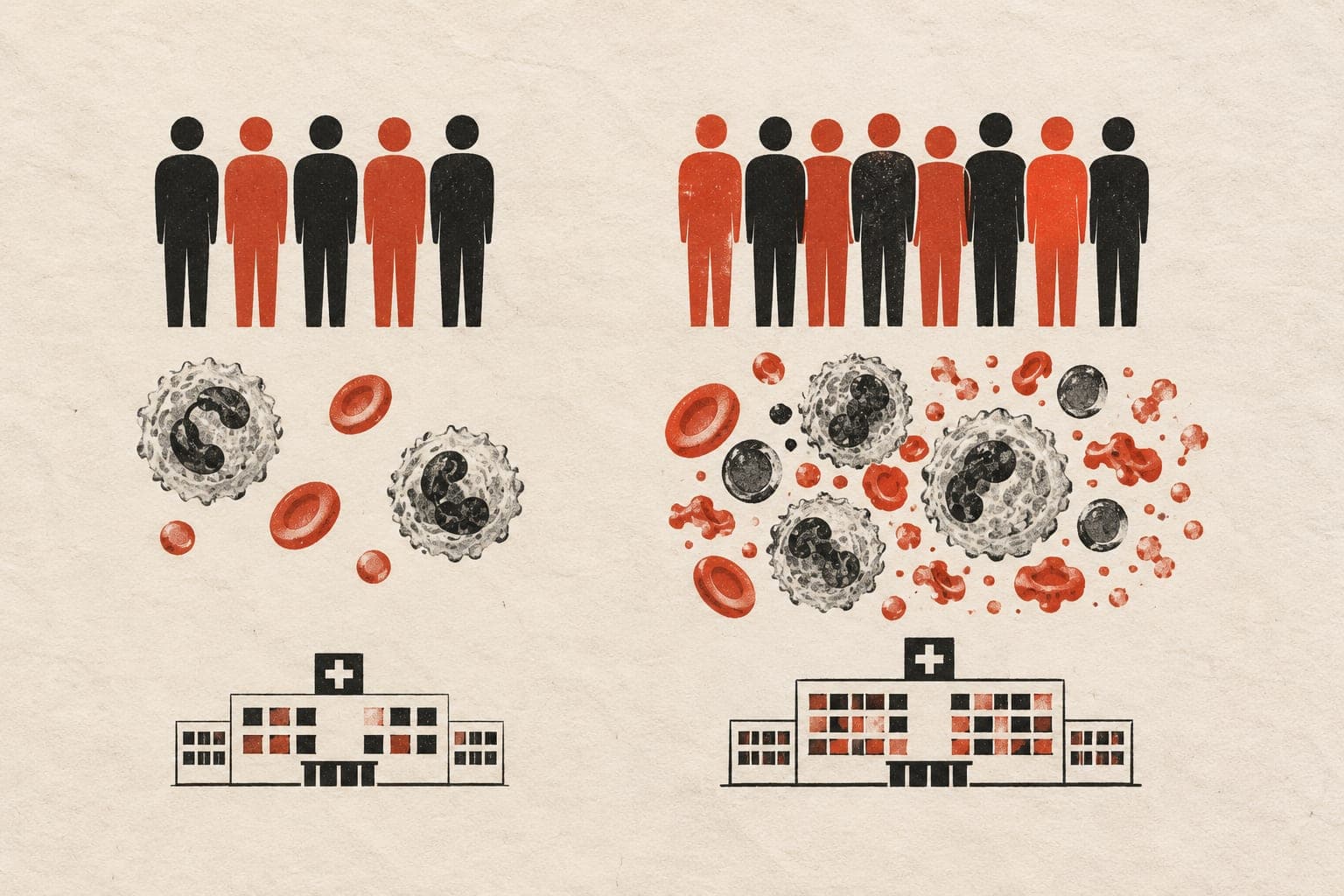
Frail myeloma patients report contrasting quality-of-life trends
A Danish observational study of 681 people found contrasting two-year trends among frail patients with newly diagnosed myeloma and those with returning or treatment-resistant disease.

Researchers followed 681 Danish patients with multiple myeloma, a blood cancer that was causing symptoms. Their disease was newly diagnosed, had returned or was resistant to treatment. The nationwide observational study assessed quality of life through questionnaires collected over two years between 2017 and 2021. Researchers classified patients as fit, intermediate-fit or frail using a myeloma frailty score.
At entry, frail patients reported clinically meaningful differences: poorer overall quality of life and physical functioning, and more fatigue, compared with fit patients. Frail patients with newly diagnosed disease reported better overall quality of life and less pain during follow-up. Their physical functioning and fatigue stayed unchanged. Frail patients with returning or treatment-resistant disease reported unchanged overall quality of life and fatigue, worsening physical functioning and more pain.
Why it matters
Frailty is a concern in aging, yet clinical trials often exclude frail patients with myeloma. The findings suggest that quality-of-life results from those trials cannot be applied directly to this group.
Caveats
This observational study used self-reported outcomes and could not show that frailty caused the differences. The findings concern Danish patients with symptomatic myeloma.
The paper
Frailty and quality of life in a real-world multiple myeloma population
Odense University Hospital
British Journal of Haematology, 15 Oct 2026