Blood vitamin D forms linked differently to death risk
The highest versus lowest quarter for one blood vitamin D₃ form had a death hazard ratio of 0.68, indicating a lower relative risk.
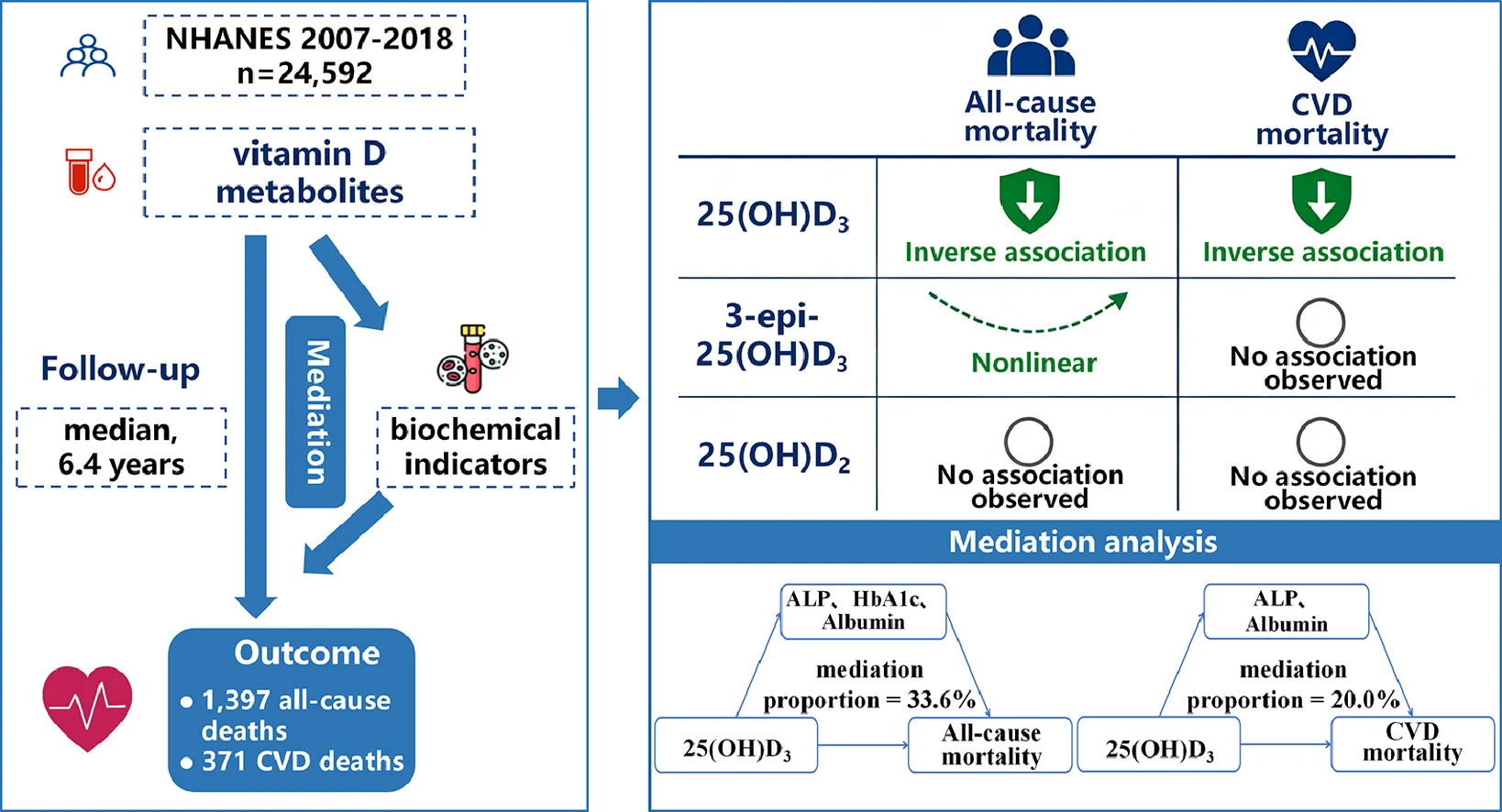
An observational study followed 24,592 participants in the US National Health and Nutrition Examination Survey 2007–2018 for a median of 6.4 years. Researchers measured vitamin D forms in blood at the start and used death records to track outcomes. They recorded 1,397 deaths, including 371 from cardiovascular disease, which affects the heart and blood vessels.
Higher levels of 25-hydroxyvitamin D₃, a processed form of vitamin D₃, were associated with lower risk of death overall and from cardiovascular disease. These links levelled off at higher concentrations. For cardiovascular death, the hazard ratio was 0.71 comparing the highest with lowest quarter of levels. The measured vitamin D₂ form showed no association. A second vitamin D₃ form had a link to lower overall death risk that weakened to no association around 10.7 nanomoles per litre.
Why it matters
For research on lifespan, the paper highlights the importance of distinguishing between vitamin D forms when assessing death risk.
Caveats
This observational study could not establish that vitamin D levels caused differences in death risk. It followed US survey participants rather than testing whether vitamin D supplements changed that risk.