Severe infections and poor cognition link bidirectionally
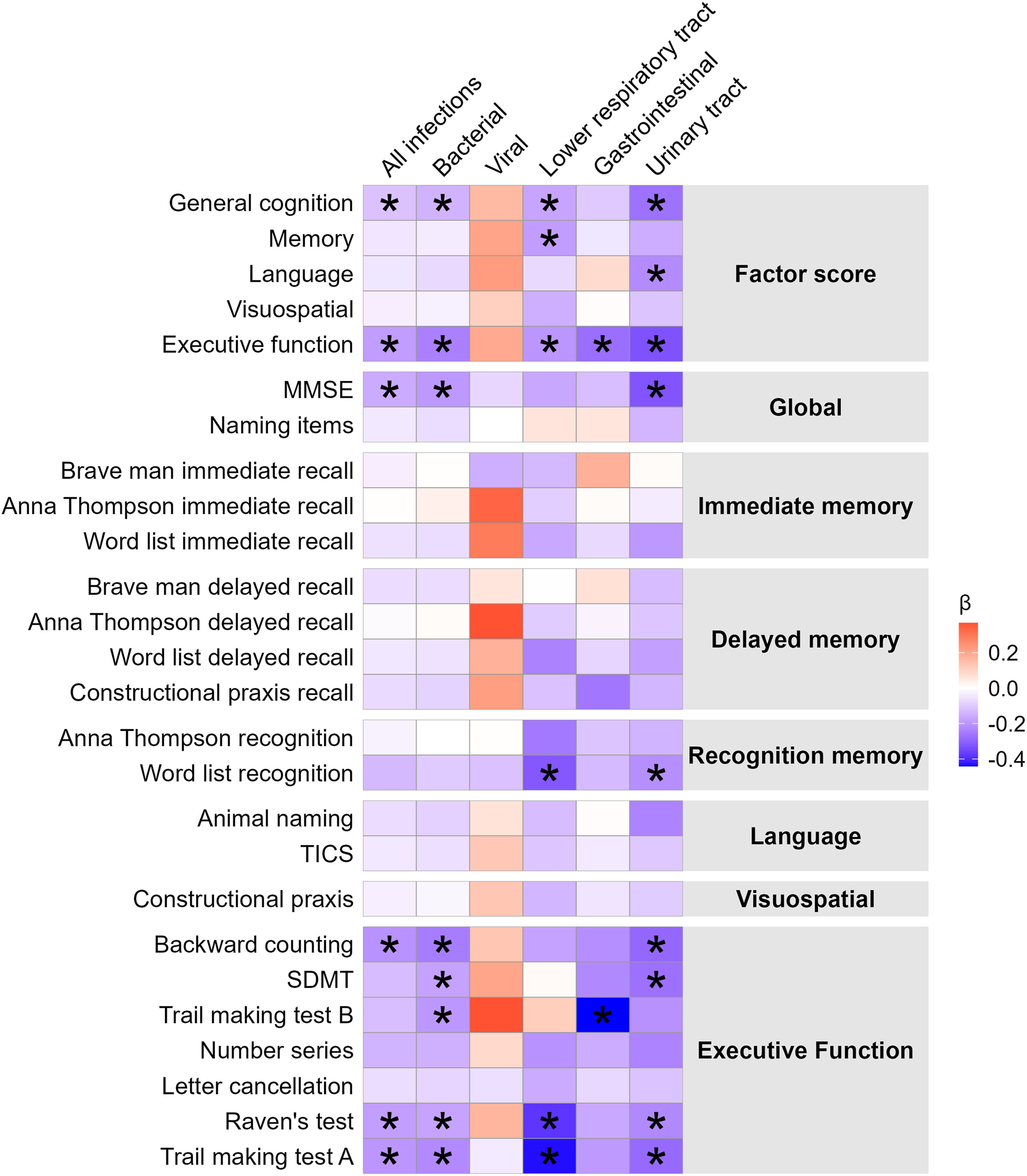
Prior hospital-treated infection linked to lower general cognition (β = -0.11 SD), while each 1-SD higher cognitive score predicted a 36% lower risk of future infection.
Brain, Behavior, & Immunity - Health
In a study of 1,159 adults aged 65 and older from the English Longitudinal Study of Ageing, researchers investigated how severe infections and domain-specific cognitive performance relate over time. Using inpatient records from 1997 to 2024, the team assessed cognitive performance across four domains. Prior hospitalization for an infection was associated with lower general cognition and poorer executive function. Lower respiratory tract infections also tracked with worse memory. Cognitive scores were lower among participants with more frequent or prolonged infection stays, sepsis, or cardiovascular disease. Over a mean 4.8-year follow-up, 271 participants were hospitalized for new infections. Each 1-SD higher general cognitive score was associated with a 36% lower risk of subsequent hospital-treated infection. Cognitive deficits across domains linked to bacterial infections, whereas lower executive function specifically predicted viral infections.
Why it matters
The findings show that severe systemic infections and cognitive vulnerability may form a reinforcing cycle in later life. This highlights the close link between immune challenges and late-life brain health.
Caveats
Because this study is observational, it cannot establish a causal relationship between infections and cognitive decline. The analysis also captured only hospital-treated cases, missing less severe infections managed in the community.
- Infection
- Lower respiratory tract infection
- Sepsis
- Cardiovascular disease
- Subsequent hospital-treated infection
- Humans
The paper
University College London
Brain, Behavior, & Immunity - Health · 20 Sep 2026