DNA marks may help track sun exposure in human skin
In a five-month intervention involving 42 people, sunscreen-treated arms showed smaller changes in DNA marks than the opposite arms under everyday conditions.
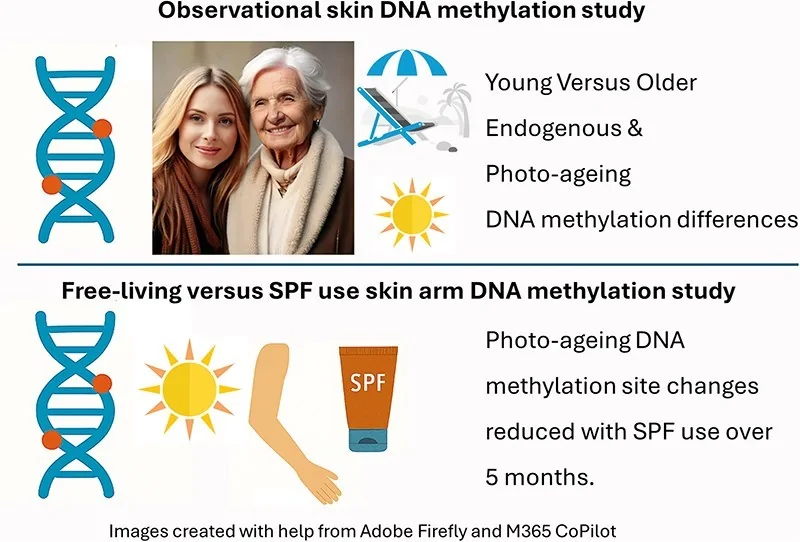
A cross-sectional observational study compared DNA methylation, chemical marks on DNA, in arm skin from 24 people aged 21–30 and 24 aged 45–65, of European or Chinese ancestry. Researchers found distinct patterns associated with aging in sun-protected skin and with sun exposure across both ancestry groups. They selected 156 DNA sites that distinguished sun-exposed from protected skin, even in younger participants.
In a subsequent five-month intervention, 42 participants regularly used sunscreen on one lower outer arm while the other followed normal everyday conditions. The arm under everyday conditions showed greater skin darkening and a larger average change in methylation across the selected sites.
Why it matters
Skin aging includes changes associated with age and with sunlight. Distinguishing these influences matters when assessing measures intended to limit sun-related aging.
Caveats
The intervention tracked DNA sites chosen because they differed between exposed and protected skin, rather than long-term skin aging. The cross-sectional comparisons cannot establish cause and effect.
- Sun exposure
- Sunscreen
- DNA methylation
- Epigenetic regulation of gene expression
- Mean methylation change at 156 photoageing-associated CpG sites
- Humans
The paper
Preusser Research Group; Guy's Hospital
Environmental Epigenetics, 6 Aug 2026, Open access