Selective autophagy pathways in ageing and neurodegeneration: Emerging roles for mitophagy and nucleophagy
Abstract
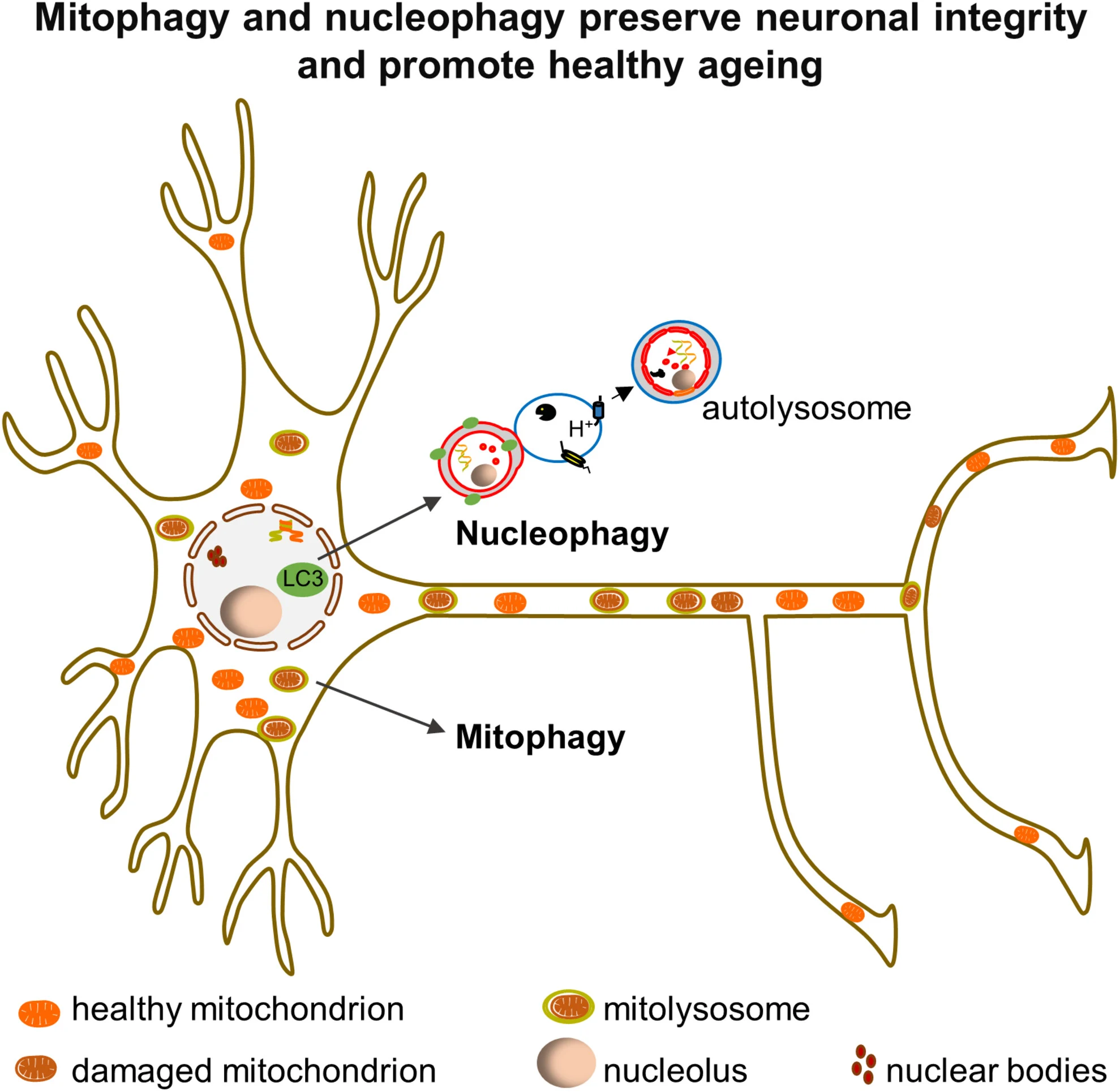
Ageing is characterized by the progressive accumulation of molecular and cellular damage, driven by both genetic and nongenetic factors and ultimately leading to functional decline and an increased risk of disease. Convergent evidence indicates that many of the mechanisms influencing ageing are intimately related to the ability of the organism to cope with intrinsic and extrinsic stress. Key determinants of this capacity are the molecular pathways that coordinate stress responses throughout life. Among these, general and cargo-specific autophagy have emerged as integral components of cellular and systemic adaptation to stress. Here, we focus on mitophagy, a selective form of autophagy targeting mitochondria, and nucleophagy, the selective autophagic recycling of nuclear material. These processes help safeguard the integrity of two organelles that are central to long-term cellular survival and function. Such homeostatic mechanisms are vital in long-lived neurons, where they mediate damage removal during ageing to protect against neurodegeneration. We further discuss how perturbations in these autophagic pathways may contribute to ageing and neurodegenerative disorders. Finally, we outline key open questions and future challenges in the field, including the largely unexplored possibility of functional connections between mitophagy and nucleophagy, which we identify as an important direction for future research.
The paper
FORTH Institute of Molecular Biology and Biotechnology; University of Crete
The FEBS Journal, 13 Oct 2026, Open access


