Supplemental Breast Cancer Screening with Contrast-enhanced Mammography or Abbreviated MRI for Extremely Dense Breasts: The DENSE-2 Trial
Abstract
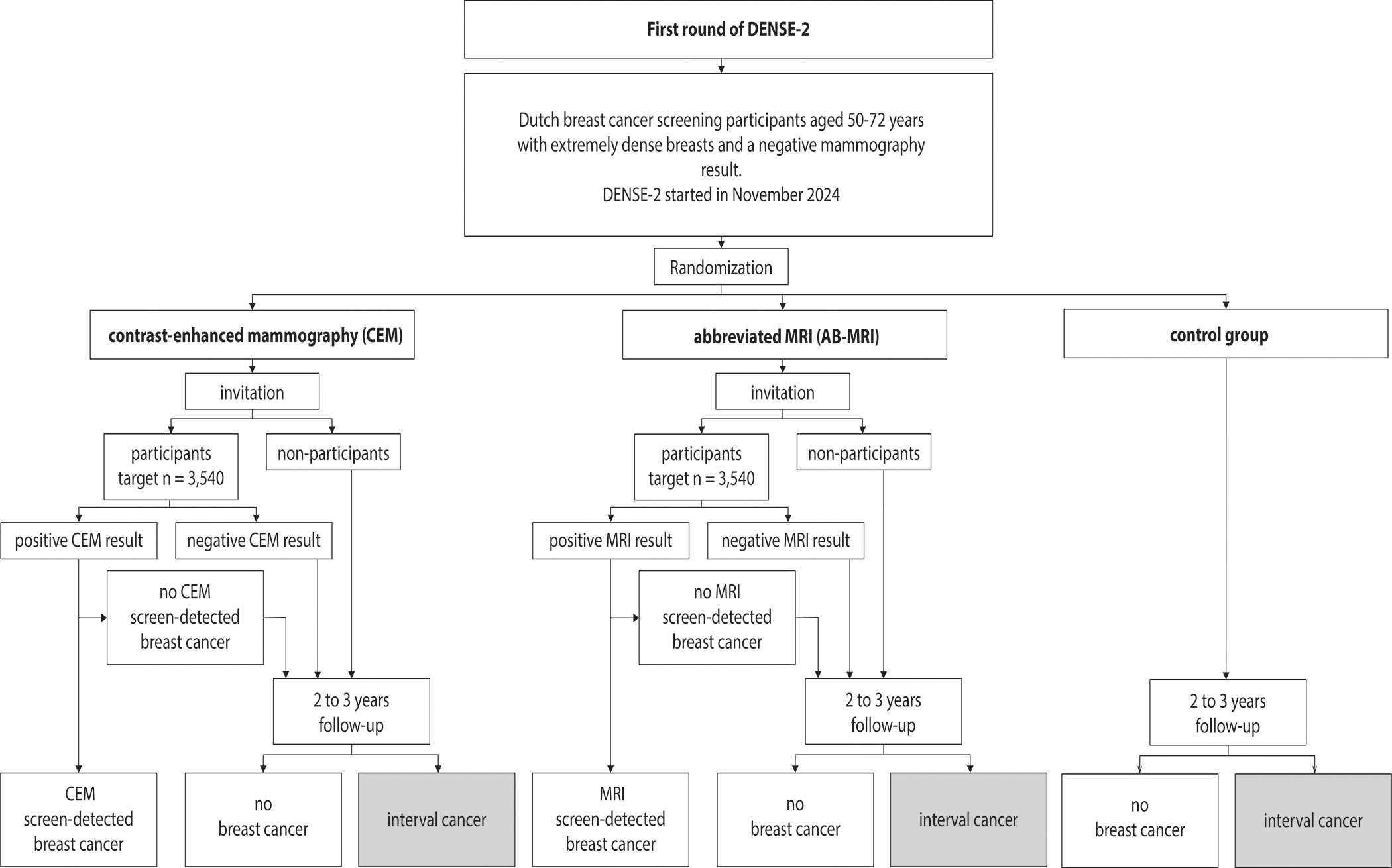
Women with extremely dense breasts have an increased risk of breast cancer but also a decreased sensitivity of mammography. The Dense Tissue and Early Breast Neoplasm Screening (DENSE) trial, initiated in 2011, showed that supplemental full-protocol MRI screening reduced the number of interval cancers in women with extremely dense breasts. Cost-effective screening scenarios have been described, but imaging costs and capacity remain barriers to implementing full-protocol MRI in population-based breast cancer screening programs. Therefore, the DENSE-2 trial was set up to investigate two alternate screening techniques, contrast-enhanced mammography (CEM) or abbreviated MRI (AB-MRI), that are expected to be cheaper and to make more efficient use of the available capacity while potentially achieving similar results to full-protocol MRI. DENSE-2 is a multicenter randomized controlled trial embedded in the Dutch screening program. It comprises two consecutive screening rounds in which women receive the same breast imaging technique both times. The trial investigates the value of supplemental screening with CEM or AB-MRI in women with extremely dense breasts with a negative screening mammogram. The primary aim is to determine whether these methods will lead to a reduction of interval cancers compared with mammography. The DENSE-2 trial results will provide insights into the performance, feasibility, and acceptability of both screening modalities, enable long-term outcome modeling, and support decision-making on the most appropriate screening strategy for women with extremely dense breasts. ClinicalTrials.gov: NCT06636370 © RSNA, 2026 Supplemental material is available for this article. See also the editorial by Bahl in this issue.