A review on recent advances in regenerative medicine for renal diseases: Approaches and challenges
Abstract
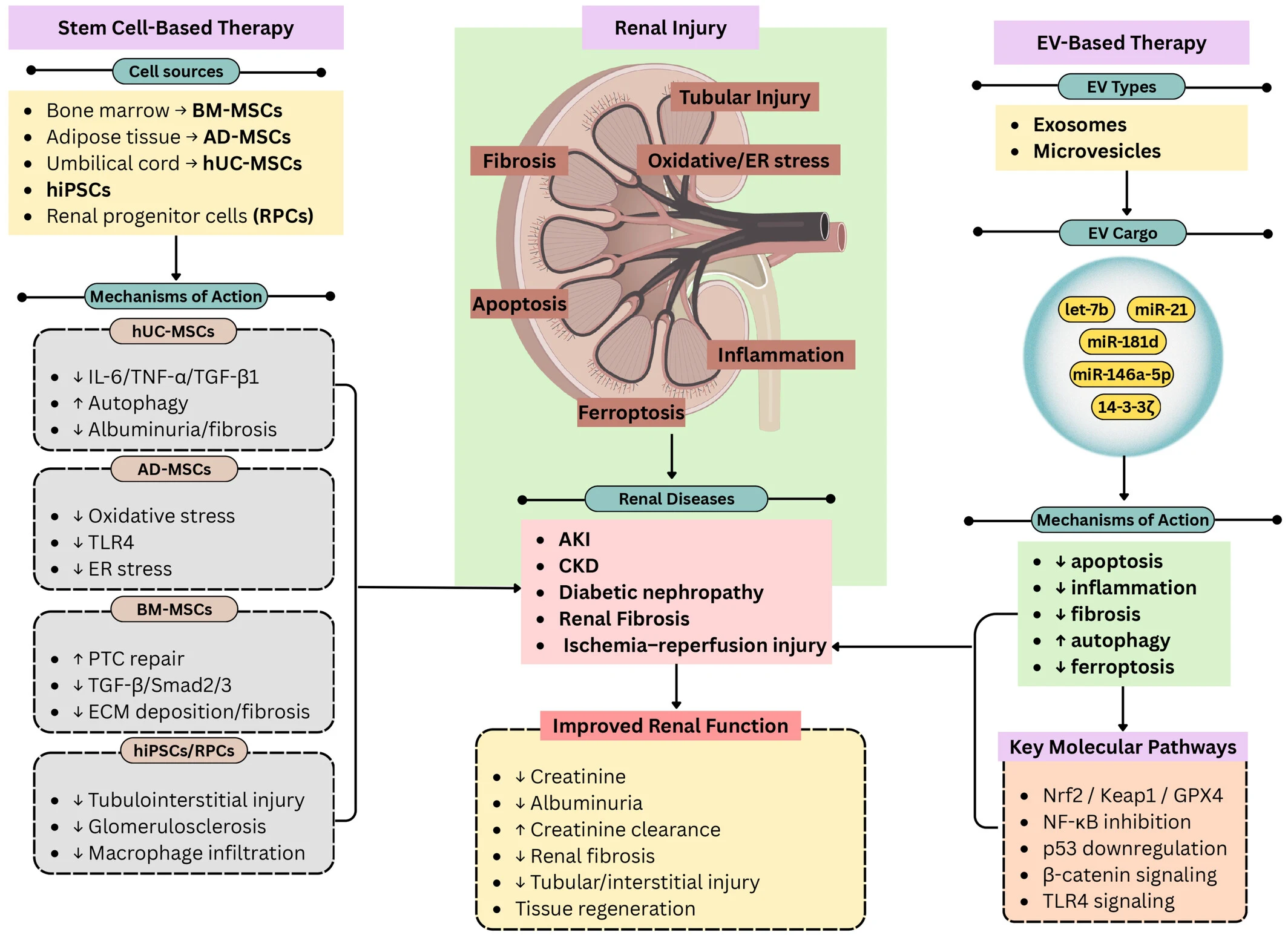
Renal diseases such as acute and chronic kidney disease cause loss of nephrons and kidney function, often leading to renal failure. Current treatments like dialysis and transplantation only manage symptoms and extend survival for a few years. Regenerative medicine offers promising approaches for repairing and regenerating renal tissue by targeting underlying disease mechanisms. For this narrative review, relevant original research articles and review articles were retrieved from online databases such as PubMed, Google Scholar, and ScienceDirect by using relevant keywords such as "renal regeneration," "kidney organoids," "stem cell therapy," "gene therapy," "extracellular vesicles," and "tissue engineering." The literature search focused primarily on articles published between 2020 and 2026 to discuss the recent advancements in regenerative approaches for renal disease. Recent advances in regenerative medicine have identified therapies such as stem cells, gene therapy, CRISPR-Cas9, extracellular vesicles, and kidney organoids that promote nephron regeneration, improve vascularization, regulate inflammation, and restore kidney function. This review highlights the cellular and molecular mechanisms underlying renal damage, recent advances in regenerative medicine, and the key challenges and future directions for the safe and effective use of regenerative medicine in treating renal diseases.
- CRISPR-cas9 gene editing
- Extracellular vesicles
- Angiogenesis
- Inflammation
- Renal disease
- Acute kidney disease
The paper
Chettinad Hospital and Research Institute (CHRI)
Developmental Dynamics, 13 Oct 2026