Semaglutide may protect kidneys by reducing vascular resistance
In a 52-week trial of 106 people with type 2 diabetes and chronic kidney disease, semaglutide reduced renal vascular resistance without altering coprimary imaging endpoints.
Nature Medicine
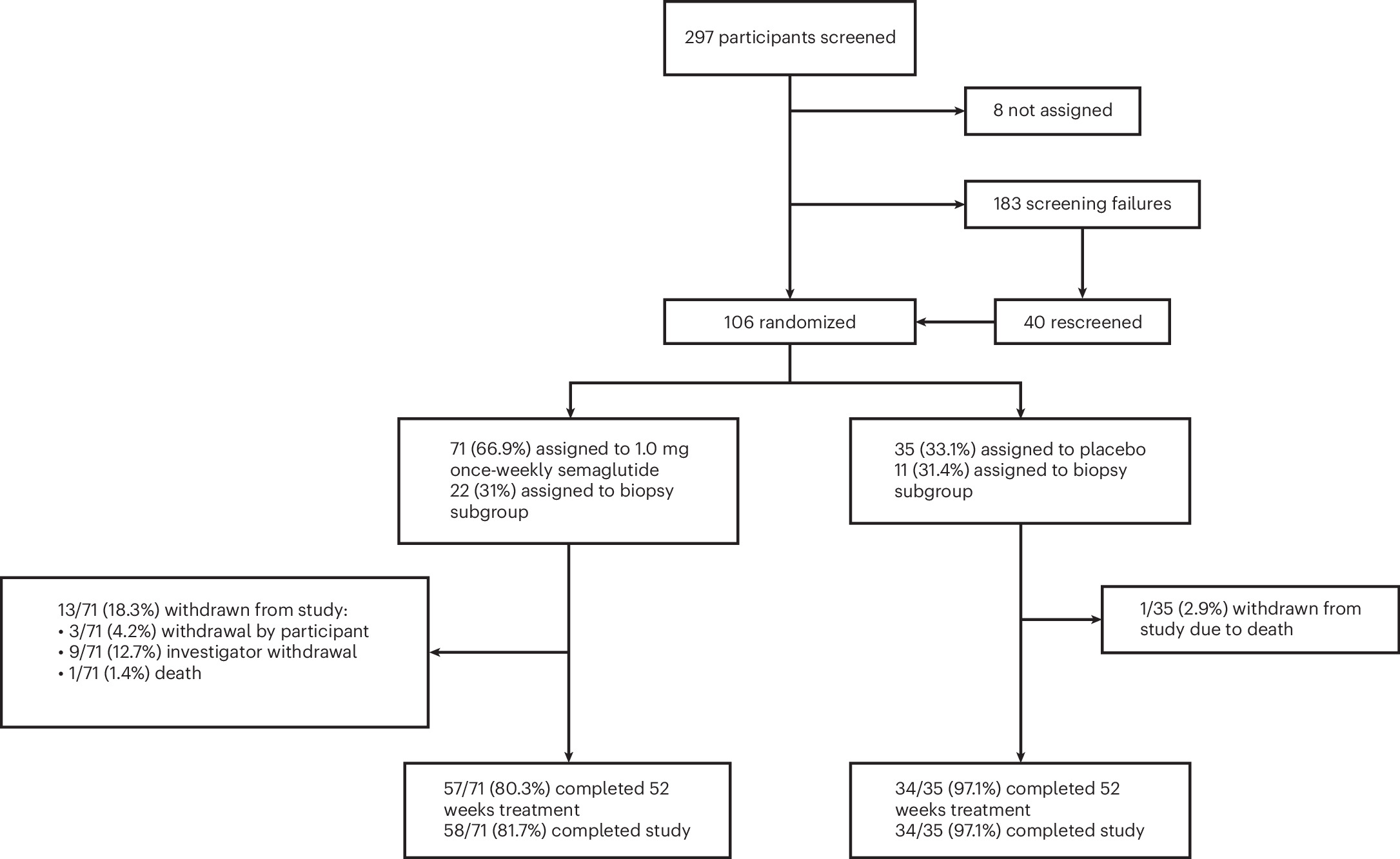
In 106 people with type 2 diabetes and chronic kidney disease, researchers evaluated subcutaneous semaglutide (1 mg once weekly) versus placebo over 52 weeks. The trial assessed kidney-specific mechanisms using multiparametric magnetic resonance imaging, alongside kidney biopsies with paired single-nucleus and spatial transcriptomics. Semaglutide did not significantly alter coprimary MRI outcomes, which measured kidney oxygenation, global perfusion, and tissue inflammation. However, secondary measures revealed that semaglutide was associated with a significantly reduced renal artery resistive index and stabilization of the apparent diffusion coefficient, indicating prevention of fibrosis progression. Secondary transcriptomic analyses also revealed pronounced effects on glomerular endothelial cells, alongside reduced numbers of nearby immune cells.
Why it matters
Declining microvascular health and progressive tissue fibrosis are key hallmarks of renal aging and diabetic nephropathy. These findings suggest that GLP-1 receptor agonists may help maintain kidney function by supporting endothelial cell health and limiting fibrosis.
Caveats
The trial did not detect significant changes in its coprimary magnetic resonance imaging endpoints, so reported vascular and tissue effects rely on secondary outcomes. In addition, paired biopsy and transcriptomic analyses were conducted on only a small subset of participants.
The paper
Effects of semaglutide on kidney disease in type 2 diabetes: a randomized placebo-controlled trial
Show 11 more authors
Menno T Pruijm, Phillip J. McCown, Jeffrey B. Hodgin, David Z.I. Cherney, Nicolas Belmar, Milenta Mariam Chacko, Vivek Das, Thomas P. Gunnarsson, Thomas Idorn, Philip Andreas Schytz, Amaya Zaratiegui,Providence Regional Medical Center Everett · University of Michigan
Nature Medicine · 1 Oct 2026