Biological aging differed by race within similar work histories
In an observational study of 1,861 adults, employment patterns from ages 18 to 50 were largely unrelated to DNA-based measures of accelerated aging.
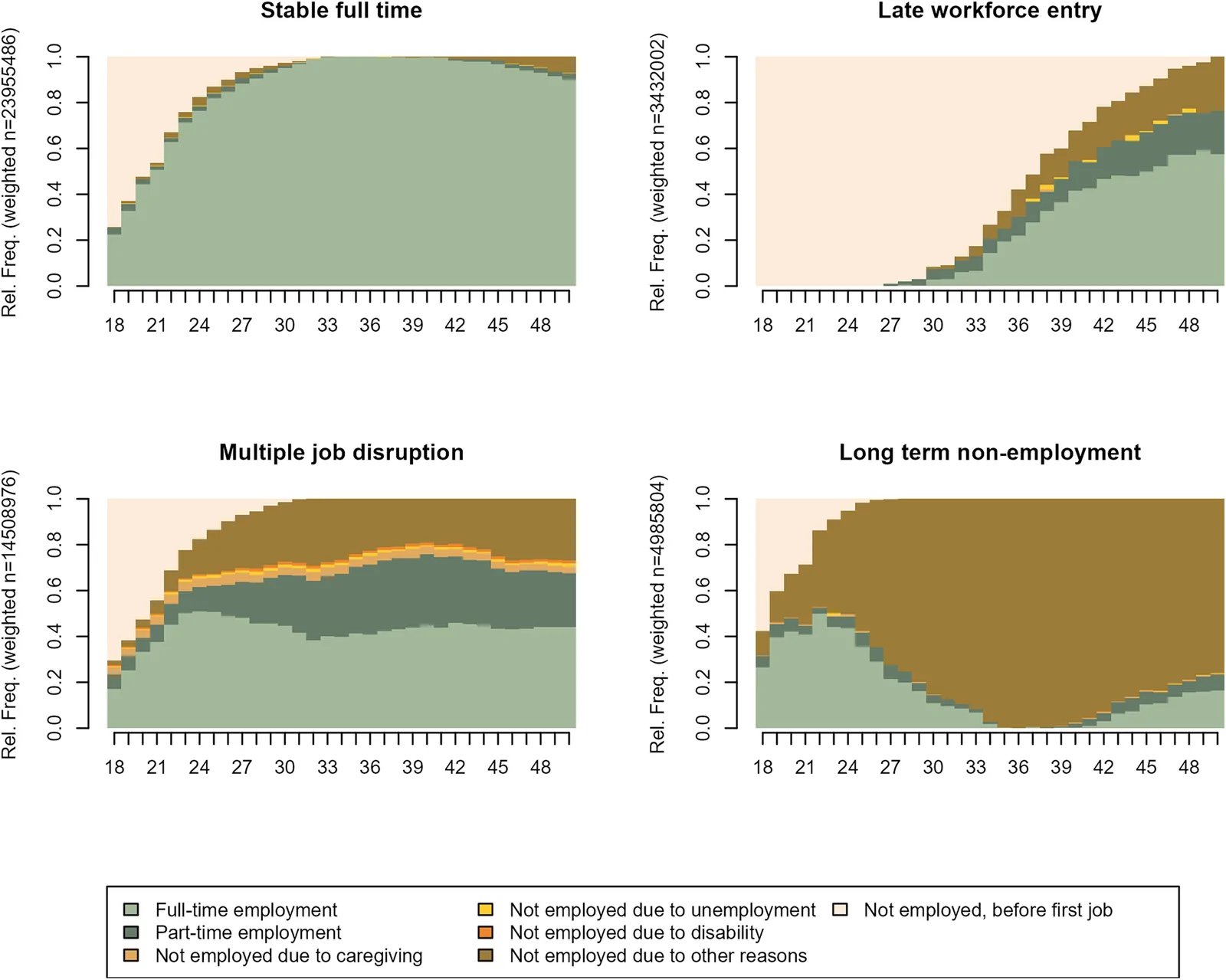
Researchers used data from 1,861 adults in the 2016 Health and Retirement Study for an observational study of employment histories and biological aging. They grouped work histories from ages 18 to 50 into four patterns and analysed five epigenetic clocks, which estimate biological aging from chemical marks on DNA. Black and Hispanic adults had more than twice the odds of entering the workforce late compared with White adults.
Employment patterns were largely unrelated to accelerated aging. The researchers found no evidence that employment patterns changed racial and ethnic differences in these measures. Within stable full-time work, Black adults showed faster aging than White adults on one clock. Within long-term non-employment, they did so on two clocks. Another clock showed the opposite racial pattern.
Why it matters
Long-term work histories offer one way to examine how disadvantage may affect biological aging. The findings suggest that unequal conditions and experiences within similar work patterns may also matter.
Caveats
The observational design cannot establish cause and effect. The clocks showed different racial patterns, so the results do not indicate uniformly faster aging in one group.
- Employment trajectories
- Epigenetic regulation of gene expression
- DunedinPACE
- Epigenetic age
- GrimAge
- Humans
The paper
Wayne State University
SSM - Population Health, 23 Sep 2026