Diet benefits for epigenetic aging may reflect familial factors
In Danish twins, adherence linked cross-sectionally to slower DunedinPACE, but within-pair and longitudinal analyses attenuated the associations over 12 years.
GeroScience
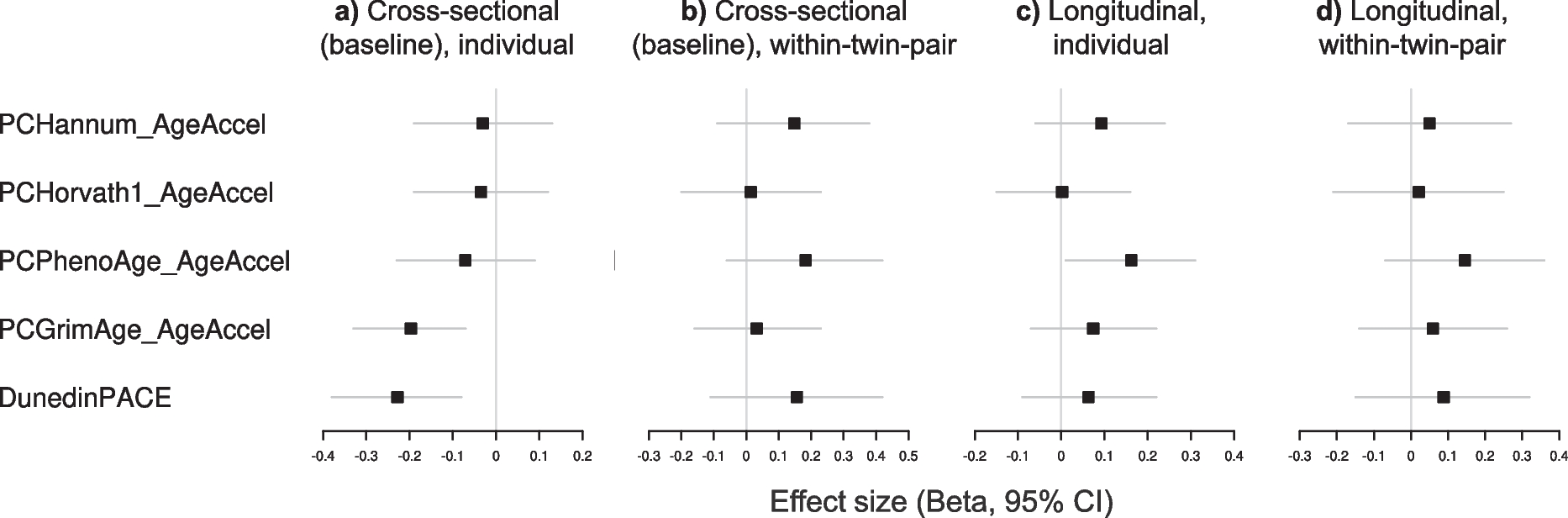
In adult Danish monozygotic twins from the GEMINAKAR cohort, researchers evaluated whether adherence to dietary guidelines is linked to epigenetic aging independent of familial factors. Participants aged 18 to 67 at baseline were assessed at enrollment and after 12 years of follow-up using food frequency questionnaires and the Danish Dietary Index. Epigenetic age was estimated using PCHannum, PCHorvath1, PCPhenoAge, PCGrimAge, and DunedinPACE. At the individual level, cross-sectional analyses showed higher adherence associated with lower epigenetic age, including 0.55 to 0.67 years lower PCGrimAge and a 3.1% lower pace of aging per 1-unit score increase. However, these associations were attenuated in within-twin-pair and longitudinal analyses. The authors conclude that apparent epigenetic benefits of dietary adherence may partly reflect shared environmental and genetic factors rather than strong independent dietary effects.
Why it matters
The findings suggest that observed associations between healthy diets and slower biological aging may be confounded by familial background. This highlights the importance of accounting for genetics and shared early-life environments when evaluating lifestyle interventions against epigenetic clocks.
Caveats
Dietary intake was measured via self-reported food frequency questionnaires, and the observational design cannot establish causality. The cohort was also restricted to Danish monozygotic twins, which may limit generalizability to other populations.
The paper
Dietary pattern and epigenetic aging: a longitudinal twin study
University of Southern Denmark
GeroScience · 26 Sep 2026