Obesity with low muscle strength linked to poorer daily function
An observational study of 453 older hospital patients linked obesity combined with low muscle mass and strength to poorer daily functioning at discharge.
Researchers studied 453 older adults admitted to a geriatric unit in an observational study. Their average age was 84.9 years. The team assessed handgrip strength and body composition. They defined sarcopenic obesity as low grip strength, low muscle mass relative to body weight and a high proportion of body fat. Thirty-six patients, or 7.9%, met these criteria.
The researchers tracked ability to carry out daily activities from admission to discharge. After accounting for other factors, only patients with sarcopenic obesity had a higher risk of impaired daily functioning at discharge than those with neither condition. Obesity alone and low muscle mass and strength alone did not show this association. Analyses of changes during the hospital stay also linked sarcopenic obesity to less recovery in daily functioning.
Why it matters
Daily functioning concerns how older adults manage everyday life. The authors emphasised assessing each older hospital patient’s combination of body fat, muscle mass and strength when considering functional needs.
Caveats
This observational study cannot establish that sarcopenic obesity caused poorer functioning. Only 36 patients had the combined condition, and all participants were admitted to a geriatric unit.
From the paper
- Participants
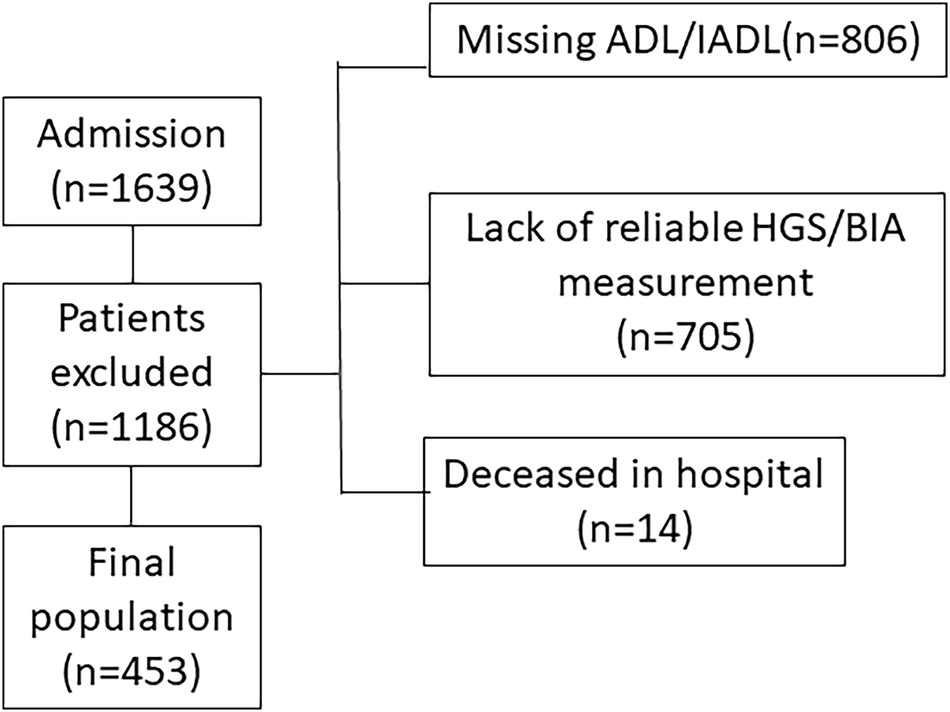
Of a total of 1639 patients admitted to the Unit in the timeframe from January 2023 to May 2025, 453 patients were included in the study, while 1186 did not meet inclusion criteria, mainly because of lack of data, and were excluded from the study.
- Limitation
First, because of a low prevalence of older adults with normal HGS and SMM (n = 21, 4%), stratification of presarcopenic from not presarcopenic patients was not possible.
Quoted word for word from the full text on nature.com.
The paper
University of Trieste
European Journal of Clinical Nutrition, 10 Oct 2026