Equation missed most low-muscle-mass cases in Chinese adults
Applying scan-based thresholds to an estimated muscle-mass index missed 97 of 123 cases identified by scans in 501 Chinese adults.
Frontiers in Nutrition
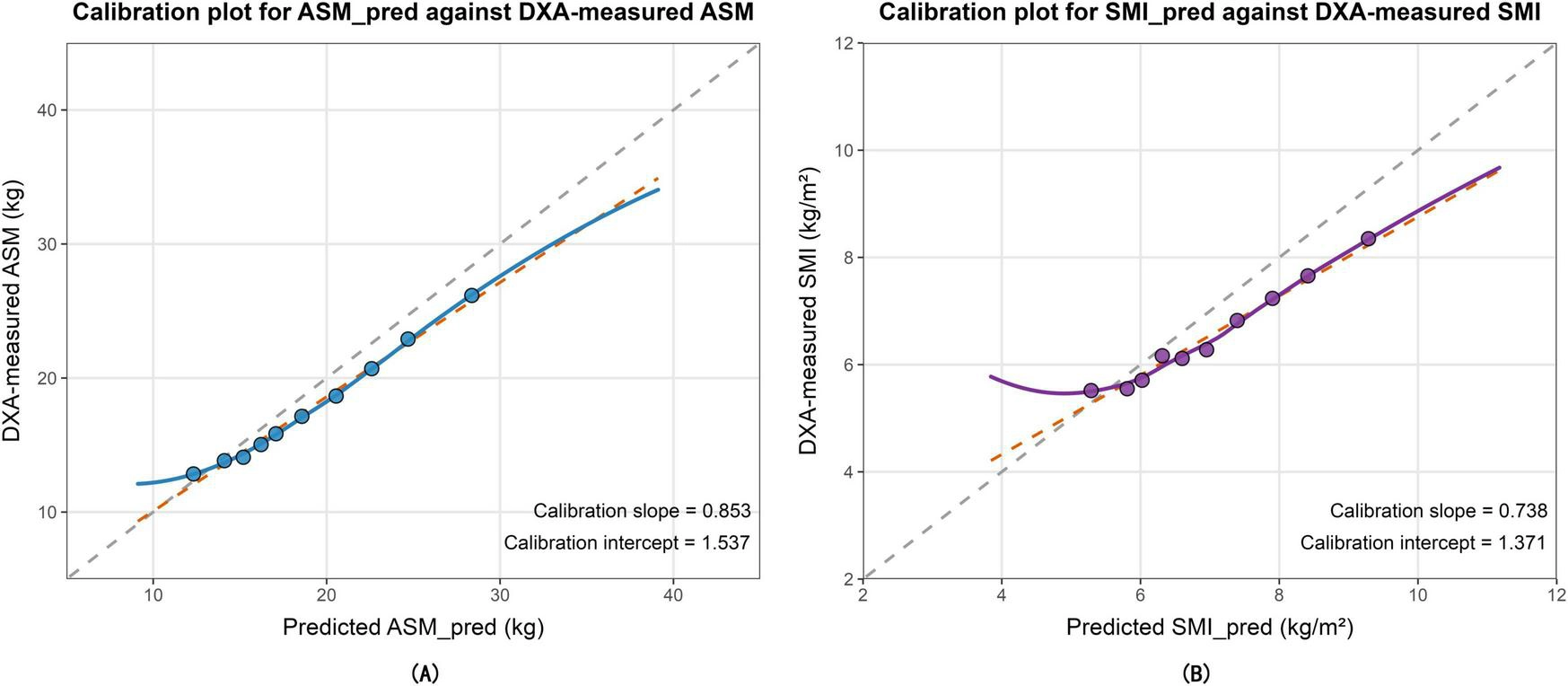
In a retrospective observational study, researchers assessed 501 Chinese adults who underwent whole-body scans during routine health examinations between 2016 and 2022. They tested a published equation based on body measurements against dual-energy X-ray absorptiometry, a scan that measures body composition. The equation estimated muscle mass in the arms and legs, which researchers adjusted for height to create a muscle-mass index.
The muscle-mass estimates closely tracked scan measurements but overestimated them by an average of 1.25 kg. Agreement weakened for the height-adjusted index. Applying scan-based thresholds to that index missed 97 of 123 scan-defined low-muscle-mass cases. Adjusting the equation locally reduced prediction error but left disagreement for individuals. The authors advised against using either version alone when classification relies on fixed muscle-mass thresholds.
Why it matters
Low muscle mass is a feature of sarcopenia, an age-related decline in muscle strength and mass. Reliable measurement matters when assessing this condition.
Caveats
The study was retrospective and limited to 501 Chinese adults at one centre. The authors said any broader screening pathway incorporating the equation would need separate validation.
- Modelling and theory
- DXA-measured appendicular skeletal muscle mass
- DXA-measured skeletal muscle index
- Predicted appendicular skeletal muscle mass
- Predicted skeletal muscle index
- Humans
The paper
Qingdao University · Linyi People's Hospital
Frontiers in Nutrition · 22 Sep 2026