Single‑Cell in silico Perturbation Uncovers a Ferroptosis Regulatory Network for Cigarette Smoke‑Induced Skin Aging and Identifies Dapivirine as a Candidate Agent
Abstract
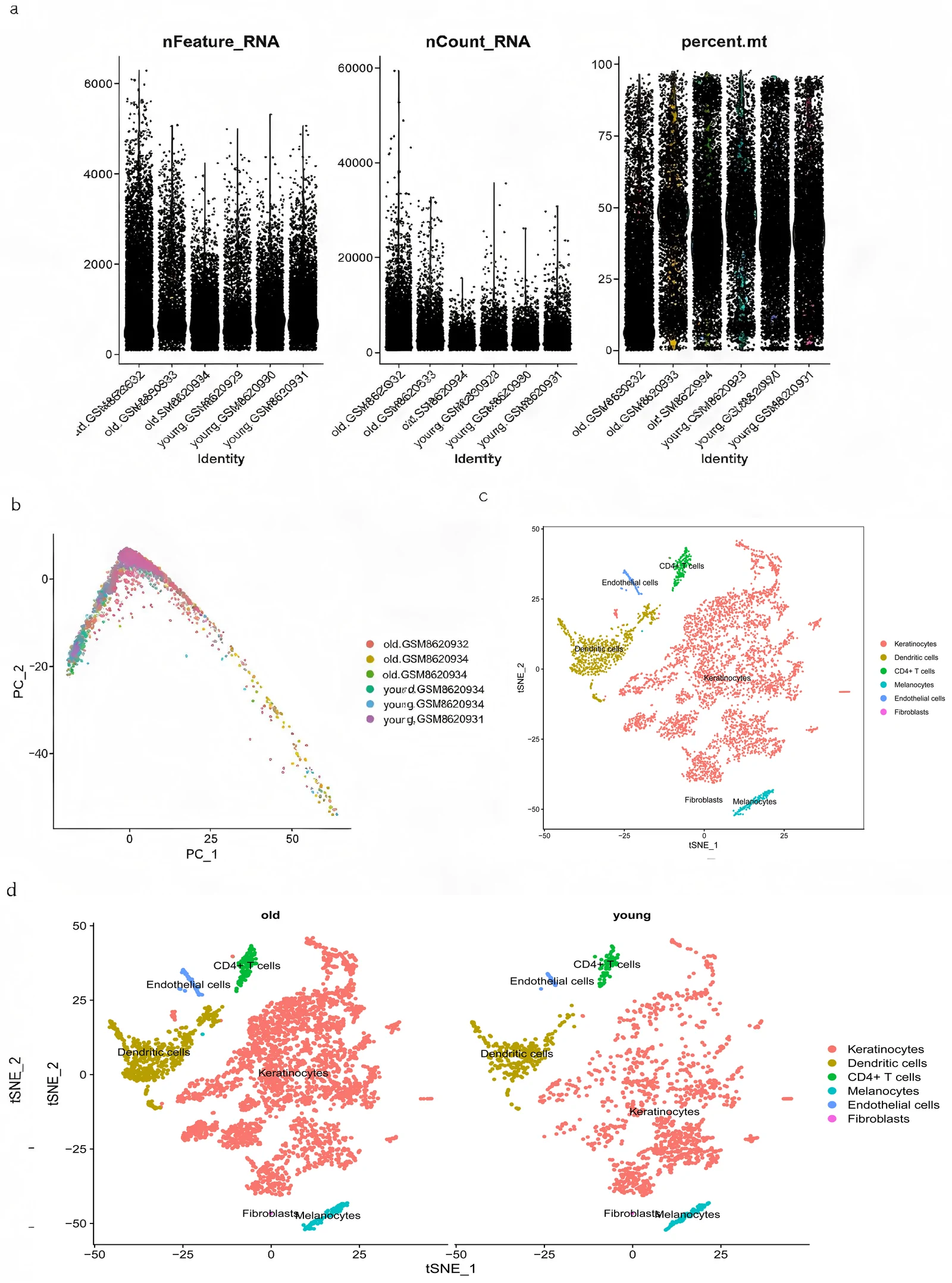
OBJECTIVE: Cigarette smoke exposure induces cutaneous ferroptosis and accelerates skin aging, yet the core regulatory genes and targeted interventions remain unclear. This study aimed to identify key ferroptosis-driving genes underlying smoke-induced skin senescence, clarify their mechanisms, and screen candidate small molecules that reverse smoke-related skin damage. METHODS: Young and aged human skin single-cell transcriptomic data from the GEO database were processed for quality control, dimensional reduction, clustering, and cell-type annotation. The scTenifoldNet toolkit performed bidirectional in silico perturbation (virtual knockout and overexpression) of seven smoke-upregulated ferroptosis driver genes, with GO and KEGG enrichment on perturbation-derived DEGs. Based on the smoke-exposed skin dataset GSE148221, the DrugReflector deep-learning model conducted high-throughput virtual screening, followed by Cb-Dock2 molecular docking to verify binding affinity of the top compound to the seven ferroptosis proteins. RESULTS: Aging was the primary driver of global transcriptional remodeling, with aged skin showing prominent immune infiltration and elevated heterogeneity consistent with inflammaging. Bidirectional perturbation consistently identified KRT15 and CXCL14 as universal markers of disrupted ferroptosis signaling. Hub-gene dysregulation simultaneously triggered epidermal barrier dysfunction, cytoskeleton disorders, and chronic cutaneous inflammation. The anti-HIV agent dapivirine ranked first in AI screening and stably bound all seven targets, with particularly high affinity for CYBB, CHAC1, and HMOX1; no prior studies have reported its anti-skin-aging activity. CONCLUSION: ABCC1, ATG4D, CHAC1, CYBB, HILPDA, HMOX1, and PGD constitute the core ferroptosis genes mediating smoke-induced skin aging. Repurposed dapivirine targets and suppresses the cutaneous ferroptosis pathway, showing promise against smoke-triggered skin senescence. These findings offer novel mechanistic insights into extrinsic skin aging and support anti-aging drug repurposing.
The paper
Guangdong Medical College; Liuzhou Maternal and Child Health Hospital
Clinical, Cosmetic and Investigational Dermatology, 7 Oct 2026