Roles of exosomal miRNAs from different sources in knee osteoarthritis: exercise-regulated skeletal muscle-derived exosomal miRNAs as a prospective therapeutic avenue
Abstract
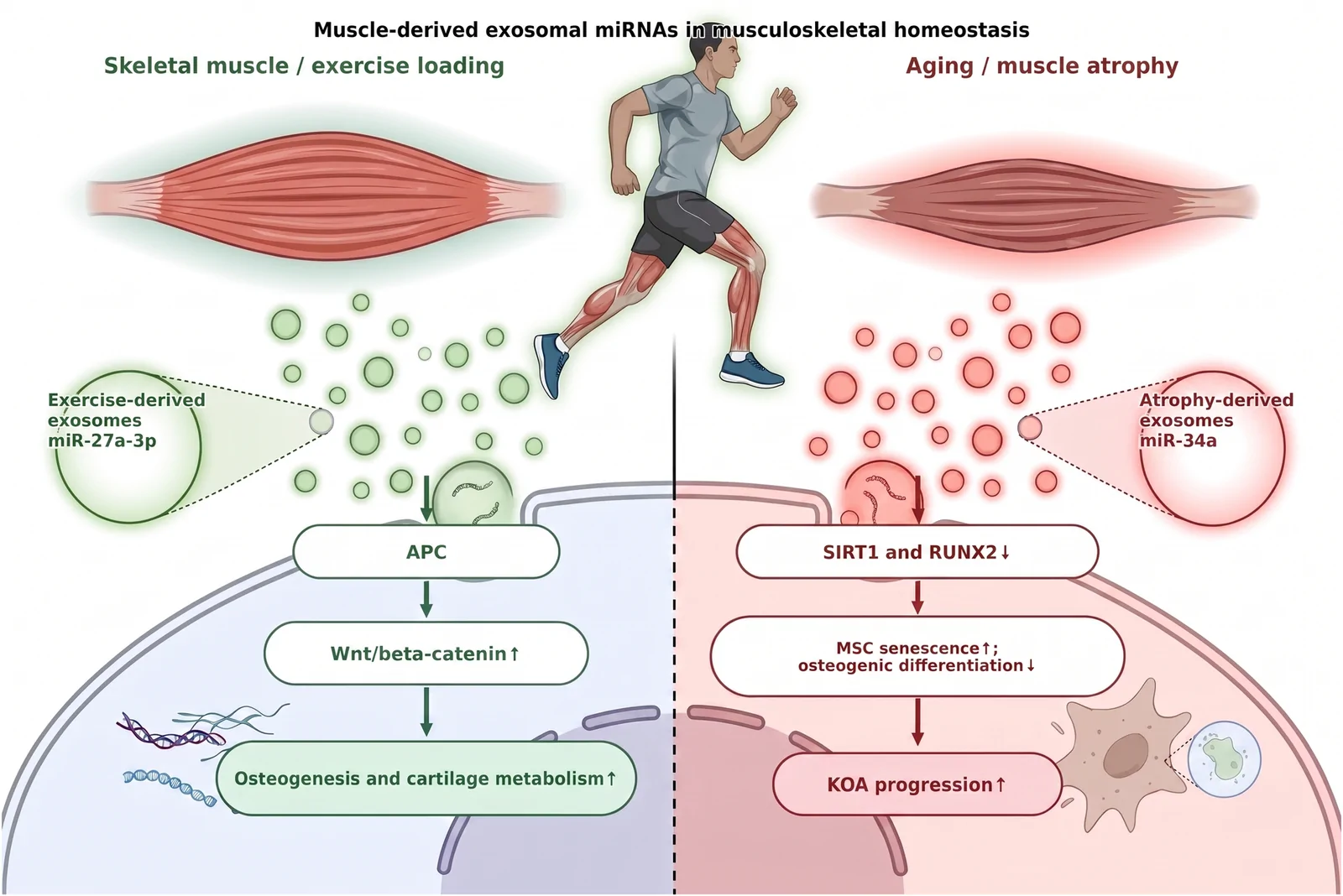
Knee osteoarthritis (KOA) is the most prevalent degenerative joint disorder in the aging population and a leading cause of joint deformity and physical disability. Long-term KOA management demands sustained pharmacological and lifestyle interventions, while advanced stages often necessitate joint replacement surgery, imposing heavy socioeconomic burdens. This narrative review examines the roles of exosomal microRNAs (miRNAs) from diverse cellular sources in KOA, with particular emphasis on exercise-regulated, skeletal muscle-derived exosomal miRNAs. A literature search of PubMed, Web of Science, and Scopus was conducted for relevant publications up to June 2026. Recent evidence demonstrates that exosomes from multiple cell types carry bioactive miRNAs that exert anti-inflammatory effects, facilitate cartilage repair, and regulate subchondral bone remodeling in KOA. While most research focuses on local joint cells and stem cell derivatives, skeletal muscle-the body's largest endocrine organ-remains understudied. Under aging or oxidative stress, senescence-associated miRNAs such as miR-34a are upregulated in muscle-derived exosomes and delivered systemically to joint tissues, modulating chondrocyte function and skeletal stem cell activity. In contrast, exercise dynamically remodels muscle-derived exosomal miRNA profiles, driving favorable metabolic outcomes in skeletal joints via muscle-joint crosstalk. Collectively, these findings suggest that muscle-derived exosomal miRNAs represent a biologically plausible therapeutic avenue for KOA, though direct clinical validation remains to be established.
The paper
Chengdu Sport University; Sichuan Academy of Traditional Chinese Medicine
Frontiers in Medicine, 28 Sep 2026