Evaluation of cardiovascular risk using smartwatch-measured pulse wave velocity in China: a nationwide cross-sectional study
Abstract
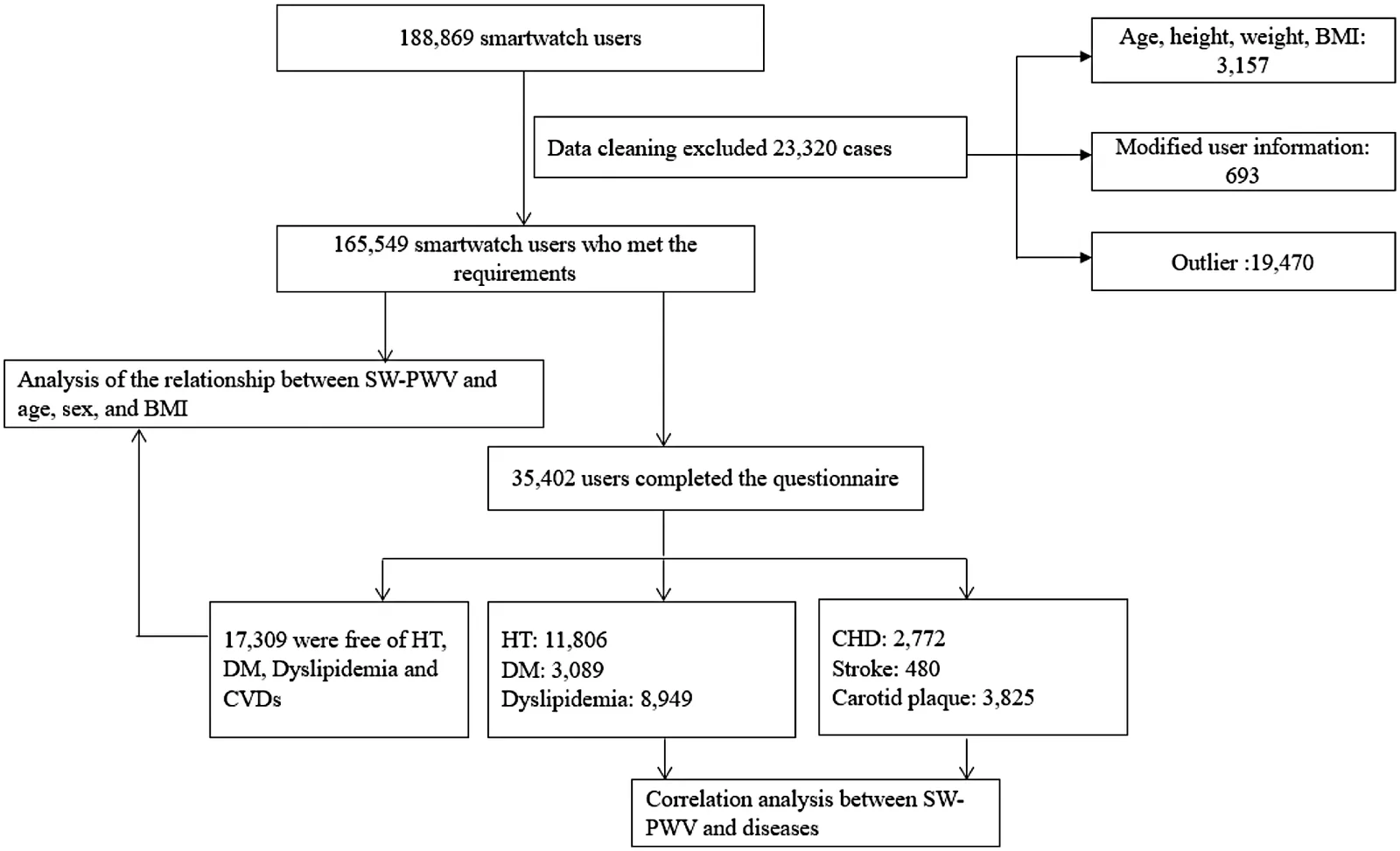
BACKGROUND: Cardiovascular and cerebrovascular diseases, driven by arteriosclerosis, are China's leading causes of death. Smartwatch-measured pulse wave velocity (SW-PWV) is an algorithm-derived estimate of carotid-femoral pulse wave velocity (cfPWV) generated using a built-in machine-learning algorithm. A previous validation study showed good agreement between smartwatch-estimated cfPWV and Complior Analyse measurements, with a concordance correlation coefficient of 0.9045 and a mean absolute error of 0.66 m/s. OBJECTIVE: This study aimed to describe the distribution of smartwatch-measured pulse wave velocity (SW-PWV) according to age, sex, and body mass index (BMI), and to investigate its cross-sectional associations with cardiovascular risk factors and established cardiovascular disease (CVD). METHODS: This cross-sectional study analyzed 165,549 users who completed at least one valid SW-PWV measurement using compatible Huawei smartwatches between December 2020 and August 2022. Analyses of cardiovascular risk factors and CVD were restricted to 35,402 users who completed the "Vascular Health" app questionnaire, in which physician-diagnosed conditions were self-reported according to predefined criteria. A threshold of 10 m/s, adapted from guideline recommendations for cfPWV, was explored for SW-PWV. Spearman's correlation, Kruskal-Wallis test, multiple regression, and Mann-Whitney U-test were used for analysis. Data were reported as median (interquartile range) or mean ± standard deviation. RESULTS: SW-PWV correlated positively with age, male sex, and BMI. After age- and BMI-stratification, SW-PWV increased progressively across all cohorts. Average SW-PWV was significantly higher in males than in females. SW-PWV was significantly elevated in participants with hypertension, diabetes, dyslipidemia, coronary heart disease, stroke, and carotid plaque, with hypertension and carotid plaque exhibiting the strongest correlations. SW-PWV demonstrated moderate discrimination for prevalent CVD (area under the curve = 0.71). When applying the guideline-recommended cfPWV threshold of 10 m/s to SW-PWV, sensitivity was 13.6% and specificity was 96.7%. CONCLUSION: In this cross-sectional study, SW-PWV was associated with age, sex, and BMI, with SW-PWV ≥10 m/s linked to a higher prevalence of cardiovascular risk factors and CVD. These findings suggest that the guideline-derived 10 m/s threshold of cfPWV might serve as a preliminary or exploratory threshold reference for SW-PWV, though direct validation against conventional cfPWV and prospective longitudinal studies are required before clinical implementation.
From the paper
- Participants
This study collected data from 188,869 individuals who completed the SW-PWV detection using smartwatches across 34 provinces and cities in China from December 2020 to August 2022.
- Limitation
Consequently, the study population may not be representative of the general population, and selection bias cannot be excluded.
Quoted word for word from the full text on frontiersin.org.
- Smartwatch-measured pulse wave velocity
- Cardiovascular disease
- Carotid plaque
- Coronary heart disease
- Diabetes
- Humans
The paper
Peking University People's Hospital
Frontiers in Cardiovascular Medicine, 28 Sep 2026