Prediabetes progression linked to later heart disease
Progression to diabetes was linked to 1.53 times the odds of later heart disease compared with consistently normal blood sugar, after accounting for other factors.
4 years, independent replication
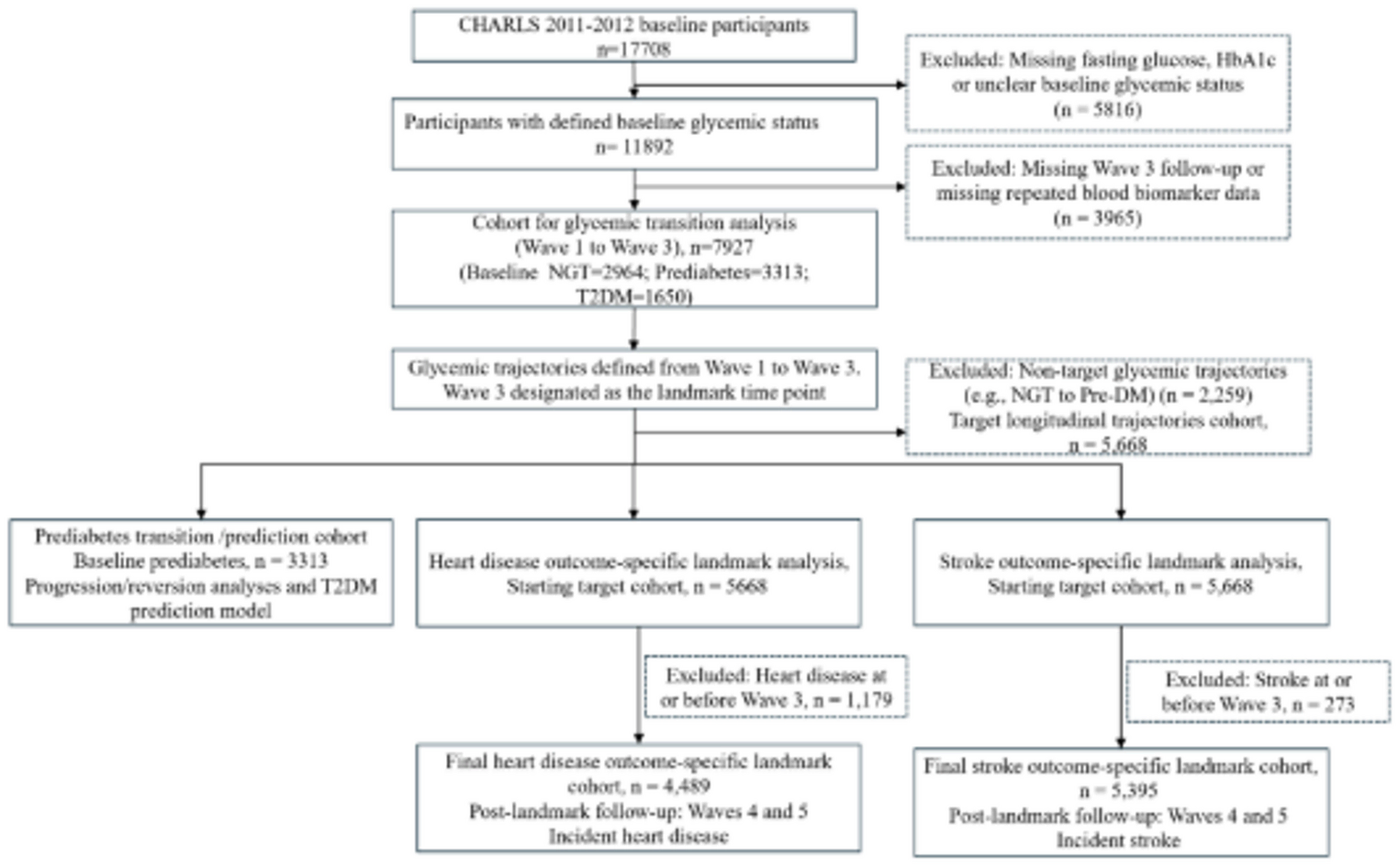
In 7,927 middle-aged and older Chinese adults, researchers analysed four-year changes in blood sugar in an observational cohort study. They then assessed new cases of heart disease and stroke in separate groups. Among 3,313 participants with prediabetes—blood sugar above normal but below the diabetes threshold—21.01% returned to normal blood sugar, 60.58% remained in prediabetes and 18.41% developed type 2 diabetes.
Progression to diabetes was associated with higher odds of later heart disease. Its association with stroke was uncertain: the range of likely values included no difference. Adults who had diabetes at both assessments had higher odds of both outcomes than those whose blood sugar stayed normal. The best prediction model had moderate ability to distinguish who would develop diabetes, with only limited improvement over a simpler clinical model.
Why it matters
Prediabetes in middle and older age raises questions about how changing blood sugar levels should inform cardiovascular risk assessment.
Caveats
This observational study cannot show that progression to diabetes caused heart disease. The prediction model was tested only within the study dataset and requires external validation.
From the paper
- Result
Compared with stable normal glucose tolerance, prediabetes progression was associated with higher odds of incident heart disease (adjusted odds ratio [aOR], 1.53; 95% CI, 1.13–2.09), whereas the association with incident stroke was not statistically significant (aOR, 1.29; 95% CI, 0.90–1.87).
Quoted word for word from the full text on link.springer.com.