Gene regulator shapes skin structure at three ages in mice
Experiments compared mice aged 20 days, one year and two years, finding that effects on stress responses diminished in old age.
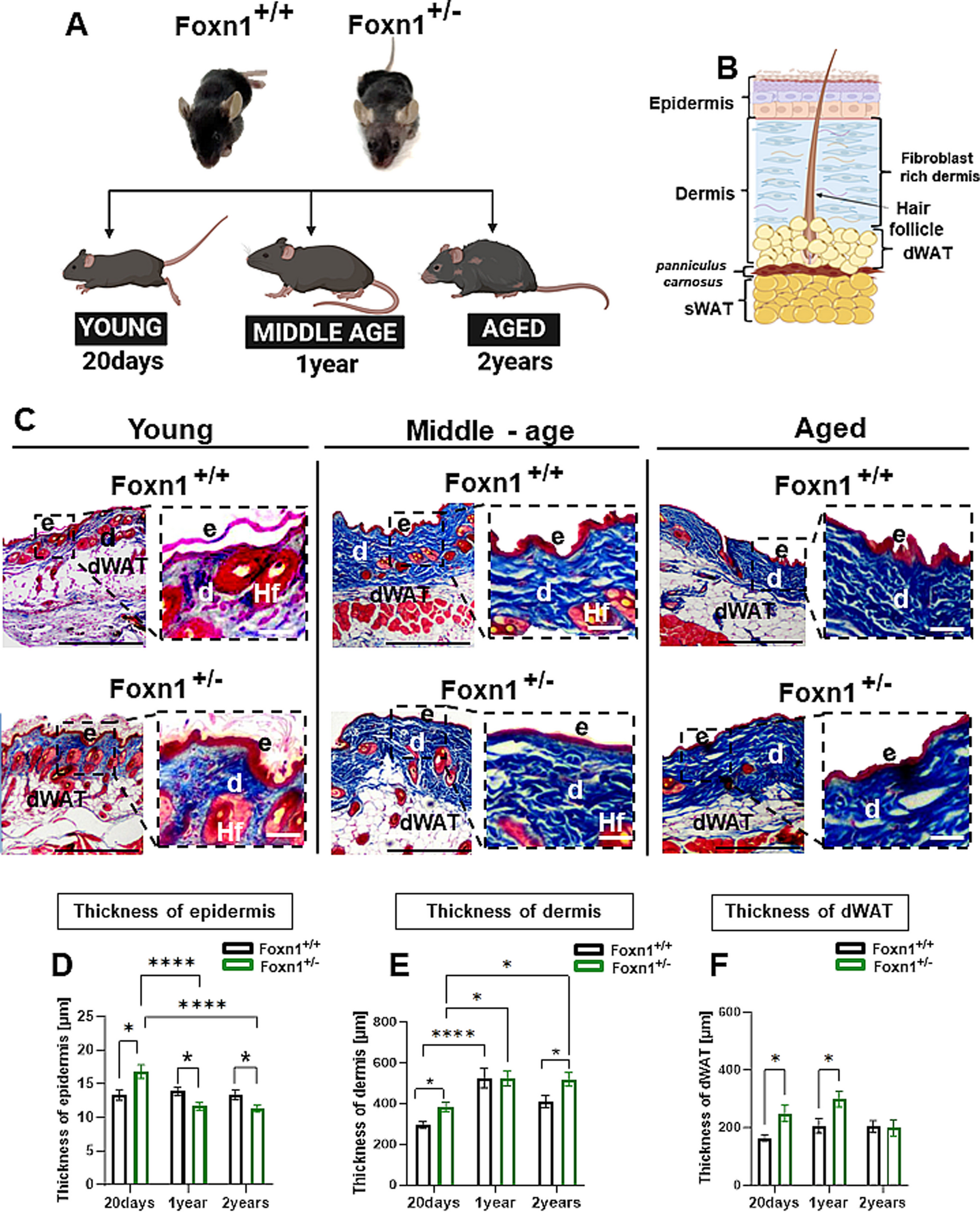
In an animal experiment, researchers compared mice aged 20 days, one year and two years that had either two intact copies of the Foxn1 gene or one copy knocked out. Foxn1 produces a protein that regulates gene activity.
Mice lacking one copy had a thinner epidermis, the outer skin layer, and a thicker dermis, the layer underneath. Their skin cells also showed disrupted maturation. Foxn1 influenced responses to low oxygen, oxidative stress and cellular protection, particularly in young and middle-aged mice. Oxidative stress is an imbalance involving reactive molecules that can damage cells. These effects diminished in old mice. The researchers concluded that Foxn1 helps maintain stable conditions in skin and may play a role in skin aging.
Why it matters
Skin aging brings declines in structure, function and regenerative capacity. This work addresses how regulation of gene activity may contribute to those changes.
Caveats
These experiments in mice do not establish a role for Foxn1 in human skin aging. The abstract did not report sample sizes.
The paper
Foxn1 regulates epidermal structure, redox balance, and age related changes
InLife Institute of Animal Reproduction and Food Research, Polish Academy of Sciences
BMC Biology, 16 Sep 2026