Sleep's link to brain damage varies with other vessel injuries
In an observational study of 735 people, other brain vessel injuries strengthened links between shorter sleep and brain lesions in some diagnostic groups.
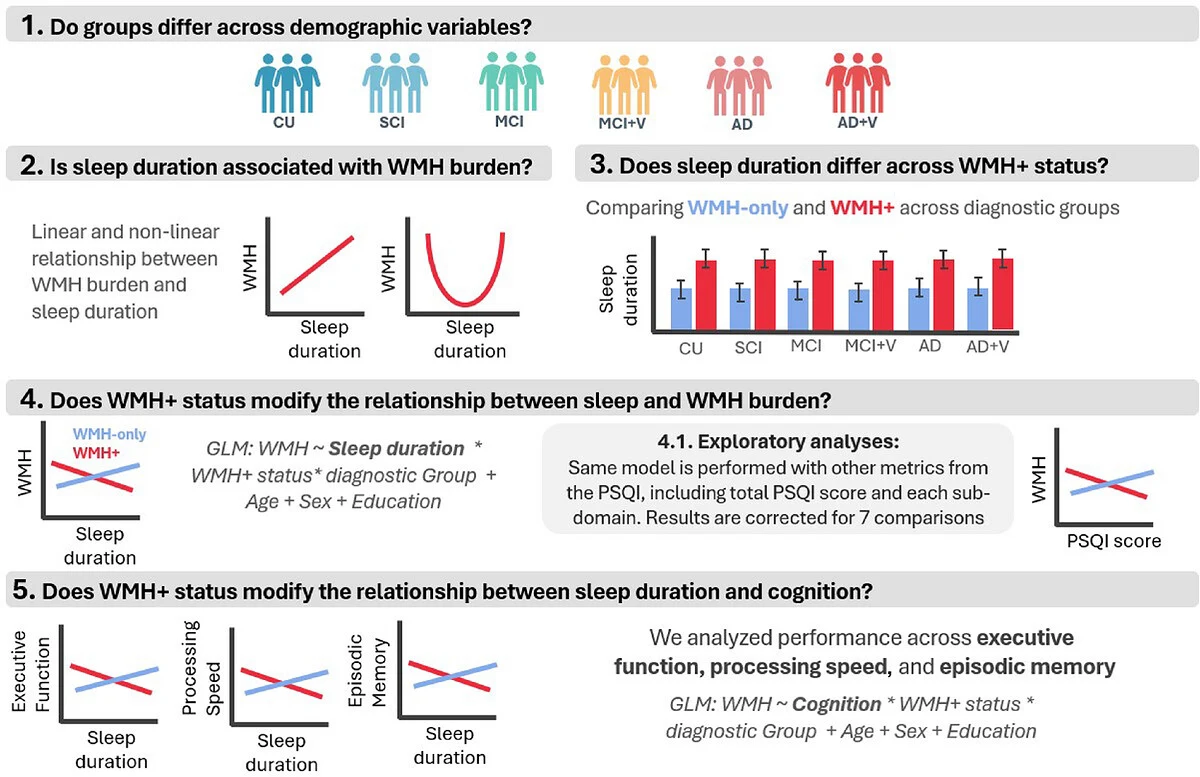
The observational study included 735 people who were healthy or had cognitive difficulties, ranging from self-reported problems to mild impairment or Alzheimer's dementia. Some groups also had high levels of brain blood vessel damage. Participants reported their sleep using a questionnaire. Researchers compared people with white matter hyperintensities—bright spots on scans of the brain's nerve-fibre tissue—with those who also had other vessel injuries.
Among people with mild cognitive impairment—mild memory or thinking problems—and high levels of brain vessel damage, additional vessel injuries strengthened the association between shorter sleep and more extensive bright spots. The same association held in Alzheimer's dementia. An exploratory analysis in Alzheimer's dementia linked longer sleep to better thinking ability in people with additional vessel injuries, but to worse thinking ability in those with white matter hyperintensities alone.
Why it matters
Sleep and brain vessel damage feature in questions about dementia risk. The paper highlights the importance of considering several forms of vessel injury when studying sleep and Alzheimer's disease.
Caveats
The observational design and self-reported sleep cannot establish that sleep duration caused brain damage or cognitive differences. The finding about thinking ability in Alzheimer's dementia was exploratory.
- Sleep duration
- Dementia
- White matter hyperintensities
- Mild cognitive impairment
- Alzheimer's disease
- Humans
The paper
Multiomics Investigation of Neurodegenerative Diseases (MIND) Laboratory
Alzheimer's & Dementia, 1 Oct 2026