COVID-19 tied to higher dementia risk in older adults with diabetes
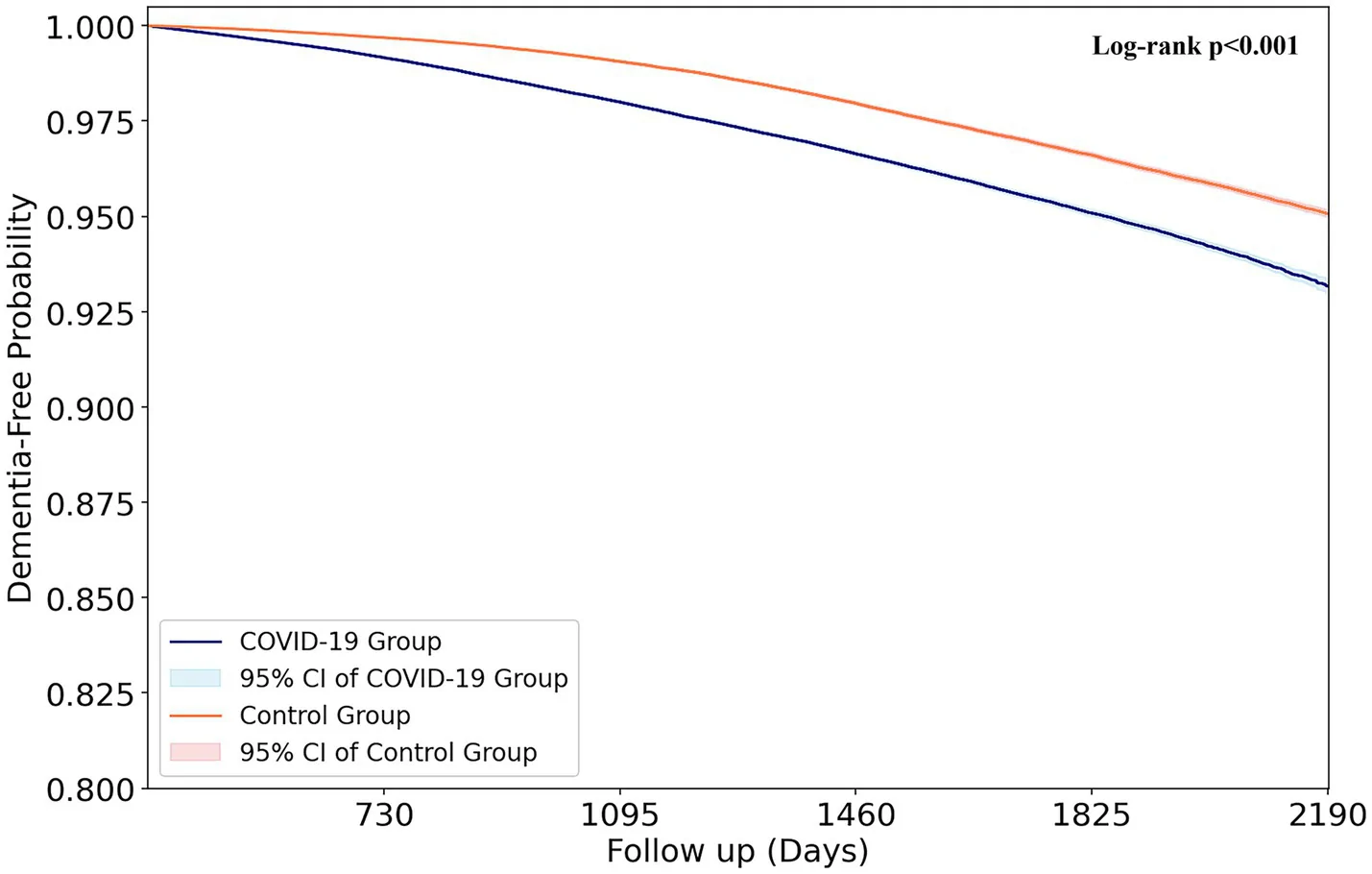
Older adults had an overall dementia hazard ratio of 1.51 after documented infection compared with matched uninfected peers across up to six years of follow-up.
Frontiers in Aging Neuroscience
In a retrospective study of 899,490 propensity-matched older adults with type 2 diabetes, documented COVID-19 was associated with an increased long-term risk of incident dementia. Using electronic health records from the TriNetX network, researchers tracked 449,745 matched pairs of patients aged 65 and older for up to six years. To limit surveillance bias, they applied a one-year landmark design, excluding individuals who died or received a dementia diagnosis within 365 days of their index date. Documented COVID-19 was linked to higher dementia incidence (3.25% versus 2.75% in controls; hazard ratio 1.51, 95% confidence interval 1.47–1.55). Associations were similarly elevated for vascular dementia (hazard ratio 1.61), Alzheimer's disease (hazard ratio 1.41), and mild cognitive impairment (hazard ratio 1.66). The hazard ratio for overall dementia increased across sequential landmark periods, reaching 2.09 at three years. Consistent associations also appeared in patients aged 50 to 65 and during the Omicron-predominant period.
Why it matters
The findings suggest that SARS-CoV-2 infection may interact with metabolic vulnerabilities to accelerate late-life neurocognitive decline. Tracking long-term cognitive outcomes after infection could help clinicians manage neurological risk in older populations with preexisting metabolic disease.
Caveats
The analysis relied on retrospective diagnostic codes in electronic health records rather than standardized cognitive testing or fluid biomarkers. In addition, unmeasured confounding and undocumented COVID-19 cases among control patients may have influenced the risk estimates.
The paper
Chi Mei Medical Center · National Sun Yat-sen University
Frontiers in Aging Neuroscience · 15 Sep 2026