Utility of longitudinal changes in CA19-9 for detection of pancreatic ductal adenocarcinoma in patients with benign pancreatic diseases
36 months
Abstract
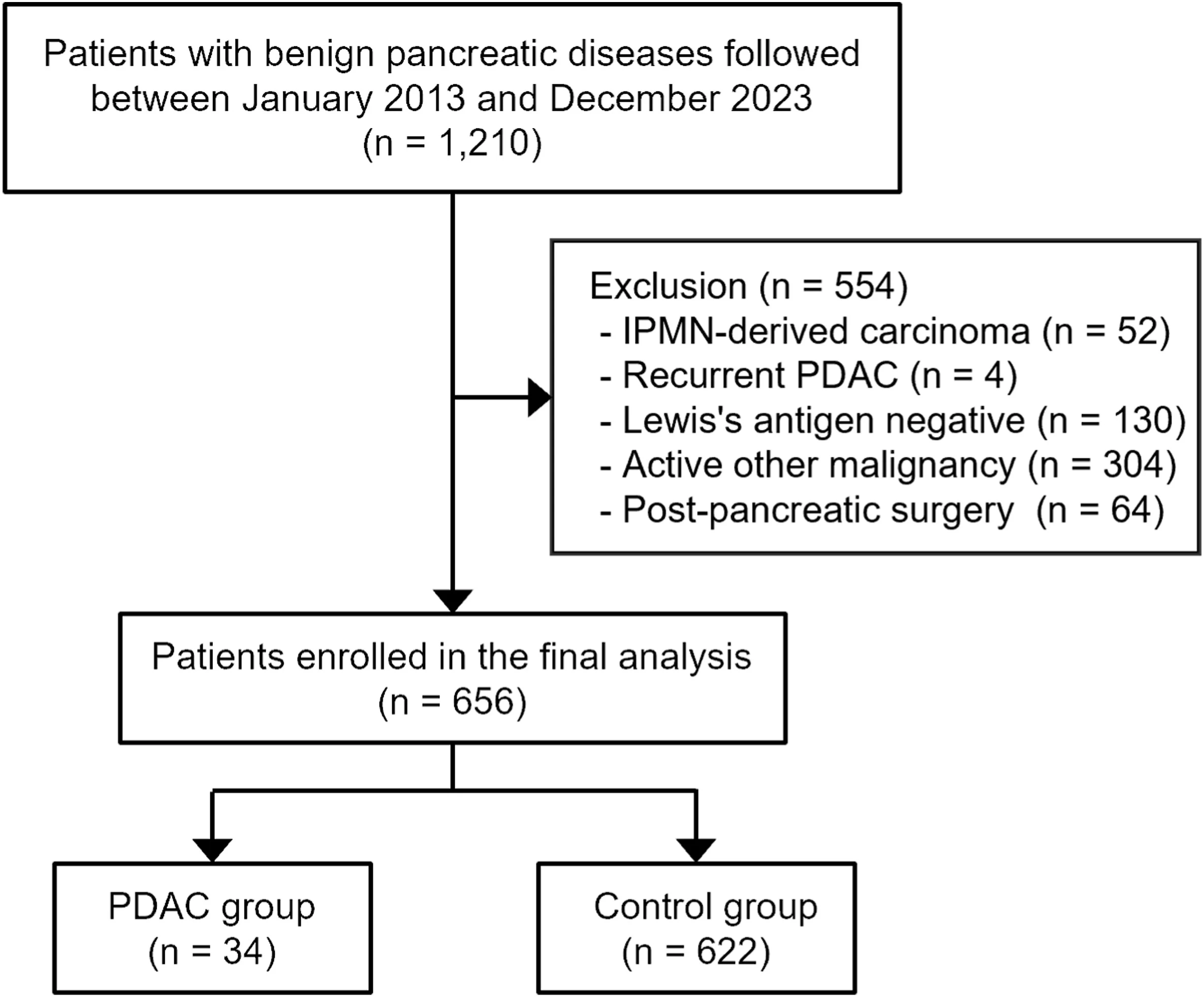
BACKGROUND/OBJECTIVE: Several benign pancreatic diseases are associated with an increased risk of PDAC; however, early detection remains challenging in these patients. We evaluated whether longitudinal changes in carbohydrate antigen 19-9 (CA19-9) could improve early detection of PDAC in patients with benign pancreatic diseases. METHODS: We retrospectively reviewed 656 patients with benign pancreatic diseases (pancreatic cysts, intraductal papillary mucinous neoplasms, chronic pancreatitis, and autoimmune pancreatitis) who were regularly followed at our institution. Patients were classified into PDAC (n = 34) and control (n = 622) groups. Longitudinal changes in CA19-9 absolute values and percent changes were assessed at predefined time points up to 36 months before diagnosis. A logistic regression model incorporating these parameters was developed, and its discriminative ability and diagnostic performance were evaluated. RESULTS: CA19-9 levels began to increase within the normal range as early as 12-18 months before PDAC diagnosis. From 12 to 18 months before diagnosis, the logistic regression model demonstrated higher AUC values than the conventional cutoff of 37 U/mL, with significant differences at 0-3 months (0.96 vs. 0.87, P = 0.003) and 12-18 months (0.69 vs. 0.56, P = 0.004). The model showed relatively high positive predictive values at 0-3 months (78.8%) and also at earlier time points, including 6-12 months (18.5%) and 12-18 months (12.0%). Similar trends were observed in patients with stage 0-II PDAC. CONCLUSIONS: Longitudinal assessment of CA19-9 may support earlier detection of PDAC in patients with benign pancreatic diseases.