The mitochondrial epigenome and noncoding genome in aging and brain diseases
Abstract
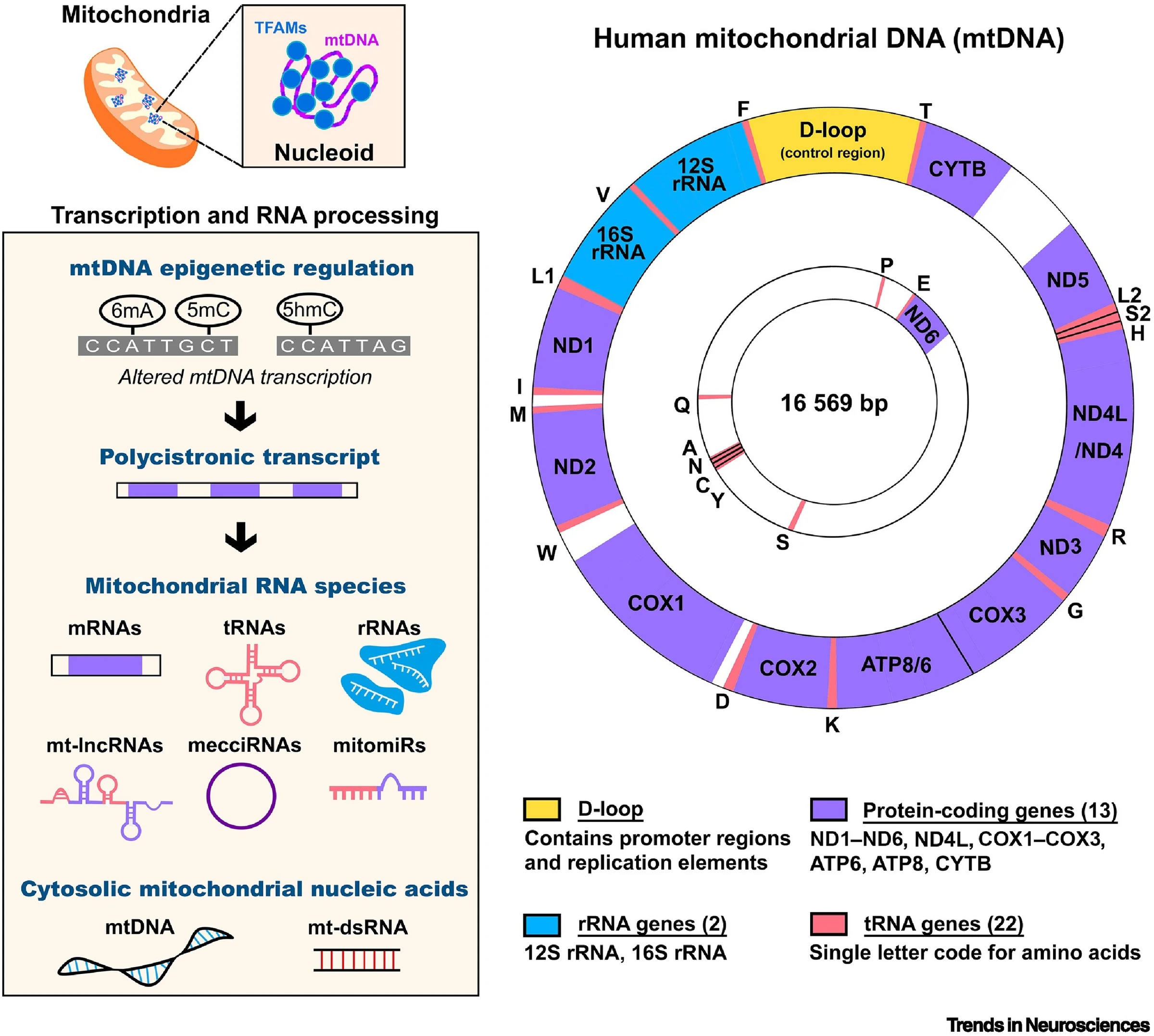
The mitochondrial genome is a dynamic regulatory platform that extends far beyond its protein-coding capacity. Mitochondrial DNA (mtDNA) harbors epigenetic modifications and produces diverse noncoding RNAs that influence mitochondrial function and cellular homeostasis. Evidence from animal models and human studies indicates that mtDNA methylation, mitochondrial-encoded noncoding RNAs, and cytosolic release of mitochondrial nucleic acids regulate transcription, metabolism, and stress signaling. Furthermore, these mechanisms are altered in aging, neurodegenerative disease, and acute brain injury. In this review, we synthesize emerging insights into how the mitochondrial epigenome and noncoding genome shape mitochondrial function and serve as regulatory interfaces linking cellular stress and neuronal vulnerability in brain aging and disease.
- Cellular homeostasis
- DNA methylation
- Epigenetic regulation of gene expression
- Mitochondrial DNA maintenance
- Mitochondrion
The paper
University of Pennsylvania
Trends in Neurosciences, 10 Oct 2026