Darker skin is linked to fewer mtDNA variants from sun exposure
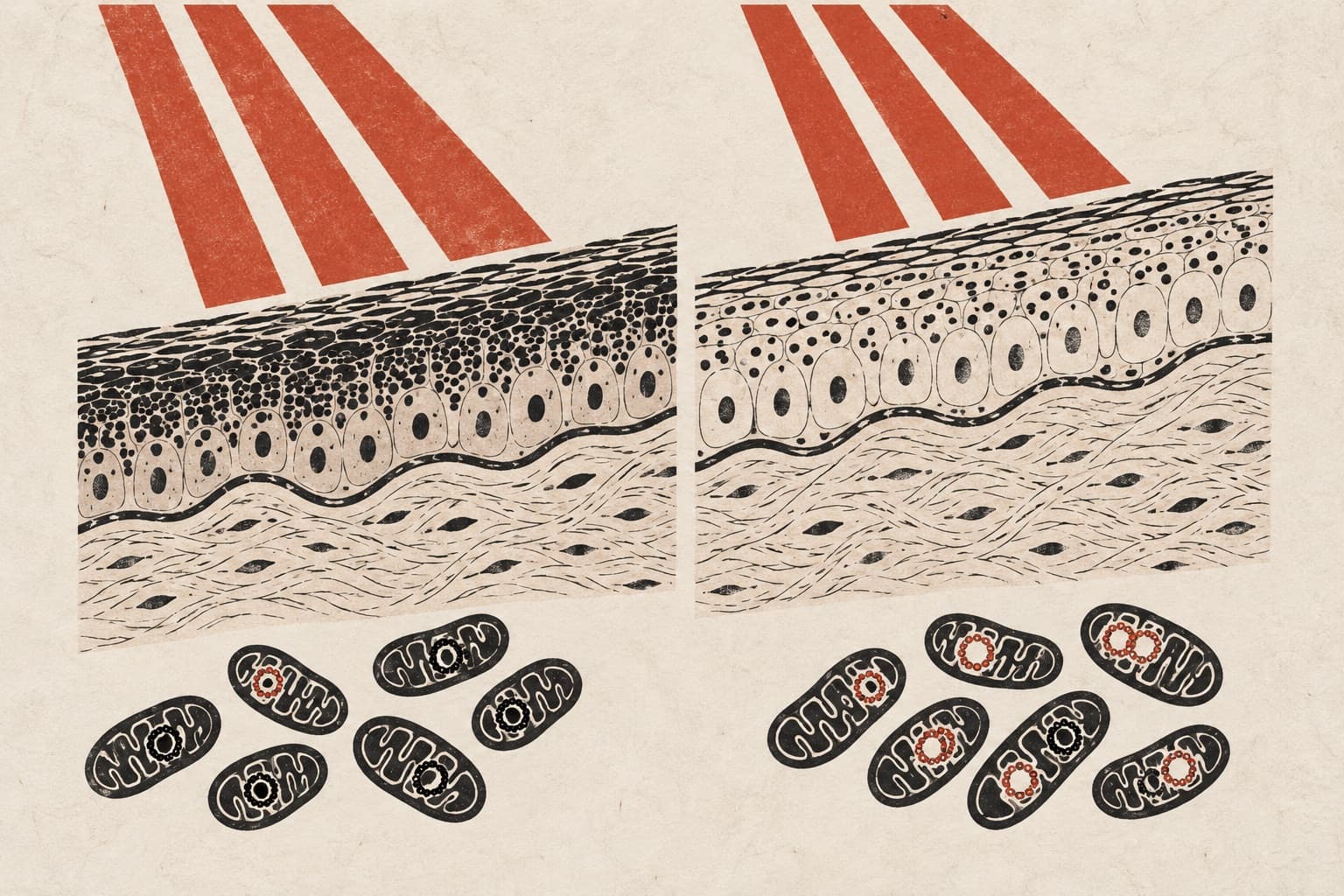
Photoexposed light skin possessed six-fold more variants than dark skin across paired biopsies from six older men.
Pigment Cell & Melanoma Research
In six older men, researchers analyzed somatic mitochondrial DNA variants from paired skin biopsies taken from photoexposed forearms and photoprotected buttocks. The participants included three Black African and three White Northern European men. Targeted sequencing identified 21 high-confidence somatic variants. Photoexposed light skin possessed six-fold more variants than dark skin and showed a broader spectrum of variant types, including insertions, deletions, and dinucleotide substitutions. Light skin was enriched for C>T transitions and CC>TT substitutions, which are signatures of chronic ultraviolet radiation. These variants affected multiple oxidative phosphorylation genes and frequently reached moderate-to-high heteroplasmy. Conversely, dark skin displayed a more restricted profile dominated by a recurrent T414G substitution, with predominantly low-impact variants and substantially lower heteroplasmy overall.
Why it matters
The findings suggest that darker skin pigmentation is associated with preserved mitochondrial genomic stability under chronic sun exposure. This mechanism may contribute to greater resistance against ultraviolet-induced photoaging.
Caveats
The study is an observational analysis with a very small sample size of six male donors. Additional research in larger cohorts with diverse sexes and varying skin tones is needed to verify these findings.
- Oxidative phosphorylation
- Mitochondrial DNA maintenance
- Mitochondrion
- mtDNA heteroplasmy
- Somatic mtDNA variant burden
- Humans
The paper
Skin Pigmentation Associates With Reduced mtDNA Variant Burden in Photoexposed Skin
University of Manchester
Pigment Cell & Melanoma Research · 3 Oct 2026