Guideline-Directed Treatment Eligibility and Burden of Untreated Stage-1 Hypertension Under the 2025 American College of Cardiology/American Heart Association Hypertension Guideline: Insights From NHANES 2015 to 2020
Abstract
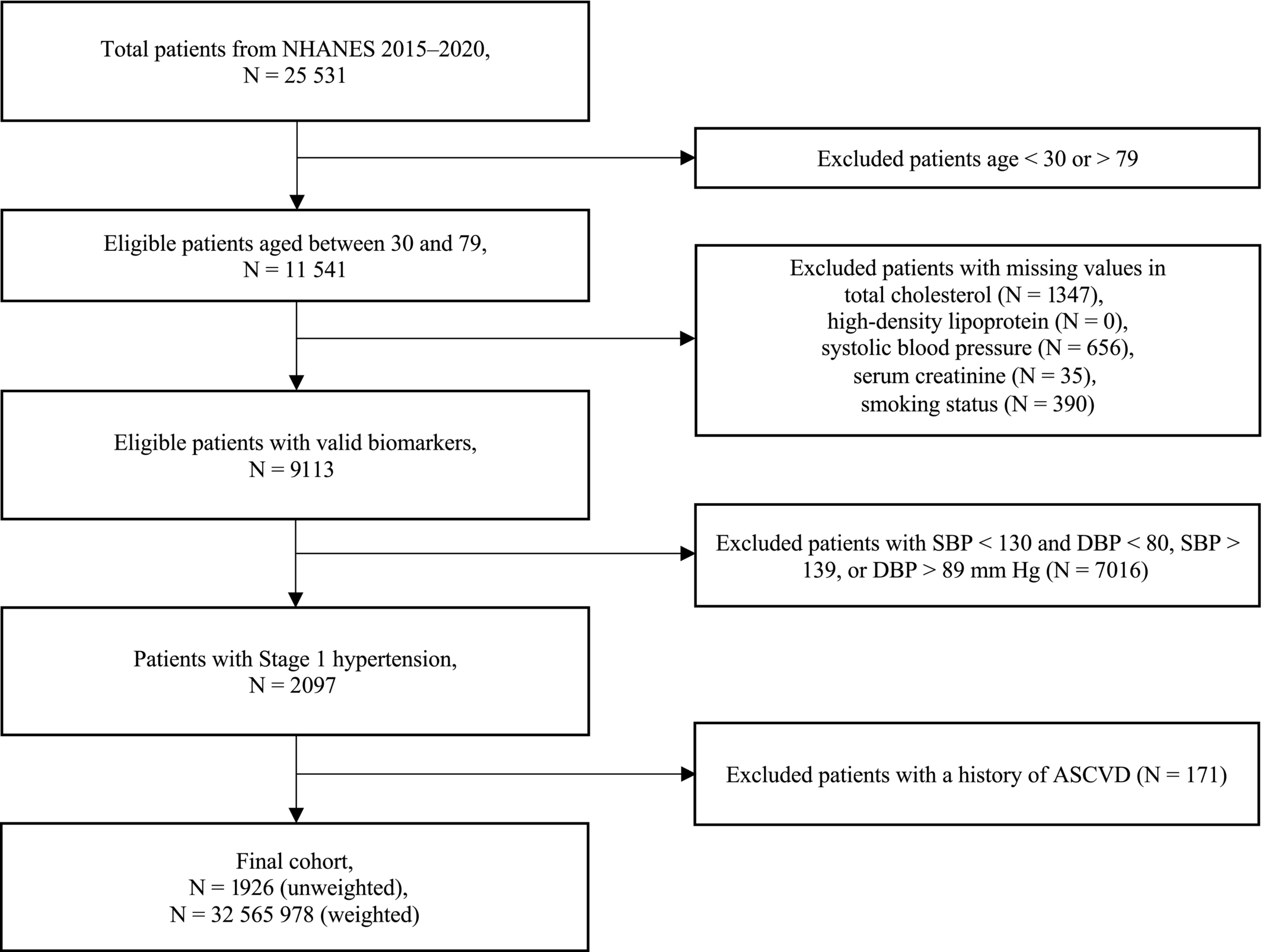
BACKGROUND: Hypertension is a major risk factor for cardiovascular disease. Adoption of the Predicting Risk of Cardiovascular Disease Events risk model in the 2025 American College of Cardiology/American Heart Association guideline may substantially alter the number and characteristics of adults with untreated stage 1 hypertension who are recommended for treatment. We aimed to quantify treatment-recommendation reclassification among adults with untreated stage 1 hypertension under the 2025 Predicting Risk of Cardiovascular Disease Events-based guideline compared with the 2017 pooled cohort equations-based guideline. METHODS: This cross-sectional, nationally representative study used data from NHANES (National Health and Nutrition Examination Survey) 2015 to March 2020. The study population included adults aged 30 to 79 years with stage 1 hypertension, focusing on untreated participants. The exposure was the guideline-endorse cardiovascular risk assessment framework, pooled cohort equations, and Predicting Risk of Cardiovascular Disease Events, respectively. The primary outcome was recommendation for antihypertensive pharmacotherapy. RESULTS: Among 1926 adults with stage 1 hypertension (weighted 32.57 million), 59.59% (19.41 million) were untreated. Under the 2025 guideline, 13.84% (95% CI, 7.06%-20.63%) of untreated adults eligible under the Predicting Risk of Cardiovascular Disease Events threshold (0.42 million) became newly eligible for pharmacotherapy compared with the 2017 guideline. Newly eligible adults were older (mean±SE, 60.48 [0.77] years) and had higher diabetes prevalence (37.74% [95% CI, 15.45%-60.04%]) than those below the treatment threshold. CONCLUSIONS: The 2025 American College of Cardiology/American Heart Association hypertension guideline recommendations were largely concordant with the prior guideline among adults with untreated stage 1 hypertension, while still newly identifying a subset of individuals with elevated cardiometabolic risk who may benefit from earlier intervention.
- 2025 acc/aha hypertension guideline
- Stage 1 hypertension
- Hypertension
- Cardiovascular disease
- Diabetes
- Humans
The paper
University of Florida
Journal of the American Heart Association, 10 Oct 2026