Uneven aging across body systems linked to cognitive decline
In 1,688 older adults in China, an index tracking uneven aging across five routine blood markers was associated with steeper cognitive decline over three years.
3 years
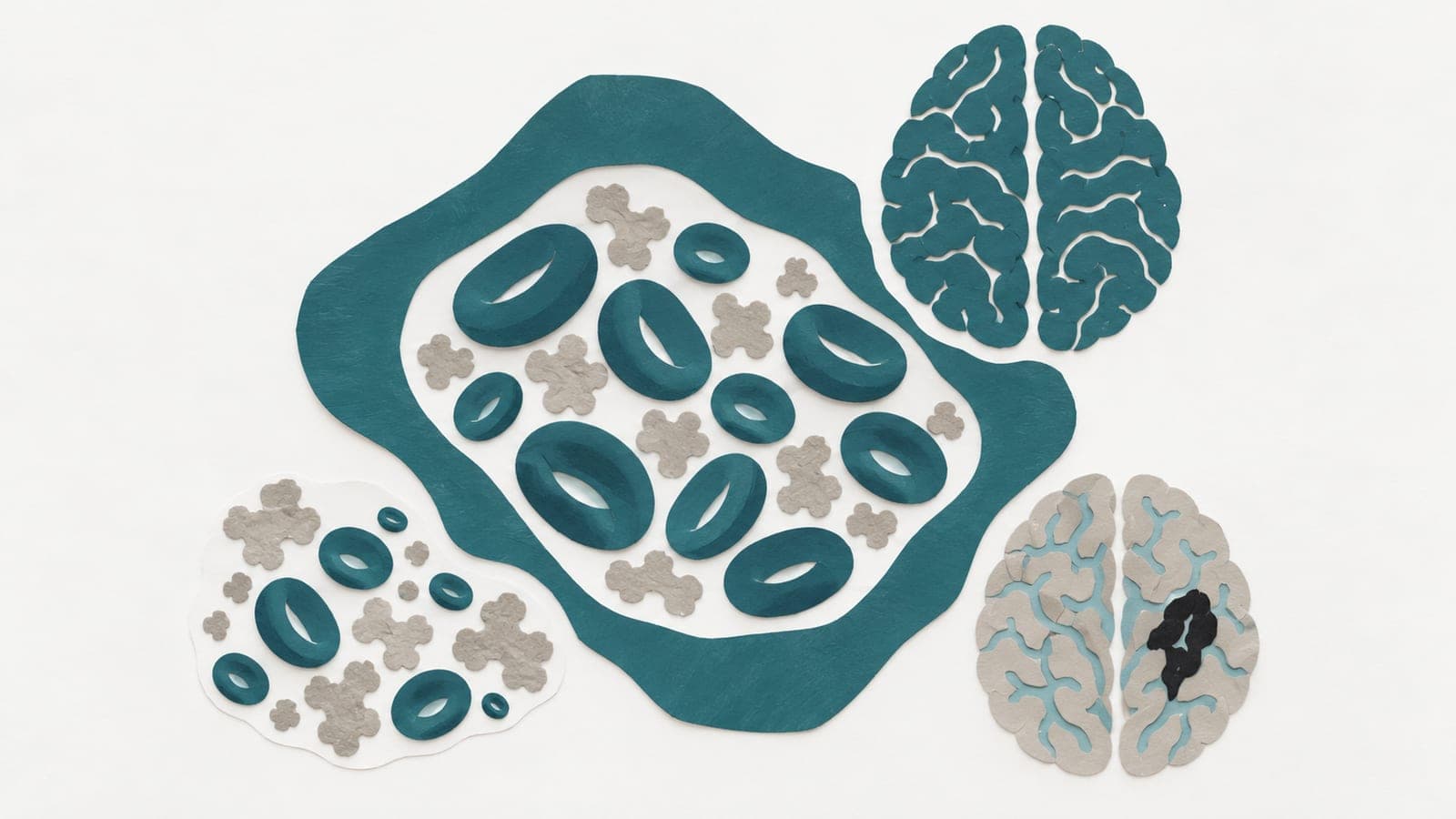
Researchers analysed data from 1,688 Chinese adults aged 60 and older in an observational cohort study. They examined whether uneven aging across different physiological systems was linked to brain health. The team created an aging discordance index based on five routine blood markers: creatinine, total cholesterol, C-reactive protein, mean corpuscular volume, and glycated haemoglobin. Cognitive function was measured over three years through tests of memory, calculation, orientation, and drawing. Higher discordance scores were independently associated with worse cognitive performance and greater cognitive decline after three years. An analysis in an expanded group of 2,912 participants also showed that the rate of cognitive decline steepened with higher baseline discordance.
Why it matters
Cognitive decline is a widespread health challenge in older adults. The authors suggest that measuring multisystem aging discordance with routine blood tests may offer a practical, low-cost tool for early risk assessment in community settings.
Caveats
Because the study was observational, it cannot show whether uneven multisystem aging causes cognitive decline. The index was also built from only five blood markers across a three-year follow-up period.
The paper
Tianjin Union Medical Center
Journal of Alzheimer's Disease, 8 Oct 2026