Brain diffusion scans predict dementia risk and mental decline
Among 5,230 adults aged 45 and older followed for a median 9.8 years, one brain diffusion marker best predicted cognitive decline, while two best predicted dementia risk.
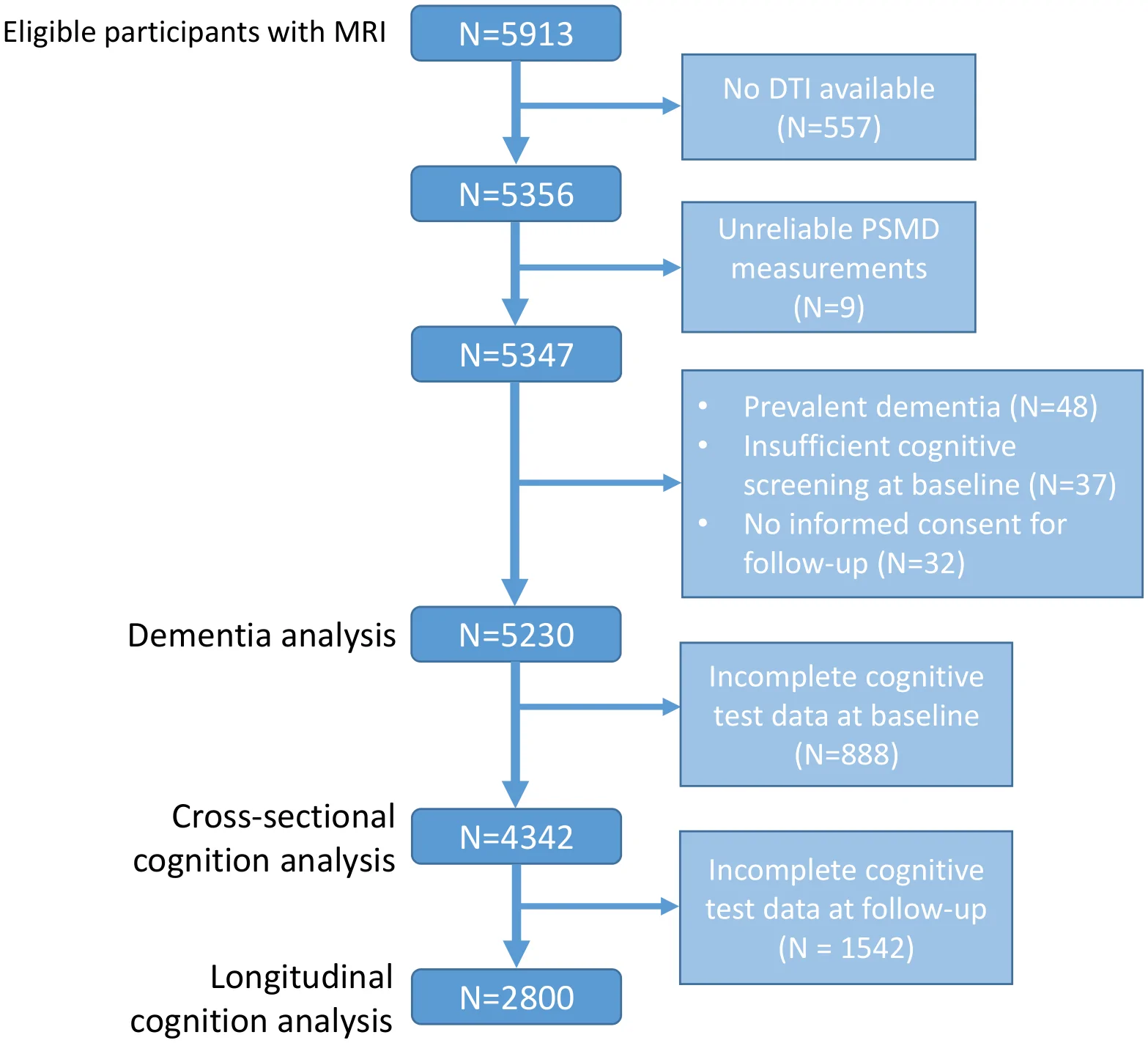
Researchers analysed brain scans from 5,230 participants aged 45 and older in the prospective population-based Rotterdam Study. Between 2006 and 2015, participants underwent magnetic resonance imaging to assess water diffusion in brain white matter, the brain's wiring. The team compared three diffusion measures to assess cognitive decline and dementia risk, while adjusting for age, sex, education, and signs of small vessel damage.
Over a median follow-up of 9.8 years, 286 participants developed dementia. Two markers, peak-width skeletonized mean diffusivity (PSMD) and global mean diffusivity, best fitted models of dementia risk, with global mean diffusivity showing a hazard ratio of 1.74. For global cognitive performance and its decline over an average of 5.6 years, PSMD was superior to the other measures in model fit and predictive strength.
Why it matters
Dementia and cognitive decline become increasingly common as people age. Determining which diffusion imaging markers best capture white matter deterioration may help researchers evaluate vulnerability to late-life cognitive loss.
Caveats
This observational study cannot show cause, and differences in dementia discrimination between the imaging measures were small. In addition, only 2,800 of 4,433 participants with baseline cognitive scores completed the cognitive follow-up visit.
From the paper
- Participants
However, of the 5913 participants who underwent brain MRI, we included 5230 participants with brain MRI between March 29, 2006, and September 22, 2015 (Fig. 1).
- Follow-up
During a median follow-up of 9.8 years, 286 participants developed dementia.
- Result
The model with PSMD achieved a slightly higher C-statistic (0.886 [95%CI: 0.871–0.900]) than models with MD (C-statisticMD: 0.882 [0.867–0.897]) and FA (C-statisticFA: 0.876 [0.860–0.891]) (Supplemental Table S1).
Quoted word for word from the full text on direct.mit.edu.


