Human aortic elastin degrades with age in males but not females
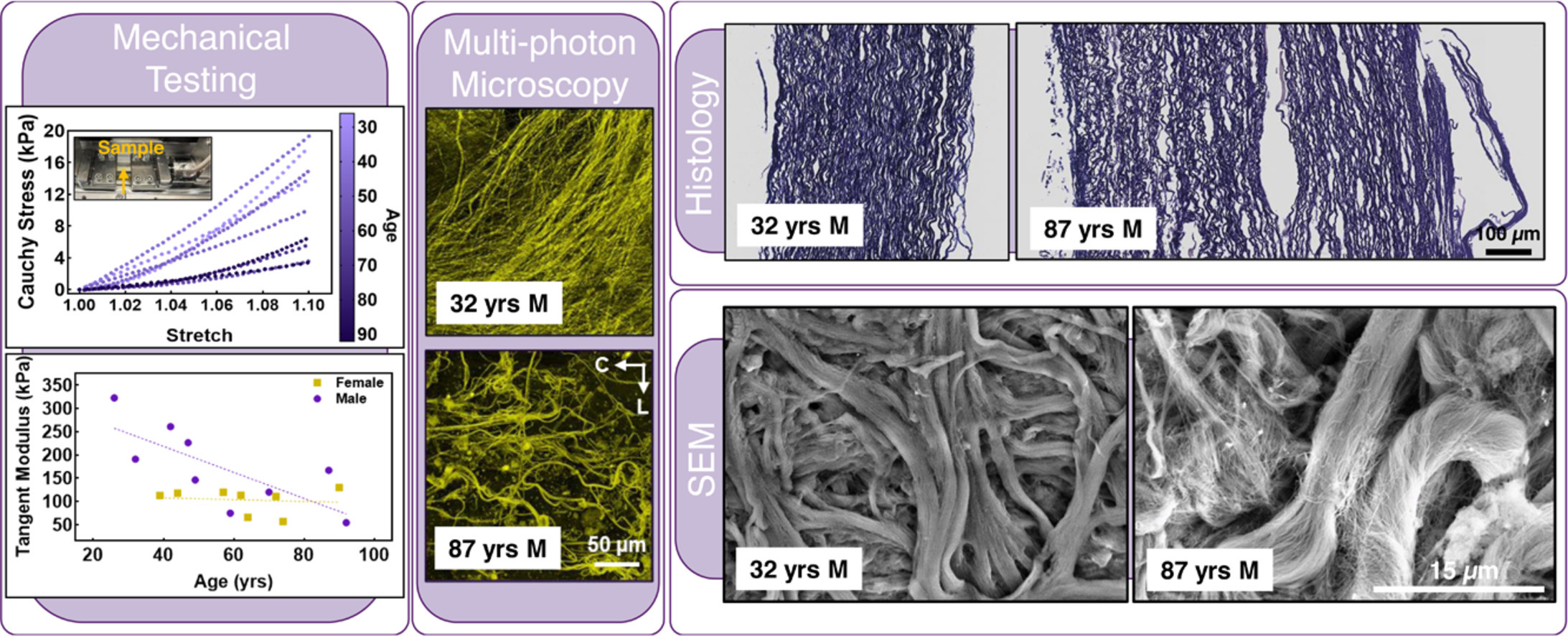
In 17 human thoracic aorta samples, elastin stiffness, straightness, and lamellar length decreased significantly with age in males (p < 0.05) but not females.
Acta Biomaterialia
Researchers analyzed purified elastin networks from 17 human thoracic aortas from donors aged 26 to 92 years, including nine males and eight females. The team conducted uniaxial tensile testing to determine tangent modulus at 1.1 stretch and examined microstructure using multiphoton microscopy, histology, and scanning electron microscopy. In male donors, elastin tangent modulus decreased significantly with age (p < 0.05). Older male tissues exhibited reduced fiber straightness (p < 0.05), increased fragmentation, and a significant decline in lamellar length (p < 0.05), aligning with electron microscopy findings of frayed fibers and diminished mechanical engagement under load. In contrast, female aortic samples showed no consistent age-dependent deterioration in mechanical or microstructural metrics.
Why it matters
Elastic fibers are essential for passive arterial load bearing across billions of cardiac cycles. These findings suggest that sex-specific loss of elastin structural integrity may act as an important mechanobiological driver of arterial stiffening during cardiovascular aging.
Caveats
The study was cross-sectional and limited to a small sample size of 17 human tissue donors. Additionally, testing was performed ex vivo on purified elastin networks rather than intact vascular walls in living organisms.
The paper
Compromised Elastin Network Load Transfer in Aging Human Aorta
Boston University
Acta Biomaterialia · 3 Oct 2026