Over half of hypertension in English adults is undetected
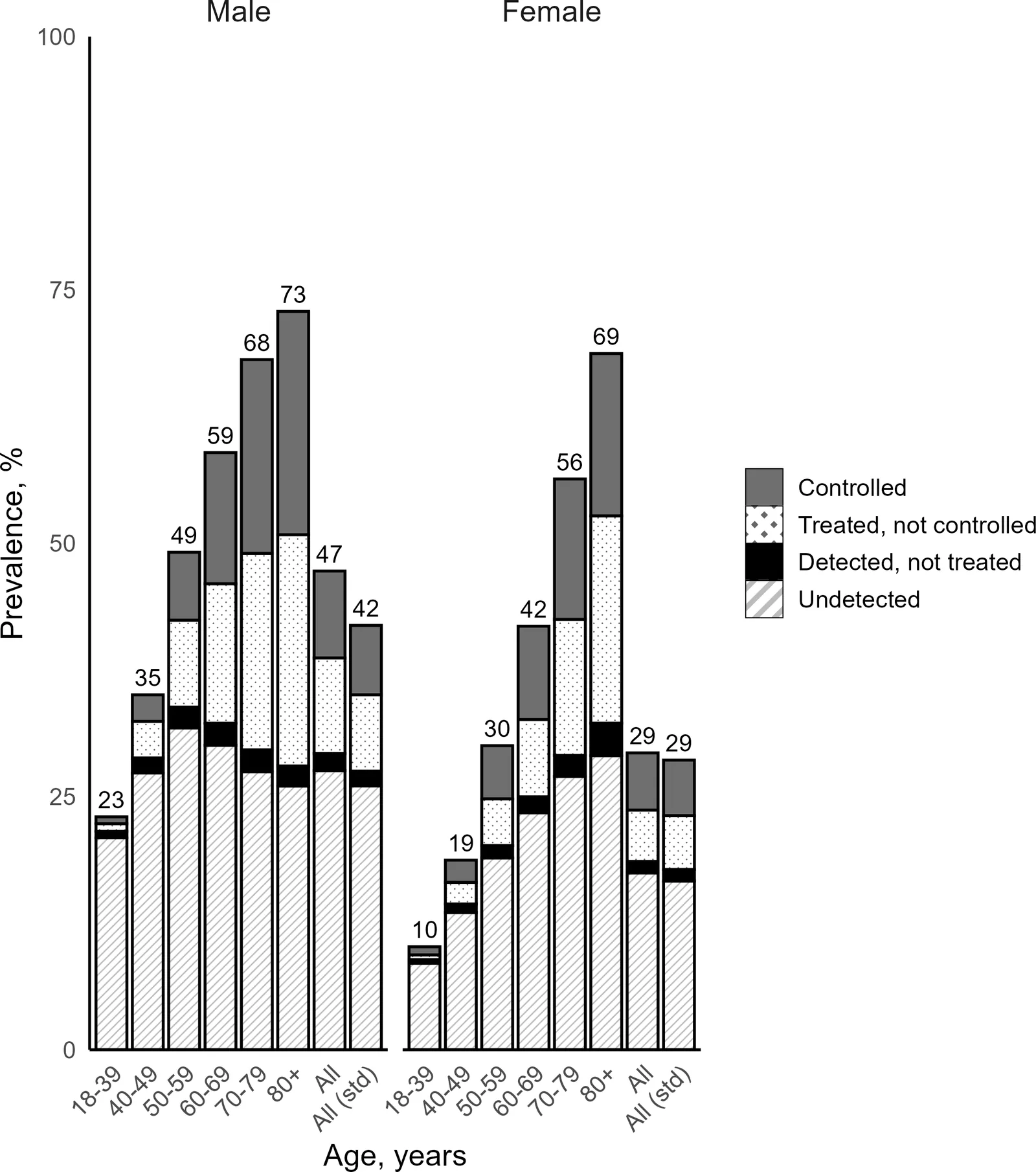
In a study of 1.4 million adults in England, 37.2% had hypertension, 58.8% were undetected, and 50.2% of treated individuals lacked blood pressure control.
BMJ Public Health
In a cross-sectional study of 1.4 million adults in England from the Our Future Health cohort, researchers evaluated the prevalence, detection, treatment, and control of hypertension. Overall, 37.2% of participants had hypertension, defined as systolic blood pressure of at least 140 mm Hg, diastolic blood pressure of at least 90 mm Hg, or use of blood pressure-lowering medications. Prevalence climbed steeply across the lifespan, rising from 23% to 73% in men and from 10% to 69% in women between ages 18–39 and 80 years or older. Despite this high prevalence, 58.8% of hypertensive individuals were undetected. Furthermore, among participants taking antihypertensive medications, 50.2% did not achieve blood pressure control. High blood pressure was also strongly associated with male sex and higher body mass index.
Why it matters
Hypertension is a hallmark of vascular aging and a leading contributor to age-related cardiovascular morbidity and mortality. Widespread gaps in detection and treatment control allow arterial stiffening and end-organ damage to accumulate unchecked as populations age.
Caveats
The cross-sectional analysis relies on baseline clinic blood pressure readings rather than longitudinal or ambulatory measurements. Additionally, the primary analysis excluded 8.1% of participants who reported serious health conditions such as cancer, heart failure, and kidney failure.
The paper
University of Oxford · Harvard University
BMJ Public Health · 23 Sep 2026