Vitamin D deficiency links to intermediate macular degeneration
Deficiency (<25 nmol/l) was associated with incident intermediate AMD with a hazard ratio of 2.34 compared to sufficient levels (≥50 nmol/l).
Ophthalmology Science
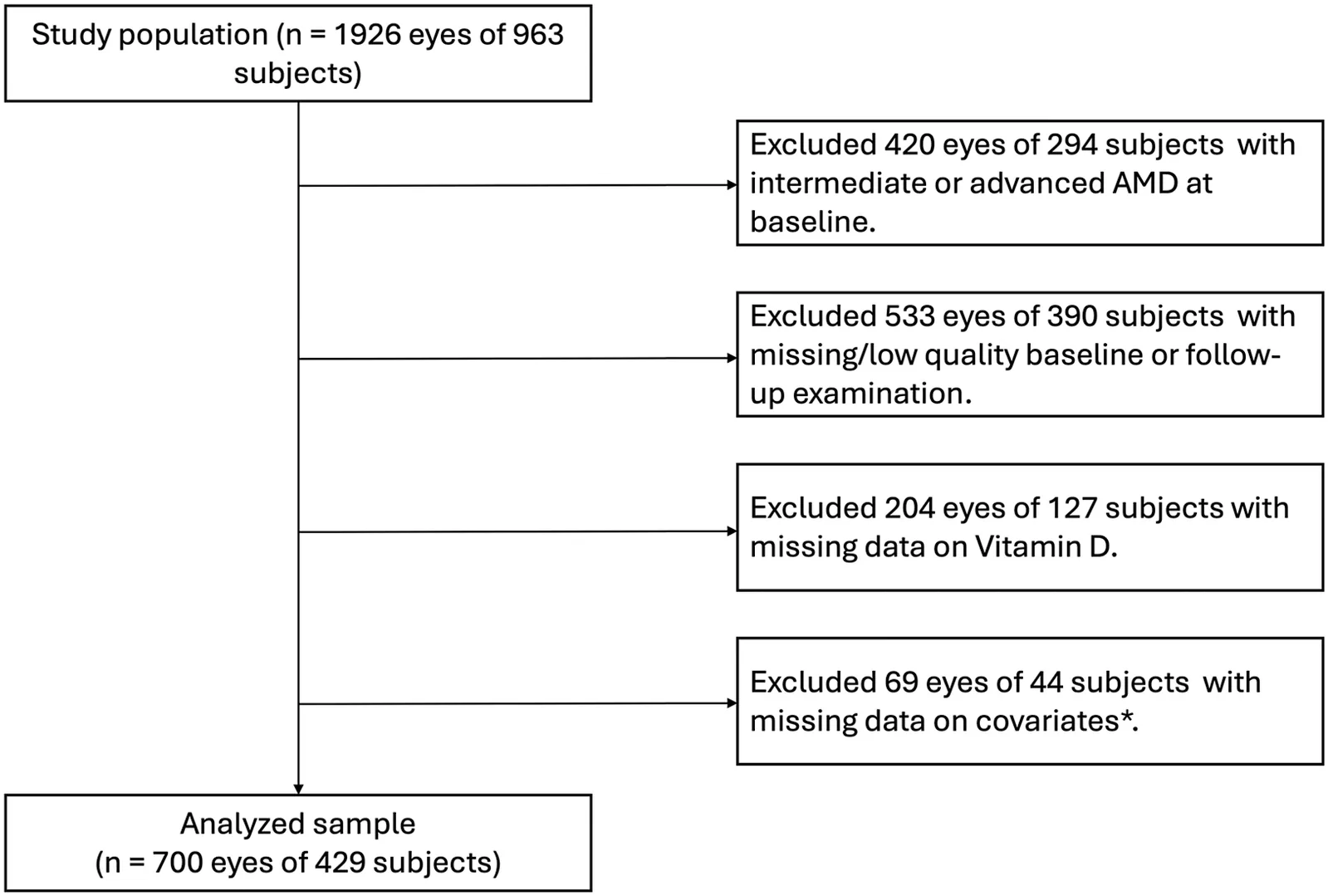
In 429 participants aged 65 and older from the ALIENOR study, researchers tracked 700 eyes over 18 years to examine deseasonalized plasma 25-hydroxyvitamin D levels and retinal aging. Baseline levels were classified as sufficient (≥50 nmol/l), insufficient (25–49 nmol/l), or deficient (<25 nmol/l).
Compared to sufficient levels, vitamin D deficiency was associated with an increased risk of incident intermediate age-related macular degeneration (hazard ratio 2.34; 95% CI: 1.19–4.61). Vitamin D insufficiency showed a borderline association (hazard ratio 1.74; 95% CI: 0.98–3.08), while no significant associations emerged for advanced disease. Deficient participants also showed significant thickening of the retinal pigment epithelium-Bruch membrane complex over time (0.07 μm per year), with no significant changes observed in other outer retinal layers.
Why it matters
Age-related macular degeneration is a leading cause of vision loss in older adults. Linking vitamin D status to progressive structural changes in the retina identifies a potential modifiable factor for intermediate stages of the disease.
Caveats
Because this was an observational cohort study, it cannot establish a causal relationship. In addition, the associations did not reach statistical significance for advanced macular degeneration.
The paper
University of Bonn · Université de Bordeaux
Ophthalmology Science · 17 Aug 2026