Underweight carries higher kidney risk than excess adiposity
Underweight was associated with an odds ratio of 1.41 for incident kidney disease compared to 1.03 for excess adiposity in adults with diabetes.
Frontiers in Endocrinology
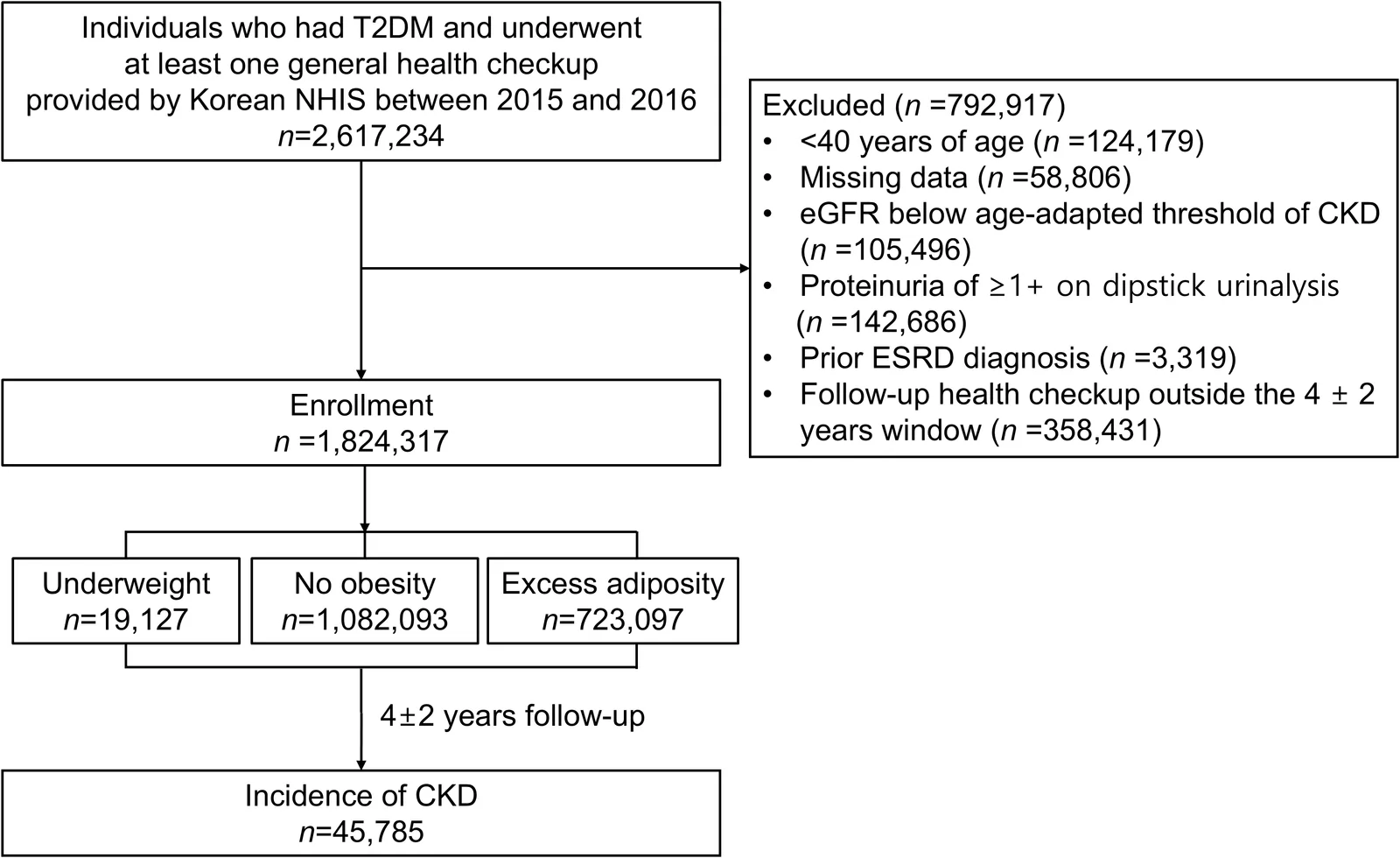
In a nationwide cohort of 1,824,317 Korean adults aged 40 and older with type 2 diabetes, researchers investigated how body composition relates to new-onset chronic kidney disease. Participants without baseline kidney impairment were classified by body mass index and waist circumference into underweight, no obesity, and excess adiposity categories. Incident kidney disease was evaluated over a four-year follow-up using age-adjusted filtration rate thresholds.
Underweight participants had a higher risk of incident chronic kidney disease (odds ratio 1.41) compared with the no-obesity group, while excess adiposity was associated with a smaller increase (odds ratio 1.03). Underweight consistently predicted higher kidney disease risk across both sexes and age groups, with the strongest association occurring in middle-aged men. In contrast, excess adiposity increased risk in women but showed no association in men.
Why it matters
Renal function declines with age, and metabolic diseases accelerate this deterioration. These findings show that low body weight may pose a greater renal risk than excess adiposity in older diabetic adults, challenging traditional assumptions about obesity as the dominant metabolic threat to kidney health.
Caveats
The study was observational and conducted solely within the Korean population, meaning the results may not generalize to other racial or ethnic groups. In addition, the four-year follow-up provides only a short-term window into chronic kidney disease development.
The paper
Yeungnam University College · Korea University Ansan Hospital
Frontiers in Endocrinology · 17 Sep 2026