Aging impairs tentacle regeneration in Cladonema medusae
Aged Cladonema medusae show stem cell depletion, increased DNA damage, delayed wound closure, and defective blastema formation during tentacle repair.
Aging Cell
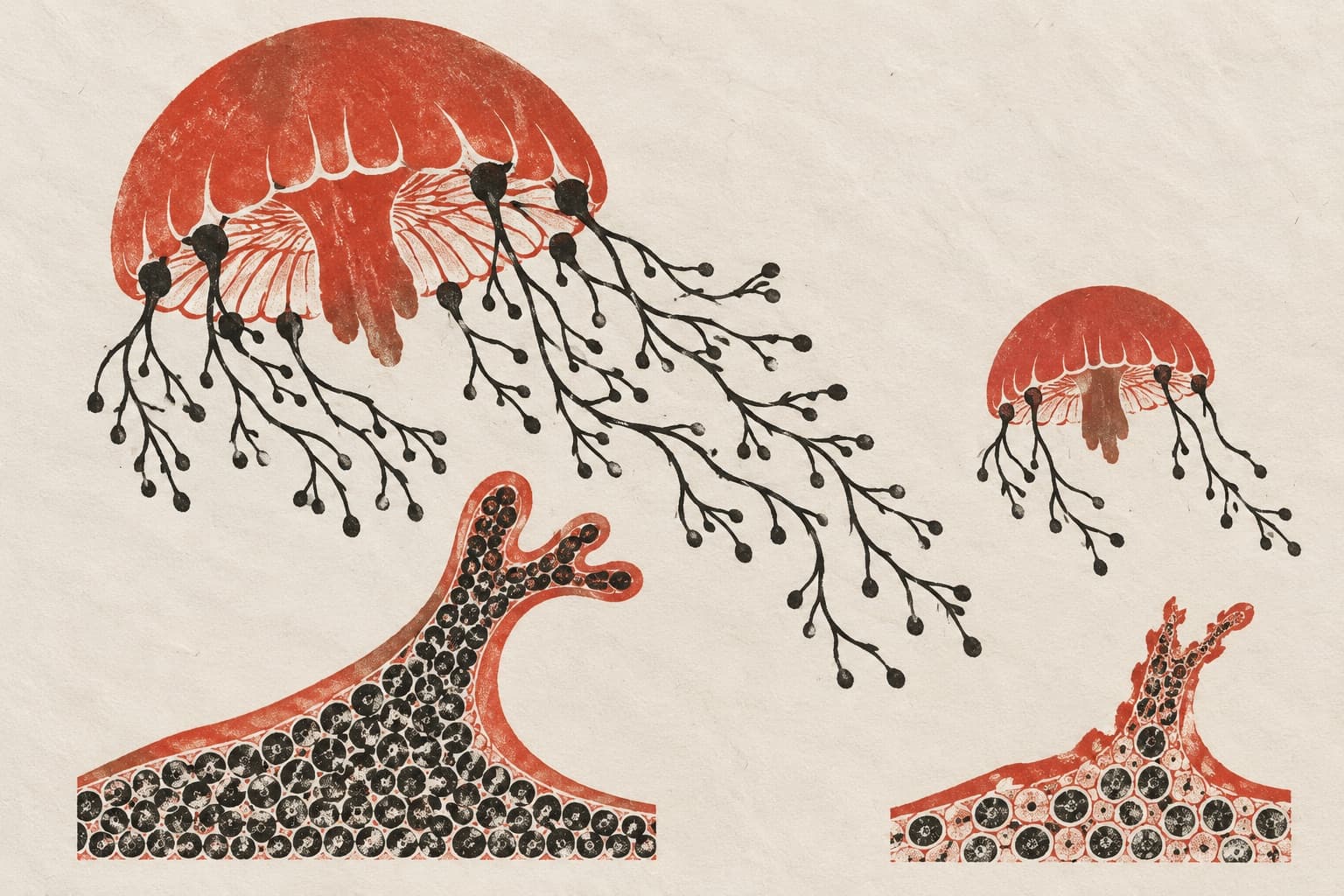
In the cnidarian Cladonema pacificum, aging impairs tissue maintenance and blastema-mediated tentacle regeneration during the medusa stage. Researchers found that aging medusae undergo progressive morphological and functional decline, including umbrella and manubrium shrinkage, tentacle shortening, decreased reproductive output, and elevated DNA damage. At the cellular level, older medusae displayed fewer differentiated cells, including nematocytes and neurons, alongside reduced stem cell-associated populations and lower proliferation within the tentacle bulb. Following tentacle injury, aged medusae showed delayed wound closure, defective blastema formation, and incomplete functional recovery. Together, the results show that aging disrupts cellular maintenance and hinders blastema-dependent repair in this cnidarian.
Why it matters
The findings suggest that aging imposes broadly shared constraints on blastema-mediated regeneration across divergent animal lineages. They also present Cladonema medusae as a tractable system for probing interactions between aging and regenerative failure.
Caveats
The study was conducted in a simple cnidarian model and examined a single regenerating structure, the tentacle. The findings are primarily descriptive and do not define the specific molecular mechanisms driving the observed regenerative arrest.
- Cell cycle regulation
- Cellular homeostasis
- DNA damage response
- DNA damage
- Cell proliferation
- C. pacificum
The paper
The University of Tokyo
Aging Cell · 1 Oct 2026