Aged human muscle secretes an enzyme that impairs stem cell maintenance
Profiling conditioned media revealed that altered sphingolipid signaling reduces muscle stem cell pools in human cell cultures.
bioRxiv
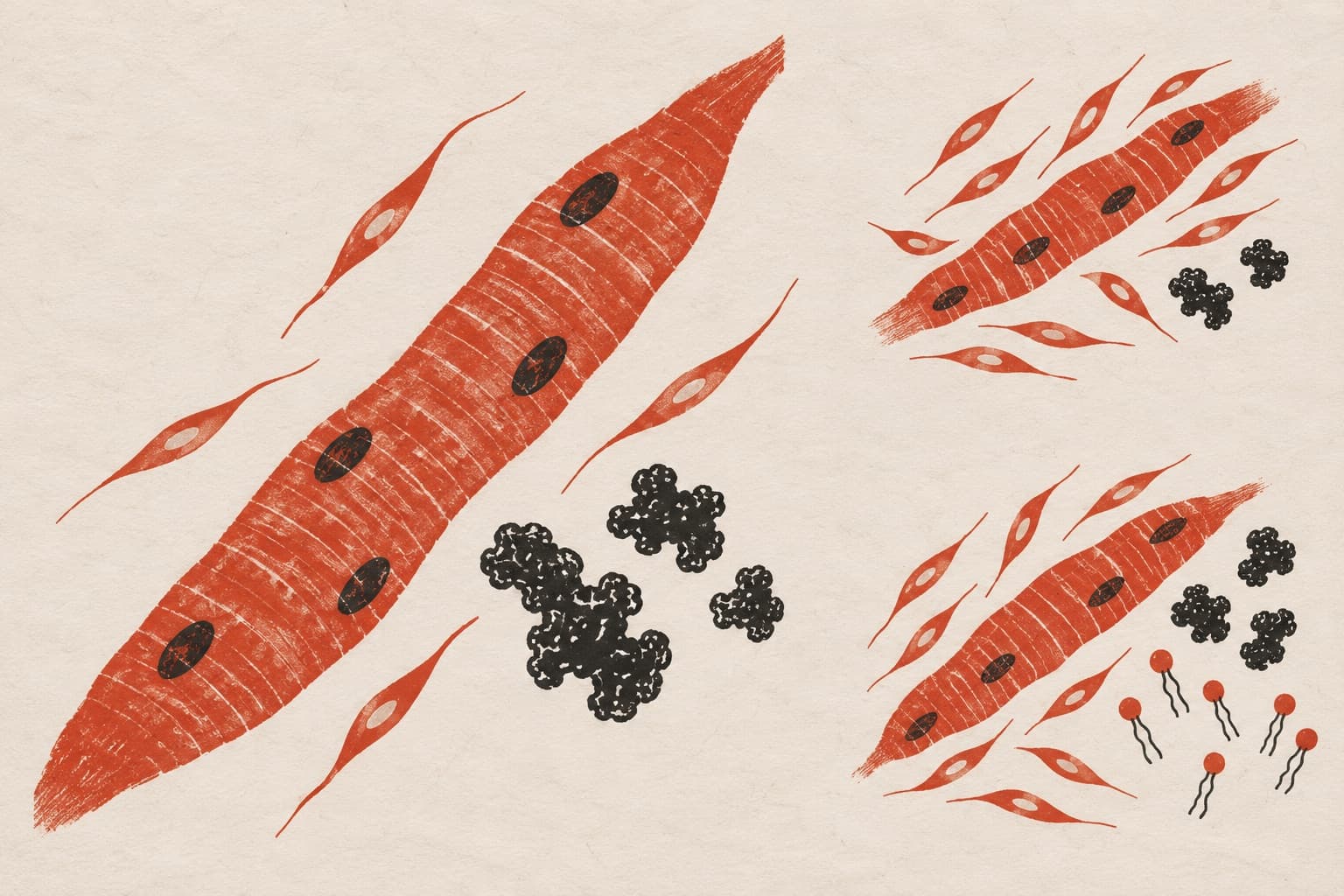
In cell culture experiments using primary muscle cells from young (15–25 years) and aged (60–86 years) human donors, researchers evaluated how aging alters the muscle secretome. Proteomic profiling of conditioned media identified 127 age-dependent secreted proteins. The lysosomal enzyme acid sphingomyelinase (ASM), which converts sphingomyelin into ceramide, was the most upregulated secreted factor with age. Adding recombinant ASM to young cultures reduced PAX7+ muscle stem cells, demonstrating that extracellular ASM impairs stem cell maintenance. Lipidomic profiling revealed a disrupted sphingomyelin-ceramide-S1P axis, with reduced levels of sphingomyelin and S1P. Supplying exogenous S1P restored the muscle stem cell pool in aged cultures.
Why it matters
These findings directly link age-related secretome remodeling and disrupted sphingolipid metabolism to the decline of muscle stem cells. They highlight ASM and S1P as potential metabolic targets to protect stem cell maintenance.
Caveats
This study is a preprint and has not yet been peer-reviewed. The findings are based solely on in vitro human cell cultures rather than intact tissues or living organisms.
The paper
Aging remodels the human muscle secretome, impairing stem cell via sphingolipid metabolism
Show 11 more authors
Jessica Ohana, Marie Lhomme, Maharajah Ponnaiah, Johanna Bruce, Maria Kondili, Ludovic Gaut, Elisa Négroni, Alexis Boulinguiez, Gillian Sandra Butler-Browne, Vincent Mouly, Capucine Trollet,Inserm
bioRxiv · 2 Oct 2026 · Preprint, not peer-reviewed