Tamoxifen causes temporary ovarian disruption without altering long-term mouse aging trajectories
A new preprint shows tamoxifen-inducible mouse models remain valid for ovarian aging research despite transient disruptions to estrous cycling.
bioRxiv
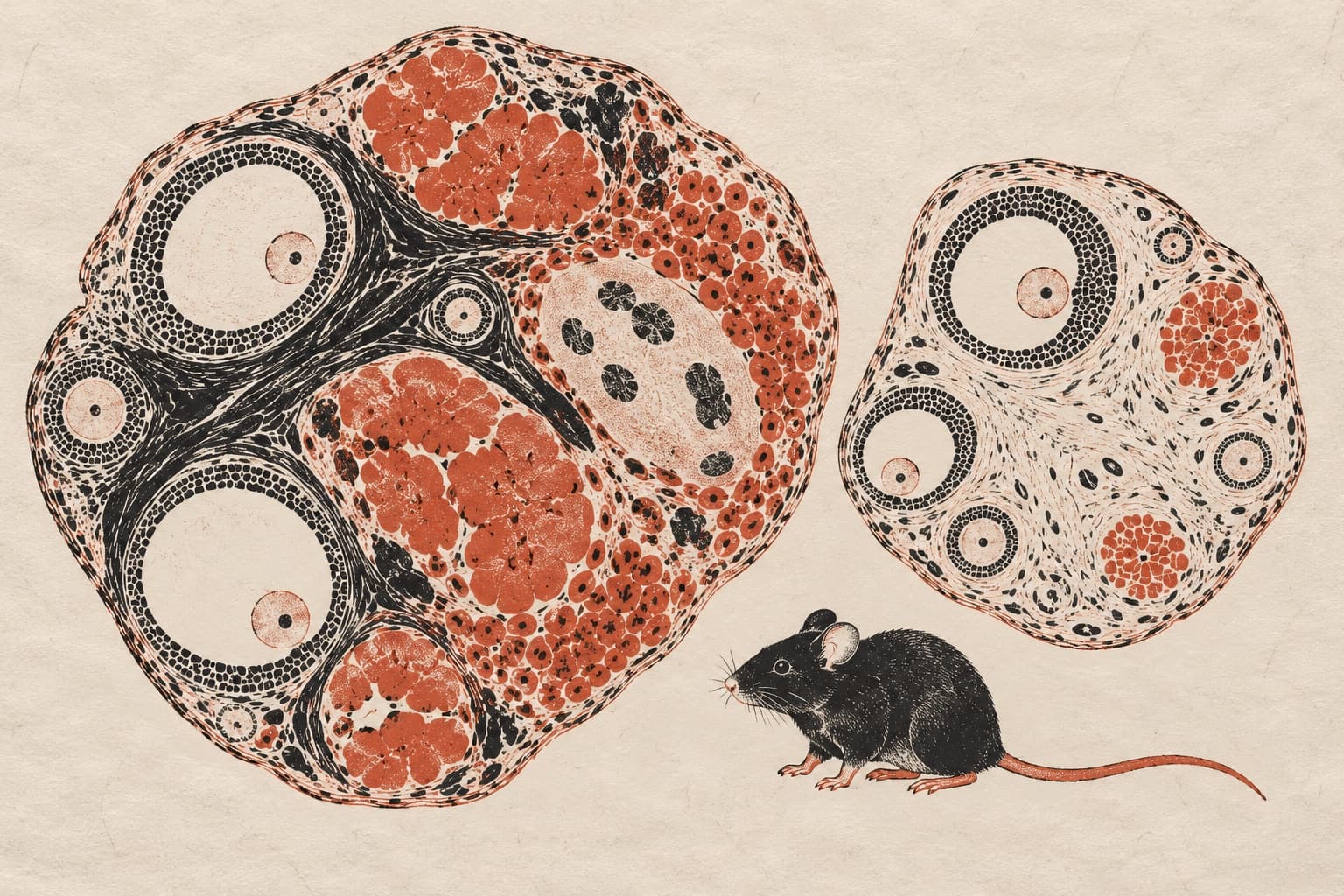
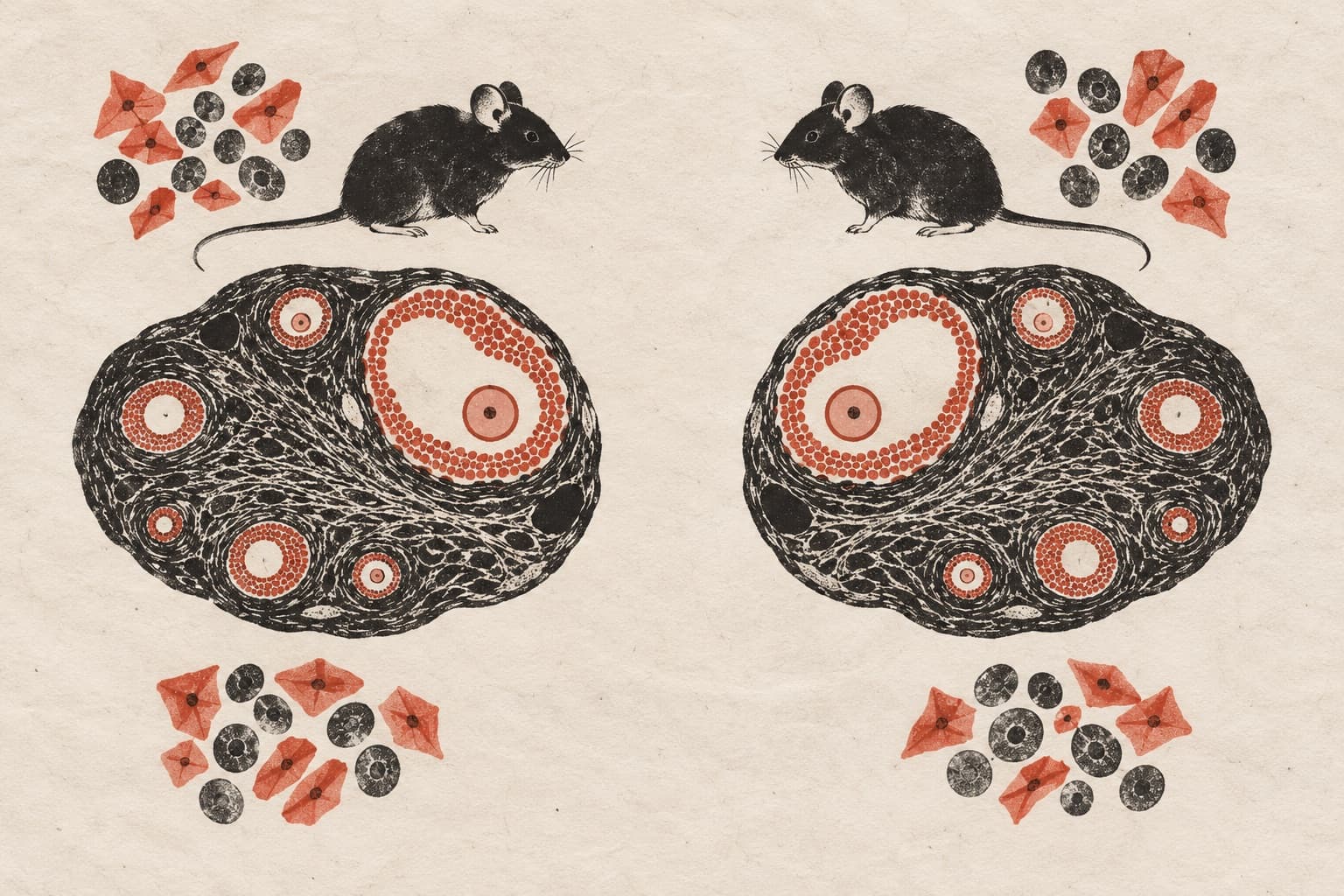
Female mice treated with tamoxifen show transient reproductive disruptions but normal long-term ovarian aging, according to a recent preprint. Researchers administered tamoxifen or a vehicle control to three-month-old female mice to test whether the drug confounds ovarian aging studies. They tracked estrous cyclicity by vaginal cytology at multiple intervals up to 12 months post-treatment and performed bulk RNA sequencing on ovaries at six and 12 months. Tamoxifen disrupted estrous cyclicity shortly after treatment, but normal cycling returned by three months. Bulk RNA sequencing revealed minimal gene expression differences between tamoxifen- and vehicle-treated mice at both young and aged time points. Aging-associated transcriptional programs, including pathways related to extracellular matrix remodeling, senescence, and cellular homeostasis, were conserved across both treatment conditions.
Why it matters
The ovary is one of the earliest organs to functionally decline, and tamoxifen-inducible systems are widely used tools for studying reproductive biology. These findings validate that tamoxifen-inducible genetic models can be reliably used in ovarian aging research without skewing long-term transcriptional outcomes.
Caveats
This work was conducted in female mice and published as a preprint that has not yet undergone peer review. The authors also emphasize that proper control groups remain necessary when using tamoxifen-inducible experimental designs.
The paper
Show 6 more authors
Hana H. Kilani, Jillian E. J. Cox, Sunghwan Ko, Subhasri Biswas, Doris M. Benbrook, Michael B. Stout,Oklahoma Medical Research Foundation
bioRxiv · 8 Sep 2026 · Preprint, not peer-reviewed